President Mahama Calls for Longer-Term Local Currency Housing Finance

President John Dramani Mahama has called for longer-term, local-currency housing finance arrangements with manageable repayments to make home ownership more accessible to Ghanaians.
He said housing finance must be structured around the income levels of Ghanaian households rather than relying on financing arrangements that make home ownership difficult because of high borrowing costs, large deposits and short repayment periods.
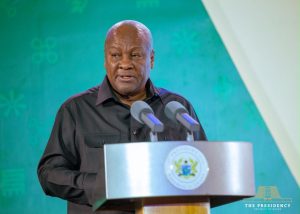
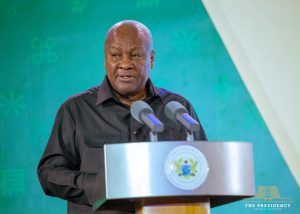
President Mahama made the call on Wednesday, October 7, 2026, when he opened the National Conference on Housing Finance in Accra, held under the theme, “Adequate Housing for All, Innovative Financing for Ghana’s Housing Future.”
He said although houses were being delivered, many remained beyond the reach of the average Ghanaian because of the cost of financing.
“We have to make sure that the financing reflects the incomes of Ghanaians. We need longer-term financing, denominated in local currency, with manageable repayments and clear terms,” he stated.
President Mahama said the high cost of borrowing was one of the factors making it difficult for many households to acquire homes, particularly where buyers were required to make large deposits and repay loans over relatively short periods.
He said the housing finance system must therefore provide products that enable people to make repayments over longer periods and in a manner that corresponds with their incomes.
The President said this was particularly important in addressing Ghana’s housing deficit, estimated at 1.8 million units, while also responding to the housing needs of families living in inadequate conditions.
He said the country needed to move beyond conventional mortgage financing and develop products for different categories of workers, including traders, artisans, farmers, transport operators and other self-employed persons.
According to him, financial institutions should be able to assess the repayment capacity of informal sector workers through their savings history and verifiable business cash flows, rather than relying solely on conventional employment documentation.
President Mahama also pointed to the National Housing Fund as part of efforts to expand access to housing finance. He said the Fund would provide a platform for mobilising and deploying financing to support affordable housing.
He disclosed that he had directed the Minister of Finance to allocate GH¢1 billion in the 2027 Budget as government’s contribution to a proposed GH¢3 billion revolving fund for the National Housing Fund.
“This money will be placed in the National Housing Fund and it will be available for financing housing in a revolving manner,” he stated.
President Mahama said government-backed mortgage facilities and rent-to-own arrangements had already helped more than 1,000 people to own homes, while the interest rate under the National Mortgage Scheme through City Mortgage currently stood at 8.4 per cent.
He said the country would need to support hundreds of thousands of new homeowners each year if it was to make meaningful progress in reducing the housing deficit.
The President further called for the mobilisation of long-term capital from pension funds, insurance companies, development finance institutions and diaspora investors to support housing finance.
He said innovative financing models, including mortgage refinancing, securitisation, employer-supported housing schemes and responsible fintech solutions, should form part of the discussions at the conference.
President Mahama said the ultimate test of housing policy was whether ordinary Ghanaians could afford the homes being delivered.
He urged financial institutions, developers, employers, organised labour and other stakeholders to work together to develop financing products that would enable more Ghanaian families to secure decent homes.
“Every family deserves the security of a decent home,” he stated.
Richard Aniagyei, ISD