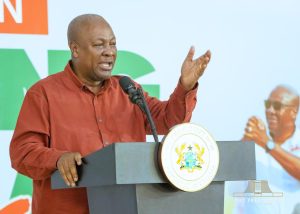
President Mahama Challenges African Financiers, Industrialists to Drive Pharmaceutical Production
President John Dramani Mahama has challenged African financiers, regulators and industrialists to work with governments to mobilise capital and build the pharmaceutical manufacturing capacity needed to achieve health sovereignty on the continent.
He said Africa must reduce its dependence on imported medicines and vaccines by creating the financial, regulatory and industrial conditions necessary for local pharmaceutical production.
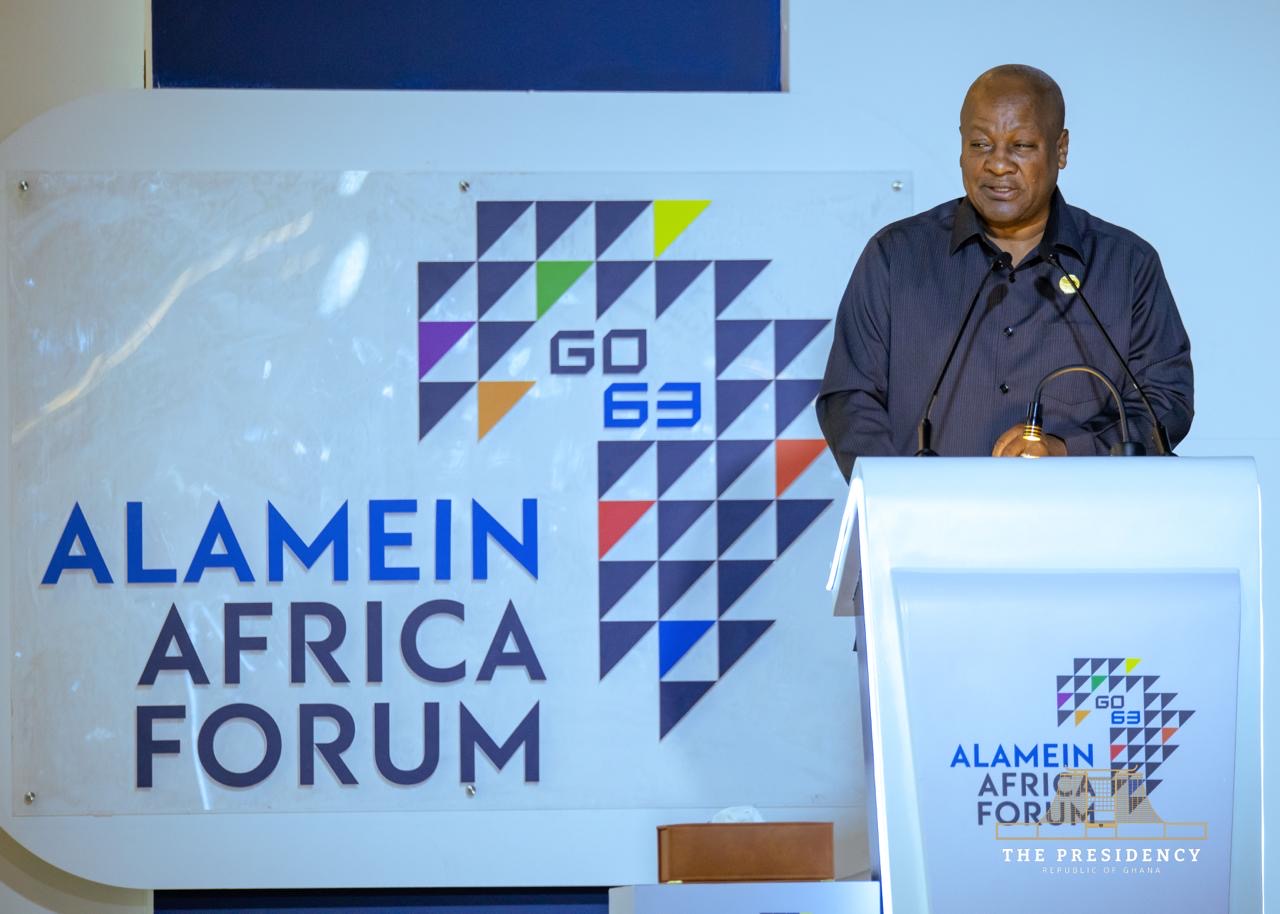
President Mahama made the call at the Alamein Africa Forum in Egypt, where he addressed African leaders, business executives, financiers and other stakeholders on the need to make health a driver of economic transformation.
He said African governments could not and should not finance the transition to health sovereignty alone, stressing the need for private capital, industrial developers, commercial banks and sovereign funds to participate in building a sustainable health manufacturing ecosystem.
President Mahama noted that Africa currently imports more than 70 per cent of its pharmaceuticals and nearly 99 per cent of its vaccines, with tens of billions of dollars leaving African economies annually to purchase medicines and vaccines from outside the continent.
He said the situation presented an opportunity for domestic private capital to support pharmaceutical manufacturing, adding that increased local production could help retain foreign exchange within African economies, support currency stability and reduce exposure to disruptions in global pharmaceutical supply chains.
According to President Mahama, the African Continental Free Trade Area (AfCFTA) provides an important foundation for pharmaceutical manufacturing because products manufactured in one African country would have access to a continental market of about 1.4 billion people rather than being confined to individual national markets.
He also cited the Africa Centres for Disease Control and Prevention’s first pooled tender for maternal and child health products, which he said achieved price reductions of more than 30 per cent while African manufacturers won 50 per cent of the product lines.
President Mahama said coordinated demand across African countries could provide predictable cash flows for local manufacturers and create the conditions for sustained investment in the pharmaceutical sector.
Turning to the role of financiers, he challenged them to consider the specific de-risking instruments and blended finance structures that governments could provide to attract patient capital into pharmaceutical manufacturing plants across the continent.
He also called on regulators to accelerate the operationalisation of the African Medicines Agency to create a regulatory framework where a single drug approval could facilitate access to markets across all 54 African Union member states.
President Mahama further challenged African industrialists to develop strategic partnerships capable of moving the continent beyond basic pharmaceutical packaging and fill-and-finish operations to the production of active pharmaceutical ingredients on African soil.
“These are the three questions we need to answer to bring governments and business together to assist in creating health sovereignty for Africa,” he said.
President Mahama said Ghana was already taking steps towards that objective through the Accra Reset, including the expansion of the National Health Insurance Scheme, the Free Primary Healthcare Programme, the establishment of the Ghana Medical Trust, and efforts to strengthen the Food and Drugs Authority and the National Vaccine Institute.
He said the interventions formed part of efforts to help Ghana transition from being primarily a consumer of health products to becoming a producer, while contributing to a wider African ecosystem for health security, investment and manufacturing.
President Mahama urged African stakeholders to build factories, integrate supply chains and fund innovators, saying the continent must leave the Alamein Africa Forum with a clear plan to achieve health sovereignty.
Richard Aniagyei, ISD