Peace Council deepens engagement with Traditional Authorities in Western Region
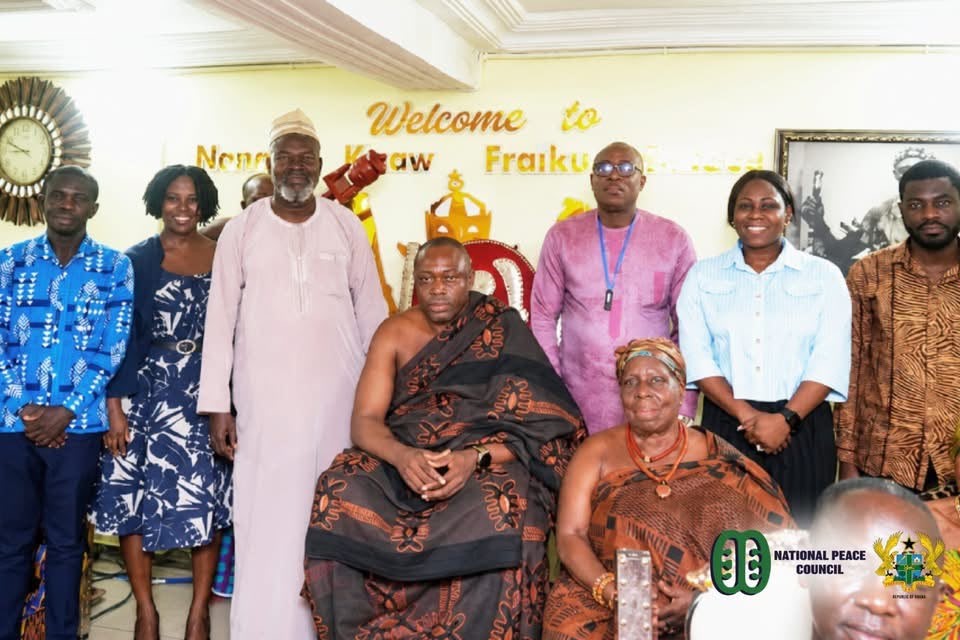
The Western Regional Peace Council (WRPC) has engaged with traditional authorities in the region as part of efforts to strengthen collaboration in conflict prevention, mediation, resolution and peacebuilding.
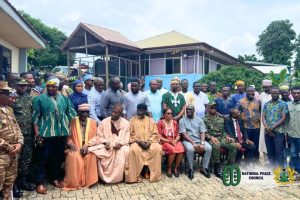
The engagement forms part of a series of courtesy calls on 16 Traditional Councils in the Western Region, with the Council recently engaging the Shama Traditional Council, Eastern Nzema Traditional Council and Western Nzema Traditional Council.
The initiative is aimed at strengthening the relationship between the Peace Council and traditional authorities and creating a platform for sustained collaboration to promote peace, stability and development in the various traditional areas.
Speaking during the engagements, the Acting Western Regional Executive Secretary of the Peace Council, Mr Stephen Sarfo Amoah, explained that the National Peace Council was a neutral institution mandated to prevent and manage conflicts through peace education, dialogue and Alternative Dispute Resolution (ADR).
He appealed to the traditional authorities to support the Council by sharing early warning signals and referring disputes to the appropriate mediation mechanisms before they escalated into violent conflicts.
Mr Sarfo Amoah said early intervention and dialogue were essential to preventing disputes from becoming protracted and having adverse effects on communities and development.
An Eminent Member of the National Peace Council, Alhajj Elias Yusuf Kofi Gyampson, reiterated the important role of traditional authorities in maintaining peace and social order.
He noted that chieftaincy disputes and other conflicts continued to affect development in some parts of the region, despite its rich natural resources.
Alhajj Gyampson said conflicts might be inevitable in society, but their impact depended largely on how they were managed.
He, therefore, called for stronger partnerships between the Peace Council and traditional authorities to promote dialogue and peaceful resolution of disputes.
The traditional leaders welcomed the initiative and expressed their commitment to working with the Peace Council to promote peace and stability in their respective traditional areas.
They emphasised the need for truth, dialogue, continuous engagement and collaboration in addressing conflicts and creating an environment conducive to development.
Judith Twumwaa, ISD