BNI Receives Major Logistical and Technological Boost with New Vehicles, Forensic Lab
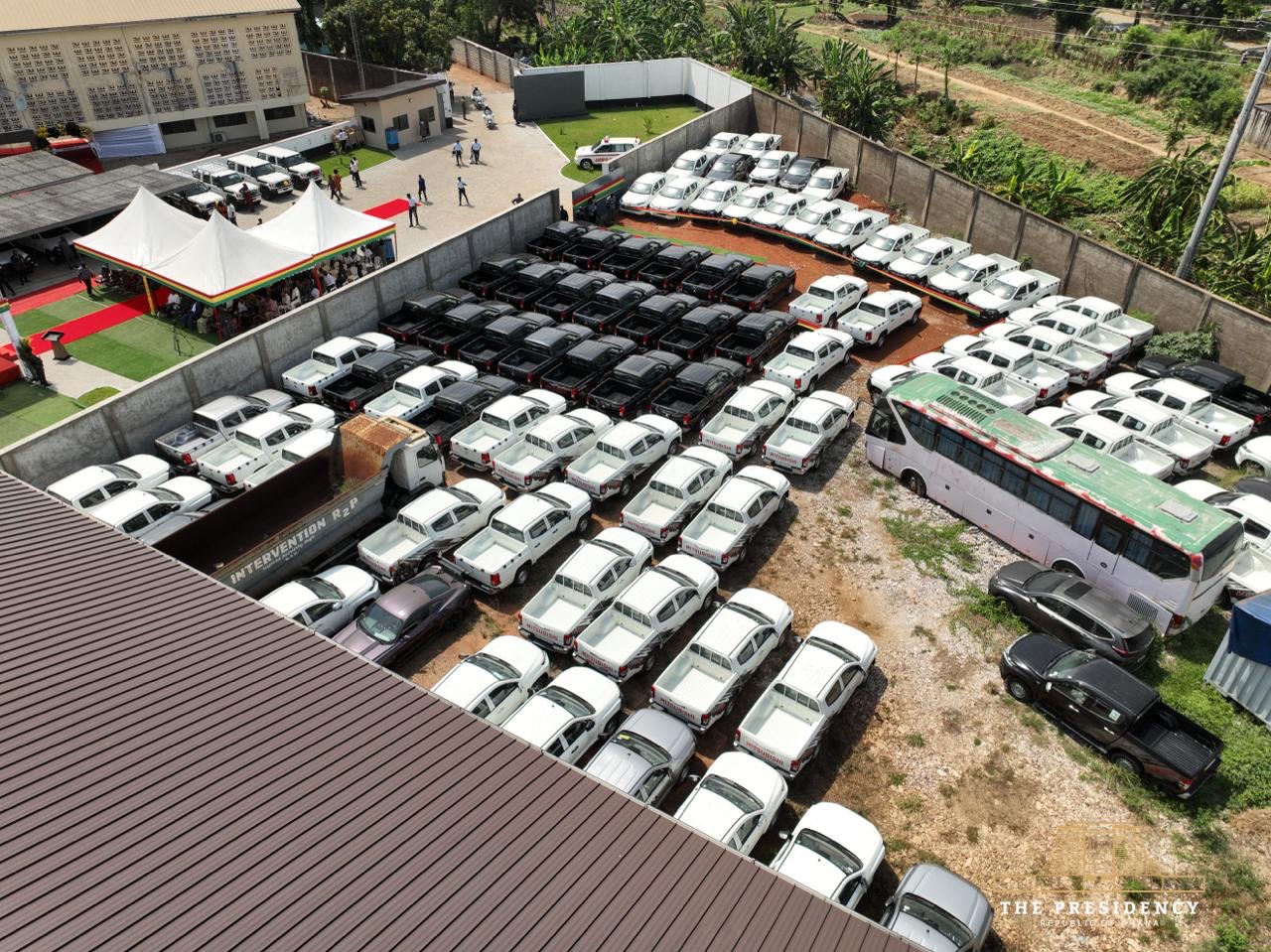
President John Dramani Mahama has commissioned 111 vehicles, a modern Digital Forensic Laboratory and upgraded interrogation facilities for the Bureau of National Intelligence (BNI), in a major logistical and technological boost to the country’s intelligence and security operations.
The facilities, commissioned on Friday, November 13, 2026, at the Bureau’s regional office in Accra, are expected to strengthen its capacity to gather intelligence, conduct investigations and respond to emerging security threats, particularly the growing use of digital technology in criminal activities.
The new fleet comprises 100 Mitsubishi pickup trucks, six Toyota Land Cruiser station wagons and five Toyota Prado vehicles, providing the Bureau with additional mobility for its intelligence-gathering and operational assignments across the country.
Speaking at the ceremony, President Mahama said the provision of the vehicles would address one of the major challenges that had affected the Bureau’s operational efficiency over the years.
He recalled seeing some of the Bureau’s old and poorly maintained vehicles struggling to travel to distant locations for intelligence-gathering activities, noting that the new fleet would significantly improve the mobility of officers.
“One of the major things that has hampered the efficient work of the Bureau has been lack of vehicles. I have seen some of your vehicles, very tattered and old, but struggling to travel from here to Boko or somewhere just to gather intelligence. That is going to be a thing of the past,” he said.
The President urged officers, particularly drivers and the transport management team, to ensure proper maintenance of the vehicles to protect the investment and extend their service life.
He cautioned against reckless use of the vehicles, saying they were expensive assets that must be handled responsibly and maintained through regular servicing, including timely oil and filter changes.
“If we maintain these vehicles properly, for a minimum of eight years, ten years, we will still have them in good condition,” he said, charging the Bureau to get the best possible service from the new fleet.
President Mahama also announced that the Government would procure additional vehicles for the country’s security agencies in 2027, with the BNI expected to receive another allocation to further expand its fleet.
Beyond the logistical support, the commissioning of the Digital Forensic Laboratory is expected to strengthen the Bureau’s capacity to investigate cybercrime and other technology-related offences.
President Mahama observed that criminal activities had evolved from predominantly physical offences such as robbery and burglary to more sophisticated operations involving digital scams, hacking and other forms of cybercrime.
He urged the Bureau to remain ahead of criminals by investing in technology and continuously upgrading its investigative capabilities.
Using the Akan expression, “Wiase dane a, wo nso dane bi,” the President said security agencies must respond to changes in criminal methods by advancing their own technological capacity.
He explained that information retrieved from mobile phones and other electronic devices could provide investigators with useful evidence to reconstruct criminal activities and identify other members of criminal networks.
He cited instances in which access to the phone of a suspected armed robber had helped investigators identify other individuals involved in a robbery, demonstrating the growing importance of digital evidence in modern investigations.
The President said the new laboratory would therefore provide the Bureau with an important tool to investigate cybercrime and other sophisticated digital offences.
The commissioning also covered the renovation of the Bureau’s interrogation rooms, which have been upgraded with soundproofing and digital recording equipment to improve the environment and documentation of interrogation sessions.
President Mahama said the facilities must ensure that individuals brought before the Bureau were treated with dignity, regardless of the circumstances surrounding their appearance.
“I pray that Ghanaians do not have to come to the interrogation rooms. But when they come, their dignity must be protected,” he said.
The President further commended the Director-General of the Bureau, Mr Charles Alhassan Kipo, for the modernisation drive under his leadership, particularly improvements in infrastructure and working conditions.
He cited the new regional headquarters in the Ahafo Region, which he had recently commissioned, as an example of the progress being made to provide officers with modern and suitable working environments.
He disclosed that eight other regional offices were under construction and expected to be completed in 2027, bringing the number of modern regional offices to at least nine.
According to the President, improved infrastructure would boost the morale of officers while ensuring that members of the public who interact with the Bureau are received in facilities that respect their dignity.
President Mahama described intelligence officers as the unsung heroes of the country’s security architecture, explaining that their investigations and intelligence-gathering activities provide vital information to support the work of the Police Service, the military, the Immigration Service and other security institutions.
He said the security threats facing Ghana, particularly those emerging from the Sahel and other parts of the West African sub-region, made it necessary to strengthen the Bureau’s operational capacity.
“I want to recognize the work that you do and to assure you that government takes your Bureau very seriously, and that we will do everything to make sure that we equip you to be able to carry out your duties properly,” he stated.
The President urged the officers to support the Director-General and the Bureau’s leadership, maintain professionalism and remain committed to protecting the country.
Richard Aniagyei, ISD