Property Rates to Go Fully Electronic Under New System – Local Gov’t Minister

The Government is set to introduce a centrally controlled electronic system for the collection of property rates, ending cash payments at the Metropolitan, Municipal and District Assembly (MMDA) level.
The Minister for Local Government, Chieftaincy and Religious Affairs, Mr Mahama Ayariga, said the reform was intended to improve revenue mobilisation, reduce leakages and address inefficiencies and corruption associated with the existing property-rate collection system.
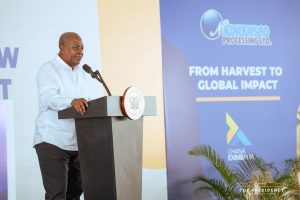
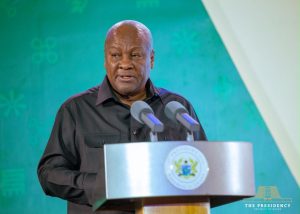
Speaking during the Government Accountability Series, Mr Ayariga said discussions were ongoing with President John Dramani Mahama and the Minister of Finance to recalibrate the property rates regime to ensure that local government authorities had adequate resources to perform their functions.
He said the existing system had created difficulties for property owners while also providing opportunities for corruption.
“Our existing property rates regime is plagued by inefficiencies, inconvenience to property owners and outright corruption, where monies paid end up in private pockets,” he said.
Mr Ayariga further raised concerns about the conduct of some local government officials, accusing some of deliberately frustrating the systems established for property-rate collection.
“Most Local Government staff deliberately ensure that the systems designed at the local level do not function for ulterior motives,” he said.
Under the proposed system, he said, cash collection would be completely removed, with all payments made electronically through MTN Mobile Money and bank transfers.
“We will roll out a centrally controlled mechanism for the collection of the rates which will totally take out cash collection.
“All payments will be electronic involving only MTN MoMo and electronic bank transfers,” Mr Ayariga said.
The Minister said the reform would make it easier to track payments and reduce opportunities for funds to be diverted before reaching the Assemblies.
He said Government’s approach was also based on the principle that citizens were more likely to comply with their property-rate obligations when local authorities delivered the services expected of them.
“As a cardinal principle, we believe in service provision at the local level as a driving force for compliance,” he said.
Mr Ayariga said when property owners saw tangible improvements in services provided by their local authorities, they would be more willing to pay the required rates.
“We believe that when citizens see their local government authorities providing them the services they are entitled to, they, the property owners, will reciprocate by paying their due property rates. Minimal force will therefore be needed,” he stated.
The reform is part of Government’s broader decentralisation agenda, under which Metropolitan, Municipal and District Assemblies are expected to mobilise adequate local resources to support the delivery of sanitation, roads, drainage, water, health, education and other services.
Mr Ayariga said the Ministry was also engaging development partners to ensure that stakeholders were aligned with the proposed reforms.
Richard Aniagyei, ISD