Ghana Intensifies Fisheries Reforms to Secure EU Yellow Card Removal
The Government has intensified efforts to strengthen fisheries governance and regulatory compliance as Ghana works towards addressing concerns that led to the European Union (EU) issuing a Yellow Card over illegal, unreported and unregulated (IUU) fishing.
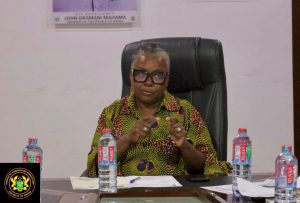
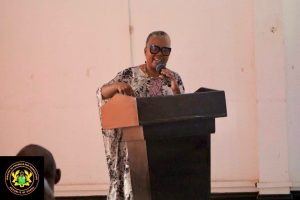
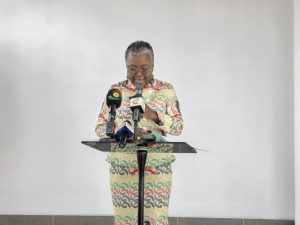
The Minister for Fisheries and Aquaculture, Mrs Emelia Arthur, said the Ministry was implementing measures to address the concerns and undertake the reforms required to secure the removal of the Yellow Card.
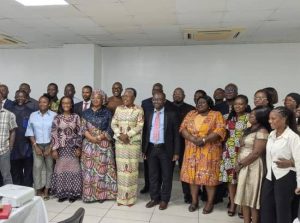
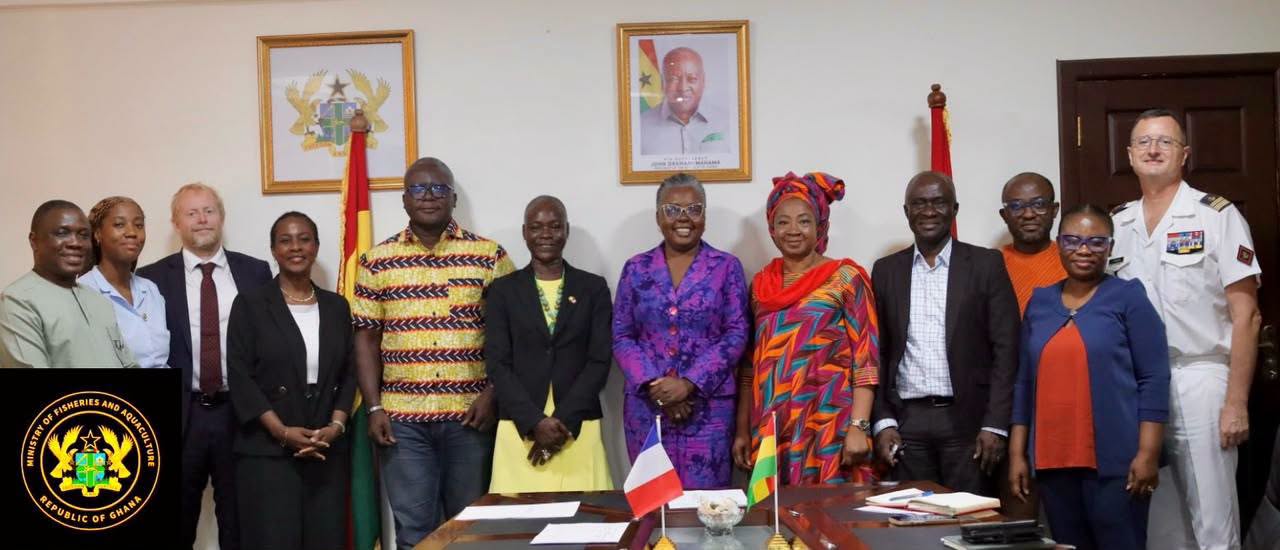
She disclosed this on Wednesday when the Ambassador of France to Ghana, H.E. Diarra Dime-Labille, and her delegation paid a courtesy call on her at the Ministry in Accra.
Mrs Arthur said strengthening the regulatory framework and enforcement mechanisms was essential to ensuring the sustainable management of the country’s fisheries resources.
She said the Ministry was also working to improve its monitoring, control and surveillance systems to enhance compliance with fisheries laws and regulations.
The Minister stressed the role of the Fisheries Enforcement Unit (FEU) in strengthening surveillance and combating illegal fishing activities across the sector.
She indicated that effective enforcement remained necessary to protect Ghana’s fisheries resources and promote sustainable fishing practices.
Mrs Arthur said the Government was committed to transforming Ghana’s marine, inland and aquaculture sectors to increase fish production, create employment and strengthen food security.
She added that the Ministry was also exploring opportunities in mariculture as part of efforts to expand fish production and diversify the country’s fisheries sector.
The Minister further pointed to ongoing efforts to protect Ghana’s marine resources, including the Greater Cape Three Points Marine Protected Area, while promoting sustainable ocean governance under the Blue Economy Agenda.
The meeting focused on strengthening cooperation between Ghana and France in fisheries research, investment, regulation, fisheries security, marine resource management and the development of Ghana’s Blue Economy.
The discussions also explored opportunities for scientific cooperation and knowledge exchange between Ghana and France.
France has research institutions such as the French Research Institute for Exploitation of the Sea (Ifremer), the French National Research Institute for Sustainable Development (IRD) and the French National Centre for Scientific Research (CNRS), which have expertise in ocean science, fisheries resources and marine ecosystem management.
The two sides therefore considered possible collaboration in artisanal, coastal and pelagic fisheries research, aquaculture development, climate change adaptation, biodiversity conservation and marine protected area management.
Irene Wirekoaa Osei, ISD