Ghana Launches National Referral Mechanism to Strengthen Protection of Vulnerable Migrants
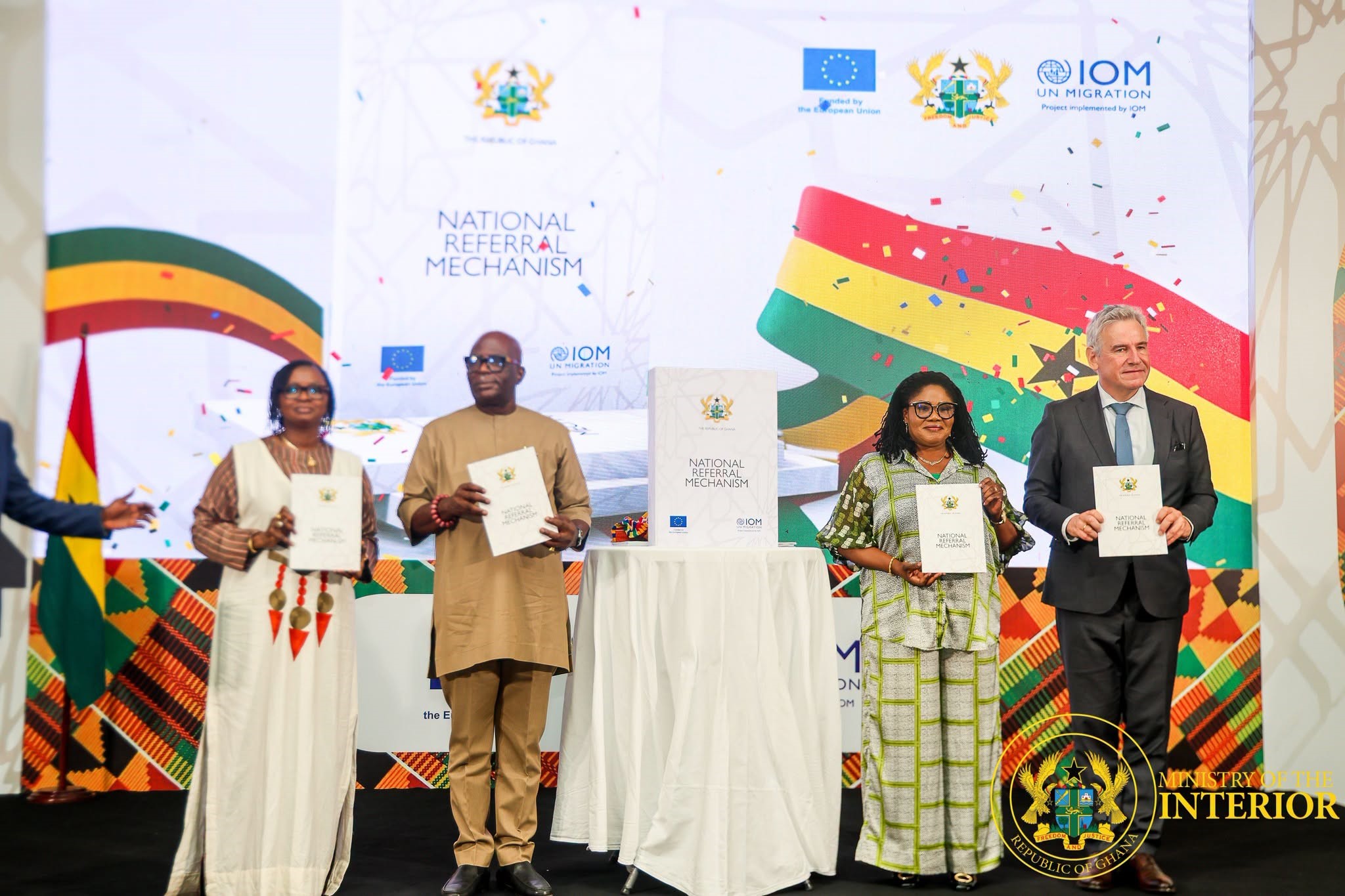
Ghana has launched a National Referral Mechanism to strengthen the identification, protection and reintegration of migrants in vulnerable situations, as part of efforts to improve migration governance and ensure coordinated support for those in need.
The framework, launched by the Deputy Minister for the Interior, Ebenezer Okletey Terlabi, establishes a coordinated system for identifying vulnerable migrants and connecting them to appropriate protection and assistance services, including safe return and sustainable reintegration.
Speaking at the launch in Ghana on Tuesday, Mr Terlabi described the initiative as an important milestone in the country’s efforts to ensure that migrants in vulnerable situations are treated with dignity and receive timely and appropriate assistance.
He said Ghana, as a country of origin, transit, destination and return, had a responsibility to adopt a comprehensive approach to migration management that balanced internal security, human rights, protection and sustainable development.
He noted that Ghana’s position as a champion country for the Global Compact for Safe, Orderly and Regular Migration (GCM) further demonstrated its commitment to promoting safe and orderly migration through coordinated national and international action.
According to him, the National Referral Mechanism provides an institutional framework for collaboration among government agencies, civil society organisations, communities and other partners in identifying vulnerable migrants and facilitating their access to essential services.
Mr Terlabi stressed that the mechanism’s effectiveness would depend not merely on the launch of the policy document but on its practical implementation and the support provided to migrants affected.
He said a successful referral must ensure that a migrant was connected to the appropriate institution, received a timely response and obtained the protection and assistance required.
He, therefore, urged stakeholders to move beyond the adoption of the framework and translate its provisions into practical interventions through stronger institutional coordination.
He identified the establishment of designated focal points, capacity-building, service mapping, data protection and regular monitoring as essential measures for ensuring the effective operation of the mechanism.
The Deputy Minister further emphasised that the success of the initiative would depend on national ownership, adequate resources and sustained commitment from stakeholders at the national, regional, district and community levels.
Judith Twumwaa, ISD