National Peace Council Hosts Nigerian Scholars to Strengthen Regional Cooperation on Peace and Security
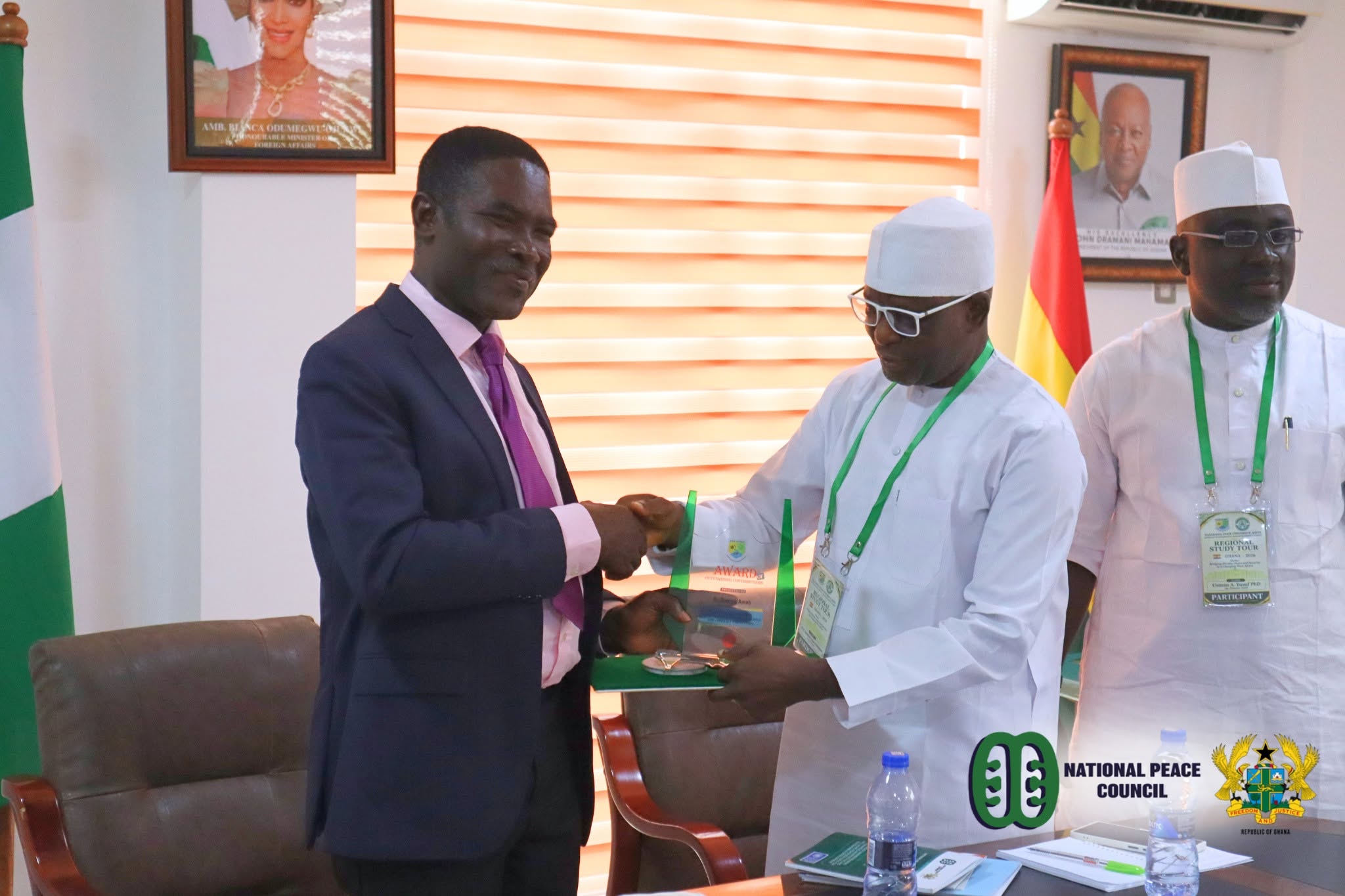
The National Peace Council (NPC) has engaged Doctoral Scholars from Nasarawa State University, Keffi (NSUK), Nigeria, to share Ghana’s experiences in peacebuilding and explore collaborative approaches to addressing conflict and security challenges in West Africa.
The engagement, held under the theme, “Bridging Divides: Peace and Security in a Changing West Africa,” brought together members of Course 7 of the university’s PhD programme in Peace and Conflict Studies for an academic and institutional exchange on peacebuilding practices in the two countries.
The delegation was led by the Dean of the Postgraduate School at NSUK, Professor Abdullahi Adamu Sulaiman, while the Executive Secretary of the NPC, Dr George Amoh, led the engagement on behalf of the Council.
Dr Amoh used the occasion to outline Ghana’s statutory and institutional framework for conflict prevention, management, resolution and sustainable peacebuilding, highlighting the Council’s mandate under the National Peace Council Act, 2011 (Act 818).
He explained the institutional structures through which the Council facilitates peacebuilding interventions at the national, regional and district levels, as well as its approaches to mediation, dialogue, early warning and early response.
He emphasised that inclusive stakeholder participation and local ownership were critical to securing lasting outcomes in conflict resolution, noting that peacebuilding interventions must reflect the concerns and interests of affected communities.
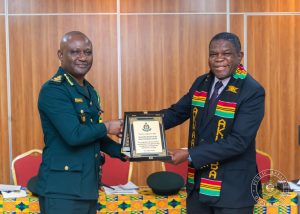
Dr Amoh expressed appreciation for the recognition and reaffirmed the importance of strengthening partnerships between academic institutions and practitioners in the peace and security sector.
He noted that sustained collaboration and the exchange of knowledge and experiences between Ghana and Nigeria were essential to building a more resilient, peaceful and secure West African sub-region
Professor Sulaiman commended the Executive Secretary and the Council for their work in conflict prevention and sustainable peacebuilding.
He said the engagement had offered the scholars valuable insights into Ghana’s peacebuilding architecture, which would enrich their academic research and contribute to policy discussions in Nigeria.
The presentation also provided a platform for the scholars and the Council to examine practical challenges facing peacebuilding institutions and the changing security situation across the West African sub-region.
Judith Twumwaa, ISD