Ghana Navy pushes satellite technology to close maritime surveillance gaps
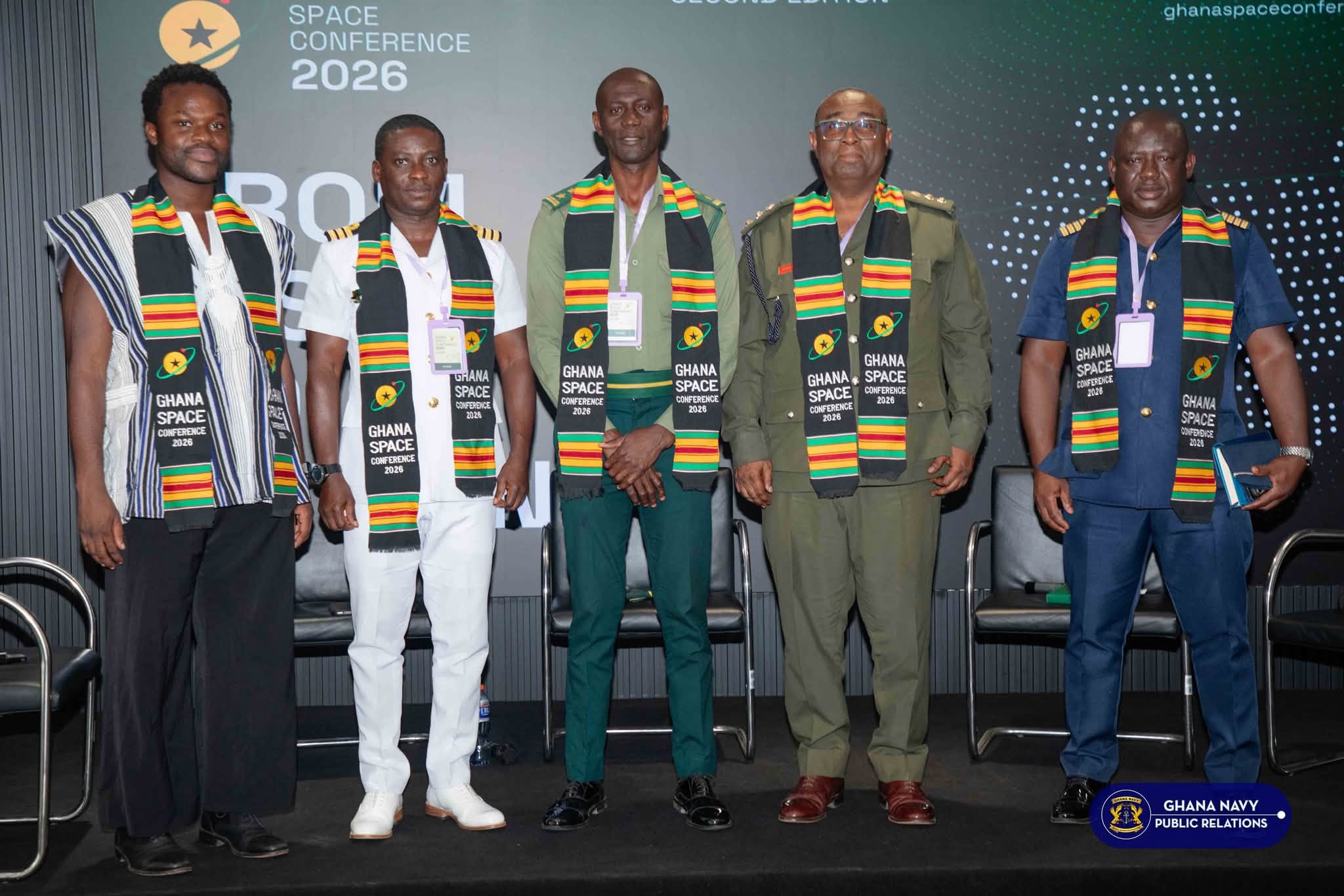
The Ghana Navy has called for the integration of advanced satellite technology into maritime security operations to address surveillance gaps and strengthen the protection of the country’s maritime resources.
Commodore Ben Baba Abdul, Chief Staff Officer at the Naval Headquarters, said space-based technologies would complement existing naval surveillance systems and enable the Navy to monitor activities across Ghana’s maritime domain more effectively.
He said Ghana’s Exclusive Economic Zone (EEZ), covering approximately 225,000 square kilometres, presented significant monitoring challenges, particularly as conventional surveillance assets could not provide continuous coverage.
Commodore Abdul, who was speaking on behalf of Rear Admiral Godwin Livinus Bessing, Chief of the Naval Staff, at the Ghana Space Conference 2026 in Accra, said the surveillance gaps could be exploited by perpetrators of illegal fishing, trafficking and other maritime crimes.
Commodore Abdul noted that Ghana’s maritime domain supported approximately 85 per cent of the country’s trade and hosted critical fisheries and offshore oil and gas activities, making effective surveillance essential to national security and economic stability.
He identified Synthetic Aperture Radar (SAR) and satellite-based vessel identification systems as important technologies that could strengthen the Navy’s existing capabilities.
Such technologies, he said, could detect unusual vessel movements, monitor activities within territorial waters and inland waterways, and provide intelligence on vessels operating without identification signals.
He said incorporating satellite-derived information into naval operations would enhance intelligence-led decision-making and enable the Navy to deploy its operational resources more strategically.
Judith Twumwaa, ISD