Gov’t to Invest in Landfills, Waste Transfer Stations Nationwide
The Government is developing a nationwide sanitation strategy that will provide engineered landfill sites in every regional capital and waste transfer stations in all 261 Metropolitan, Municipal and District Assemblies (MMDAs).
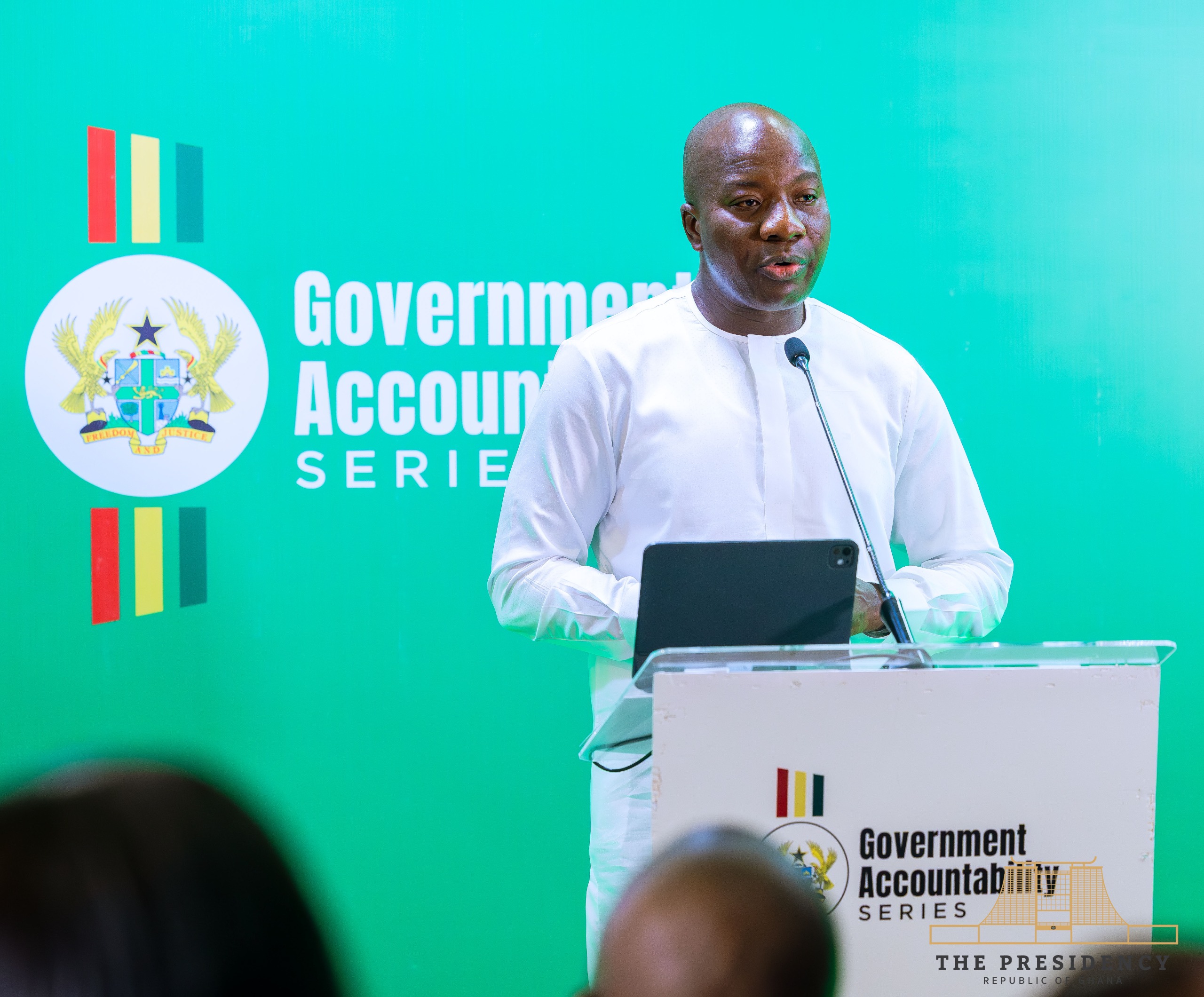
The Minister for Local Government, Chieftaincy and Religious Affairs, Mr Mahama Ayariga, said the plan was part of President John Dramani Mahama’s directive to tackle sanitation and establish an effective waste management infrastructure across the country.
Speaking during the Government Accountability Series, Mr Ayariga said the proposed infrastructure would include three landfill sites in Greater Accra and two each for Greater Kumasi and Sekondi-Takoradi.
He said waste transfer stations would also be constructed in every MMDA to improve the collection, transportation and management of waste.
“As we speak, Minister Ato is waiting for the full cost of the construction of engineered landfill sites across all regional capitals and, in the case of Greater Accra, three landfill sites and two for Greater Kumasi and Sekondi-Takoradi.
“He is also waiting for the cost of the construction of waste transfer stations in every MMDA for his consideration. He has already expressed a commitment to support the development of a national sanitation infrastructure,” he said
Mr Ayariga said the sanitation programme would go beyond the construction of disposal facilities to improve waste collection at the household level.
He said Government would provide financing for waste collection vehicles and tricycles, as well as waste bins for households, with an automated system to collect payments for waste lifting.
“The work will see the financing of waste collection vehicles and tricycles and waste bins in homes. We will ultimately pay for the investment by households’ payment for lifting of waste. We will automate the payment system,” he said.
The Minister said the proposed system was intended to reduce the cost and inconvenience associated with household waste collection while creating a more reliable mechanism for evacuating waste.
“We have to achieve a drastically reduced household spending on waste evacuations whilst making it seamless and more convenient,” he said.
He said Government would work with existing operators in the waste management industry while creating opportunities for additional participation, particularly by women.
“In doing this, we will use the competencies of existing actors in the industry whilst creating space for more women to participate,” Mr Ayariga stated.
The sanitation programme is also expected to generate employment, with the Minister projecting the creation of at least 20,000 permanent jobs in waste management and the circular economy.
“We hope to create not less than 20,000 permanent jobs in the waste management and circular economy,” he said.
Mr Ayariga said the strategy followed the recent nationwide sanitation response after devastating floods, which led President Mahama to establish a Post-Flood Mitigation Committee and declare July 10 and 11, 2026 as National General Cleaning Days.
He said the Ministry subsequently led a coordinated sanitation response involving the 48 Engineers Regiment, Ministries, Departments and Agencies, Regional Coordinating Councils, MMDAs, security services, environmental service providers, private sector operators, traditional authorities, civil society organisations and community volunteer groups.
“This coordinated whole-of-government approach enabled the rapid mobilisation of personnel, equipment and logistics to address the immediate sanitation crisis,” he said.
He said the cleanup exercises had since continued through the institutionalised monthly Sanitation Day and called on citizens to participate actively in the exercise.
“We urge all to rally to the national patriotic duty,” Mr Ayariga stated
Richard Aniagyei, ISD