President Mahama Declares Business Regulatory Reform a National Priority
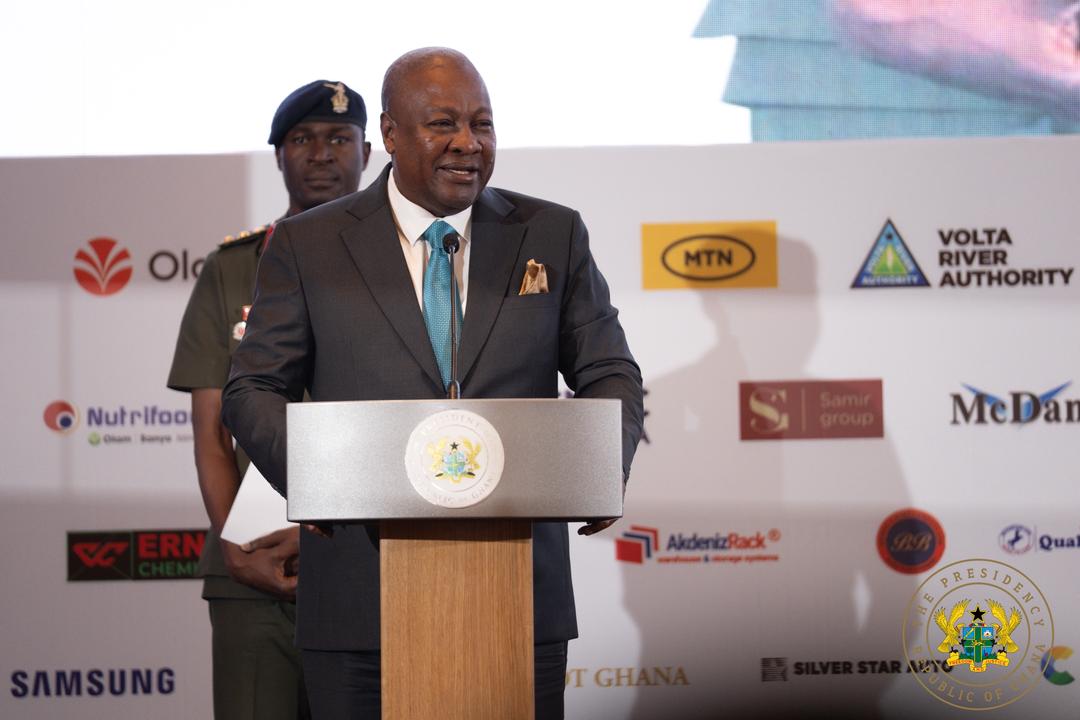
President John Dramani Mahama has called for business regulatory reform in Ghana, telling a gathering of chief executives that unclear procedures, overlapping mandates and avoidable delays are holding back investment and productivity, and that fixing them must be treated as a national priority.
Addressing the 10th Ghana CEO Summit on Thursday, the President said no country can accelerate economic transformation when businesses are slowed down by bureaucratic obstacles.
He said a businessperson should not have to waste productive time moving between public offices to obtain routine approvals, a serious investor should not receive conflicting signals from agencies of the same state, and a young entrepreneur should not walk away from a promising idea simply because formalising a business has become too cumbersome.
“Clear procedures, reduced duplication, transparent rules, and faster service delivery all influence a business’s decision to expand operations, to hire more staff, and compete more effectively in the export space,” he told the summit.
The President said reform, properly understood, is about making the state work better for citizens and businesses alike.
According to him, this means reducing the cost of doing business, building confidence and making Ghana a more competitive environment for production, processing, trading and exporting.
The President also addressed the government’s work on special economic zones, saying industrial zones must not become isolated enclaves cut off from the wider economy.
He said well-designed zones should connect Ghanaian suppliers to larger industries, facilitate technology transfer, strengthen exports, attract investment and create decent jobs.
The call for regulatory reform came as President Mahama launched the CEO Government Compact 2026, a structured framework committing both government and the private sector to accountability, measurable outcomes and a working partnership aimed at driving investment, production and job creation.
Richard Aniagyei, ISD