NDPC seeks stronger Government Industry partnership on Food and Nutrition Policies
The Director General of the National Development Planning Commission (NDPC), Dr Audrey Smock Amoah, has called for stronger collaboration between government and industry in shaping Ghana’s food and nutrition policies.
She said meaningful consultation and stakeholder participation were necessary to ensure that policies addressed concerns from all sectors and secured broad ownership for effective implementation.
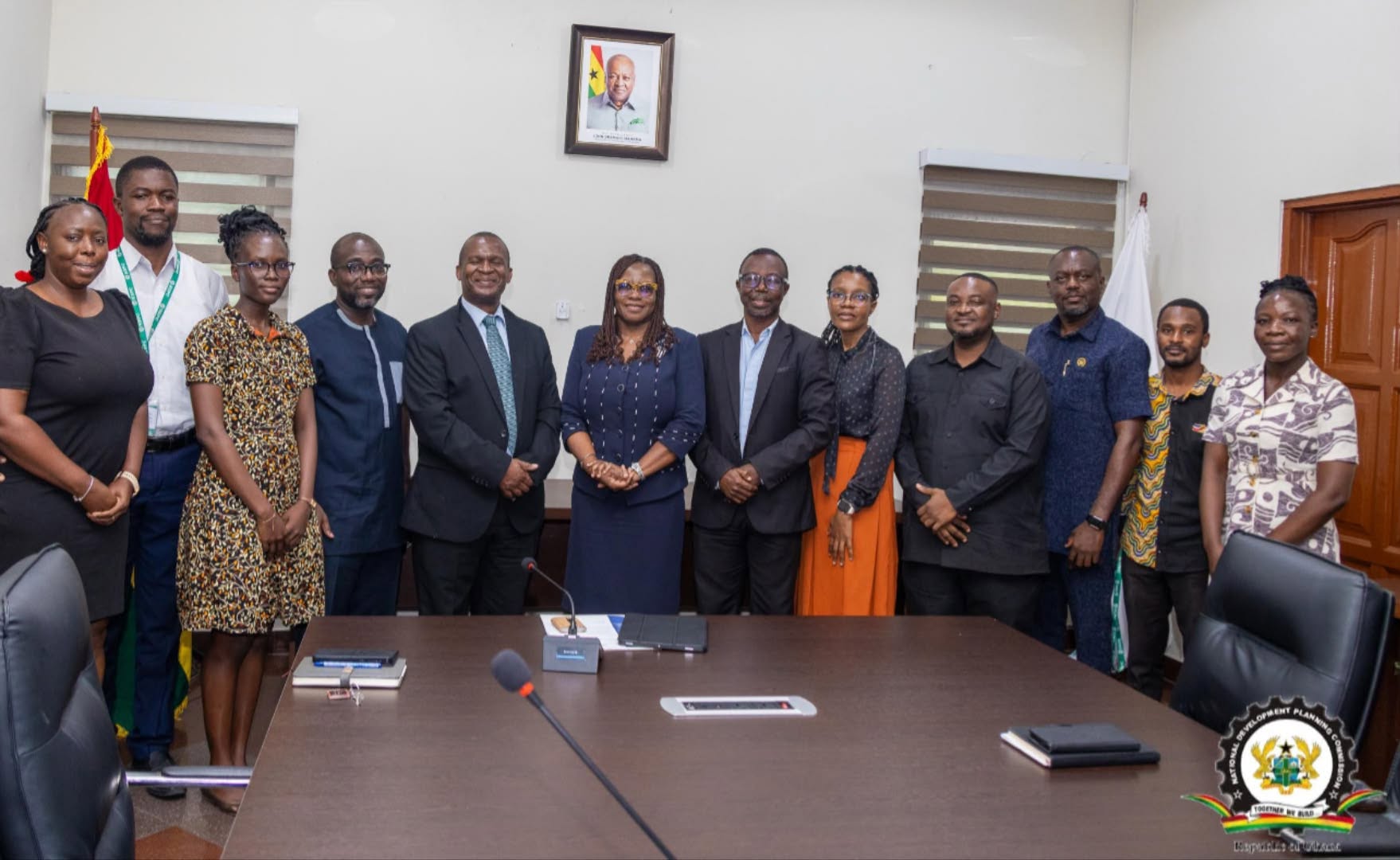
Dr Amoah made the call on Tuesday, when the NDPC received a high level delegation from the Association of Ghana Industries (AGI) and The Coca Cola Company to discuss Ghana’s evolving food and nutrition policy environment.
She said the Commission remained committed to working with stakeholders to develop policies that were responsive to national needs while taking into account the realities of businesses and other implementing institutions.
Dr Amoah explained that the NDPC was mandated to support successive Presidents in preparing the Coordinated Programme of Economic and Social Development Policies, which sets out the government’s vision and priorities for national development.
She said the Commission also prepared the Medium Term National Development Policy Framework (MTNDPF), which guides Ministries, Departments and Agencies in aligning their plans with national development priorities.
The current framework covers the period 2026 to 2029 and provides the basis for coordinating development planning, monitoring implementation and reporting on Ghana’s development progress.
Presenting Ghana’s evolving food and nutrition policy environment, Principal Planning Analyst at the NDPC, Mr Nii Odoi Odotei, said the country faced a triple burden of malnutrition comprising undernutrition, micronutrient deficiencies and rising overweight and obesity.
He said available data showed that, as at 2022, 17.4 per cent of children were stunted, while six per cent experienced wasting and Anemia also affected about 49 per cent of children under five and 41 per cent of women of reproductive age.
Mr Odotei attributed changing dietary patterns to factors including urbanisation, changing incomes, inflation, climate pressures and increased exposure to highly processed foods.
He said addressing the challenges required a whole food systems approach covering food production, storage, transportation, markets, consumption and food waste.
Mr Odotei said Ghana was developing four complementary policy interventions to improve the food environment. These were Food Marketing Restrictions, Front of Pack Nutrition Labelling, Food Related Fiscal Policy and Public Food Provisioning.
Senior Director and Public Policy Lead, Africa, The Coca Cola Company, Mr Shiletsi Makhofane, welcomed the Commission’s openness to consultation and said the Association was ready to engage throughout the policy process.
He said regulatory compliance could have cost implications for businesses, particularly in areas involving imported products, packaging, labelling and branding.
Mr Makhofane called for clarity on proposed standards and thresholds to enable businesses to understand the requirements and prepare adequately for implementation.
Joyce Adwoa Animia Ocran, ISD