Ghana Steps Up Response to Emerging Synthetic Drug Threat
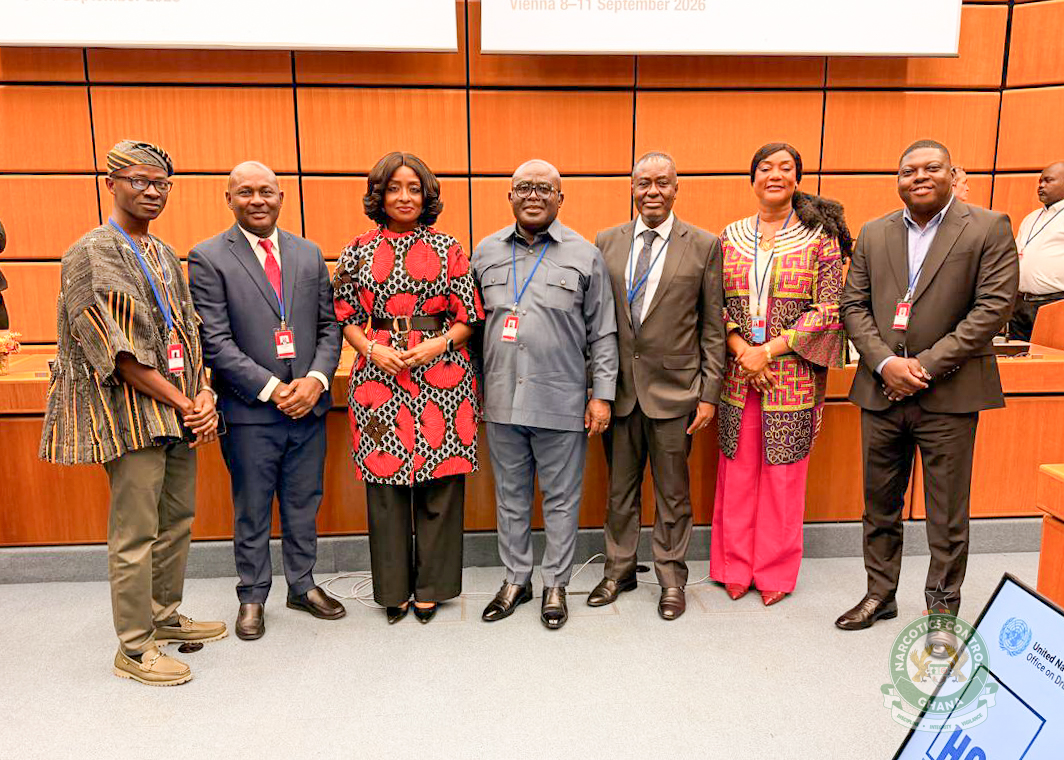
Ghana has intensified efforts to confront the changing nature of the illicit drug trade, with the Narcotics Control Commission (NACOC) increasing intelligence-led operations, forensic investigations and cross-border cooperation to disrupt increasingly sophisticated criminal networks.
The Director-General of NACOC, Major General Maxwell Obuba Mantey, disclosed this at the 33rd Meeting of Heads of National Drug Law Enforcement Agencies, Africa (HONLAF) in Vienna, Austria, where he outlined Ghana’s response to the evolving drug trafficking threat.
He said criminal networks were increasingly moving beyond traditional narcotic drugs to the trafficking and diversion of pharmaceutical and synthetic substances, including tramadol and tapentadol.
The development, he said, required drug law enforcement agencies to strengthen their operational capabilities and deepen cooperation to keep pace with the changing methods of organised crime groups.
Major General Mantey reported that intelligence-led operations undertaken by NACOC and partner security agencies had resulted in 217 arrests and 165 prosecutions, with more than 8.5 tonnes of assorted narcotic drugs and 45.4 million tramadol tablets intercepted during the period under review.
He said the Commission was also strengthening digital intelligence, forensic investigations and financial investigations to target not only drug traffickers but also the criminal proceeds generated from the illicit trade.
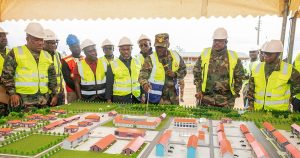
As part of efforts to improve forensic capabilities, he disclosed that construction had commenced on a dedicated forensic laboratory to facilitate the timely identification and analysis of suspected narcotic drugs and related exhibits.
He further highlighted Ghana’s growing cooperation with regional partners, including the signing of a counter-narcotics cooperation agreement between NACOC and Nigeria’s National Drug Law Enforcement Agency (NDLEA). Ghana has also signed Memoranda of Understanding with the Drug Enforcement Commission of Zambia and the Government of Burkina Faso.
According to him, NACOC continues to cooperate with neighbouring countries, particularly Togo, in intelligence sharing and efforts to facilitate the arrest of persons under investigation.
Beyond enforcement, Major General Mantey said Ghana was also investing in measures to reduce demand for illicit drugs and support persons affected by substance use disorders.
He said prevention and public education programmes had reached approximately 495,000 people, while 30 treatment centres had provided support to 1,179 persons affected by substance use disorders. In addition, 800 Senior High School Guidance and Counselling Coordinators had been trained to strengthen prevention, early identification and referral of persons at risk of substance abuse.
He called for stronger regional and international cooperation to prevent organised criminal networks from exploiting national borders and institutional gaps.
He said Ghana remained committed to working with the Economic Community of West African States (ECOWAS), the African Union (AU), the United Nations Office on Drugs and Crime (UNODC) and other international partners to build a coordinated response to the evolving drug threat.
The Director-General said the increasing use of synthetic and pharmaceutical substances by criminal networks underscored the urgency for countries to share intelligence, coordinate investigations and strengthen their collective capacity to dismantle organised crime groups operating across borders.
Judith Twumwaa, ISD