National Household Registry Profiles Over 11.2 Million Ghanaians

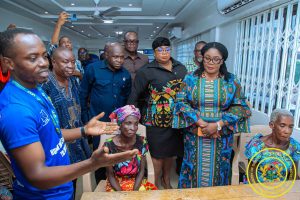
The National Household Registry has profiled more than 11.2 million Ghanaians across the country, providing the government with a single database to better identify people who need social protection support.
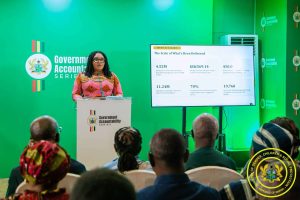
The Ministry of Gender, Children and Social Protection, Dr Agnes Naa Momo Lartey, said the data collection had been completed in all 16 regions, covering 2,906,288 households and 11,244,027 individuals.
She disclosed this at the government accountability series on Wednesday in Accra.
She said the Registry contains information on 508,870 households classified as extremely poor for social protection targeting.
According to her, the National Household Registry had become the evidence base for the country’s social protection system and would help improve the targeting of programmes for vulnerable groups.
“For the first time, Ghana has a single, reliable national database to target social protection,” she said.
The Minister explained that the Social Protection Act, 2025 (Act 1148), and the Social Protection Regulations, 2026 (L.I. 2521), had established the legal framework for using the Ghana National Household Registry as the official mechanism for targeting social protection nationwide.
Dr Lartey said the approach would replace fragmented beneficiary lists used by individual programmes and provide a common basis for identifying eligible beneficiaries.
“The Registry is already supporting the reassessment of beneficiaries under the Livelihood Empowerment Against Poverty (LEAP) programme,” she said.
“The Ministry said 350,000 beneficiary households had been reassessed using data from the National Household Registry, resulting in more than 226,000 households graduating from extreme poverty.
The LEAP programme ceiling has also been increased from 350,000 to 450,000 households,” she added
Dr Lartey said the Ministry would continue to make the Registry available to institutions and development partners undertaking social protection interventions for vulnerable groups.
She said the availability of reliable household data would support better targeting of social protection programmes and help ensure that assistance reaches eligible beneficiaries.
Irene Wirekoaa Osei, ISD