Dr Pamela Graham commits to building on Ghana Audit Service strengths rather than imposing change from outside

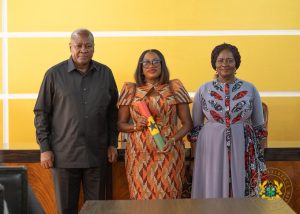
The newly sworn-in Auditor-General, Dr Pamela Graham, has committed to working alongside dedicated professionals within the Ghana Audit Service to strengthen existing systems and build on what already works, rather than imposing sweeping change from the outside.
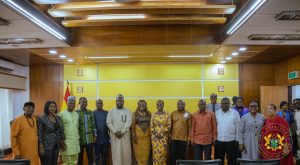
Dr Graham made the commitment in her inaugural address at the Presidency, following her swearing-in as the first woman to hold the office of Auditor-General in the history of the Republic.
She said while she brought 25 years of private sector experience to the role, she was acutely aware that public service carried its own complexities, and that the path to a stronger institution lay in collaboration rather than unilateral transformation.
“It is imperative that I work hand in hand with all dedicated professionals within the service to strengthen what already exists, improve where necessary, and continue to build an institution that commands confidence and trust,” Dr Graham said.
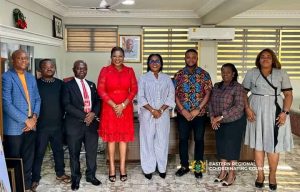
She told colleagues in the Audit Service that the moment of her appointment belonged to all of them, and that the credibility of the institution would be shaped by their daily decisions, the rigour of their work, the standards they refused to compromise and the courage to insist on what was right even when it was inconvenient.
Dr Graham said she was coming into the role with a fresh perspective grounded in professional rigour, global standards and a strong culture of performance and results, and that she saw her appointment as an opportunity to bring that discipline into the public financial management space without losing sight of the institutional knowledge and dedication already present within the service.
She drew on her two decades of managing various engagements under the Office of the Auditor-General to acknowledge that she was not arriving without context, saying she understood the terrain and intended to use that understanding to guide the changes she believed were necessary.
Dr Graham warned that errors in public financial records were truly harmful, citing a recent IMANI Africa policy brief titled The Integrity of the Public Ledger and the Cost of Error, which she said reminded the country that inaccuracies in the public ledger shaped decisions, influenced priorities and could quietly undermine the systems citizens relied on.
“When the public ledger loses its integrity, the nation pays a price, not only in financial terms, but in trust,” she said.
She welcomed the establishment of dedicated high courts to handle infractions arising from the Auditor-General’s report, describing it as a step in the right direction and saying that accountability had to be enforced in a timely and credible manner, because when findings were not acted upon, the system weakened further.
Dr Graham closed her address with a direct commitment to the President and the people of Ghana, pledging to protect the integrity of the public space, strengthen confidence in institutions and contribute in a practical and measurable way to restoring trust in the systems that served the nation.
“I will serve with diligence, with fairness, and with integrity,” she said.
Richard Aniagyei, ISD