Energy Minister Charges Institutions to Align Programmes with Clean Energy Agenda
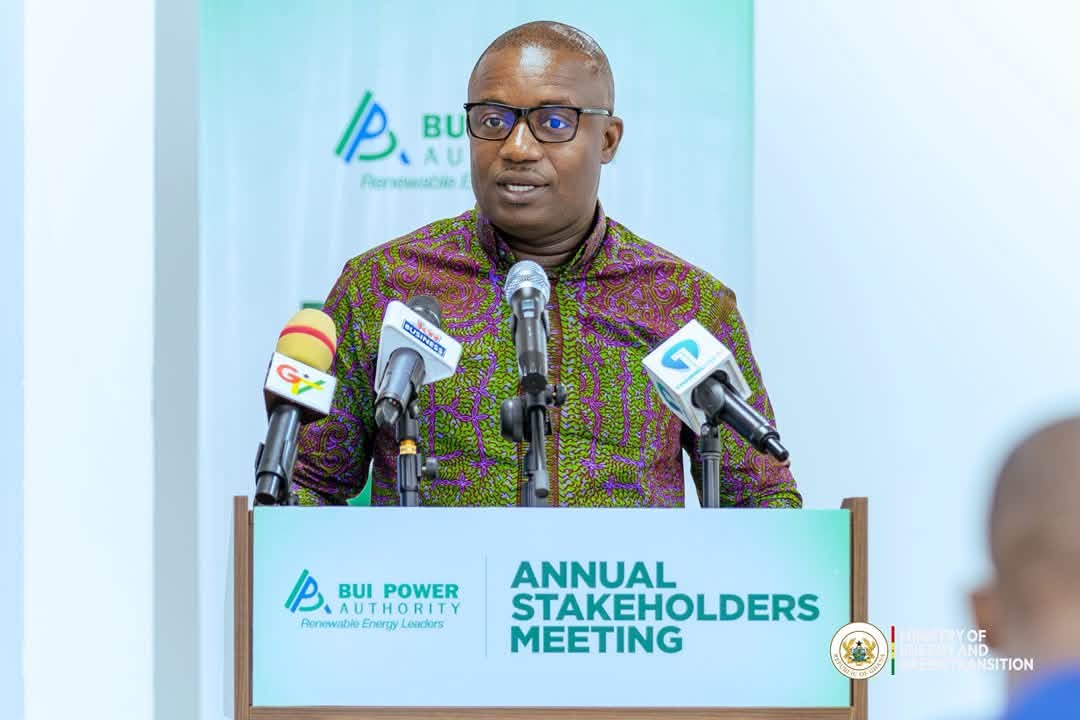
The Minister for Energy and Green Transition, Dr John Abdulai Jinapor, has urged all institutions within the energy sector to align their programmes and investments with the national clean energy agenda.
He said the government remained committed to achieving at least 10 per cent renewable energy penetration in the country’s electricity generation mix by 2030, and institutions within the sector had an important role to play in achieving the target.
Dr Jinapor made the call at the Annual Stakeholders Meeting of the Bui Power Authority (BPA) in Accra, where he outlined government’s plans to increase renewable energy capacity while improving energy security and sustainability.
“Government remains firmly committed to achieving at least ten per cent renewable energy penetration in the national electricity generation mix by 2030, and every institution within the sector must align its programmes and investments with this national objective,” he said.
He noted that government has established the necessary policy and regulatory framework to encourage investment in clean energy, strengthen grid resilience and expand access to electricity.
He cited the Renewable Energy Master Plan, the amended Renewable Energy Act and the National Energy Transition Framework as key instruments guiding Ghana’s transition towards cleaner energy sources.
Dr Jinapor said the amended mandate of the Bui Power Authority under Act 1046 placed the institution at the centre of Ghana’s renewable energy expansion efforts.
He tasked the Authority to continue leading the development of clean energy projects, particularly in solar power generation and energy storage.
Among the priority projects he mentioned were the completion of additional phases of the solar programme at the Bui Generating Station, the 50-megawatt peak Yendi Solar Project and the development of new solar facilities with battery storage systems in parts of the northern regions.
The Minister said government expected ongoing 145-megawatt peak solar projects to become operational this year, with continued policy support to accelerate renewable energy development.
He also highlighted the importance of Battery Energy Storage Systems (BESS), saying the technology would improve grid stability, support the integration of intermittent renewable energy and enhance the reliability of electricity supply.
“Ghana’s renewable energy contribution currently remains relatively low, estimated at one to two per cent of the national electricity generation mix when large hydro sources are excluded,” he added.
According to the minister, achieving the 2030 target would require increased investment in renewable energy infrastructure, improved regulatory support and stronger collaboration among institutions within the energy sector.
He said the government would continue working with sector institutions and other stakeholders to expand renewable energy capacity and build a more sustainable and resilient electricity system.
Irene Wirekoaa Osei, ISD