Engineering Works Commence to Restore Lafa Basin’s Drainage Capacity
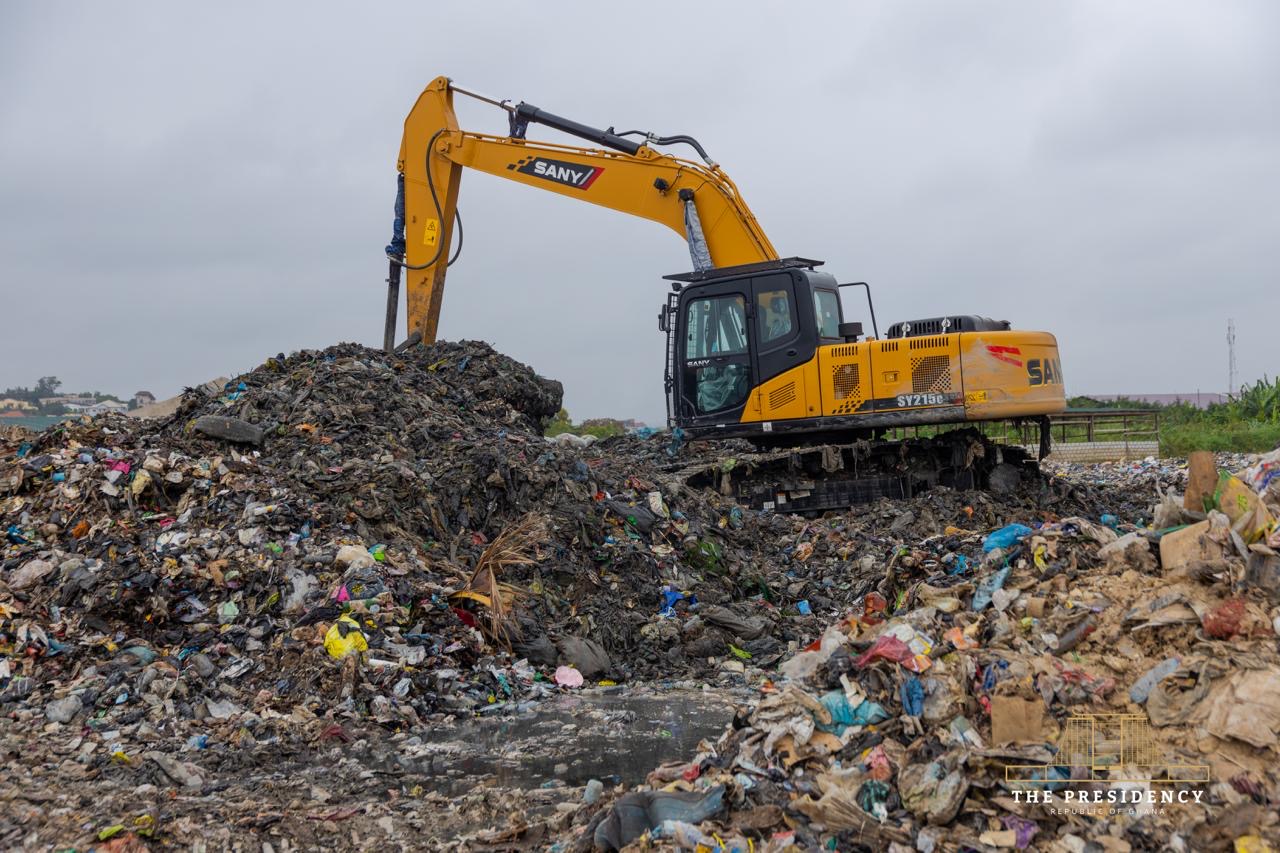
The Government has commenced a major operation to reclaim the Lafa water retention basin at Mallam in the Greater Accra Region as part of efforts to curb perennial flooding in Mallam, Weija, Blue Lagoon, Dansoman and surrounding communities.
The exercise, being carried out by the 48 Engineer Regiment of the Ghana Armed Forces, involves breaking up tonnes of compacted solid waste that have accumulated in the basin over several years before dredging and transporting the debris to a designated landfill site at Nsawam.
The intervention forms part of the nationwide flood mitigation programme being coordinated by the Post-Flood Mitigation Task Force, led by the Deputy Chief of Staff in charge of Operations, Mr Stan Xoese Dogbe.
Officials say the reclamation will restore the basin’s natural capacity to retain storm water and reduce the risk of flooding that devastated several communities following the torrential rains of June 29.
The Head of Drainage at the Ghana Hydrological Authority, Ing. Richard Kofi Amekor, described the operation as one of the most challenging flood mitigation projects undertaken in the area.
He explained that years of deliberate dumping of solid waste, boulders and laterite into the basin had heavily silted the reservoir, preventing rainwater from flowing naturally into it.
According to him, the Lafa stream originates from Mallam-Gbawe Zero and channels water through Santa Maria, Atieku, Pallas Town, Alhaji Tabora and McCarthy Hill before draining into the basin and eventually into the sea.
However, the obstruction of the basin caused water to backflow during the June 29 downpour, leading to severe flooding across Blue Lagoon, the Mallam-Gbawe corridor and parts of the Dansoman enclave.
Ing. Amekor said restoring the basin would significantly reduce the impact of floods, although it may not eliminate flooding entirely due to the area’s topography and the volume of runoff from upstream communities.
He also called for the demolition of all illegal structures within the water retention area, noting that buildings erected inside the basin had substantially reduced its storage capacity.
“Once the illegal structures are removed, the Hydrological Authority will work with the Weija-Gbawe Municipal Assembly to secure the banks and ensure continuous monitoring,” he said.
Commander of the 14 Engineer Brigade, Brigadier General Richard Kinney, said the immediate task was to loosen the compacted waste material to facilitate its removal.
He noted that the waste had been capped with laterite over the years to create land for illegal sale and development, making excavation particularly difficult.
Brig. Gen. Kinney said haulage of the excavated material would be undertaken at night to minimise traffic disruptions, adding that the overall dredging and evacuation exercise was expected to take several months.
He urged residents to desist from dumping refuse into the basin and warned individuals involved in encroachment activities to stop immediately.
The Director General of Joint Operations of the Ghana Armed Forces and Coordinator of the Flood Mitigation Works, Brigadier General Forster Okae-Yeboah, said similar operations were ongoing at Oyarifa, East Legon and the Kpeshie Lagoon, with additional locations scheduled for intervention.
He announced that work would begin next week around the Kpeshie-Laboma Beach enclave to reopen the channel linking the lagoon to the sea, improving the free flow of storm water.
Brig. Gen. Okae-Yeboah said government had fulfilled its commitment by providing funding and equipment for the exercise but appealed to the private sector to support the nationwide flood mitigation initiative.
He emphasised that sustained public cooperation, particularly by preventing illegal dumping and encroachment on waterways, would be essential to protecting lives and property from future flooding.
Richard Aniagyei, ISD