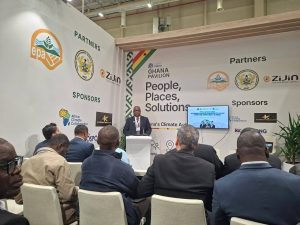
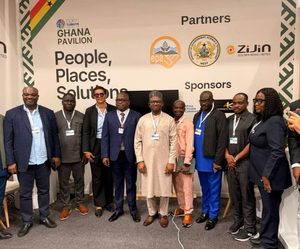
Ghana showcases locally made products at COP31 to promote value addition
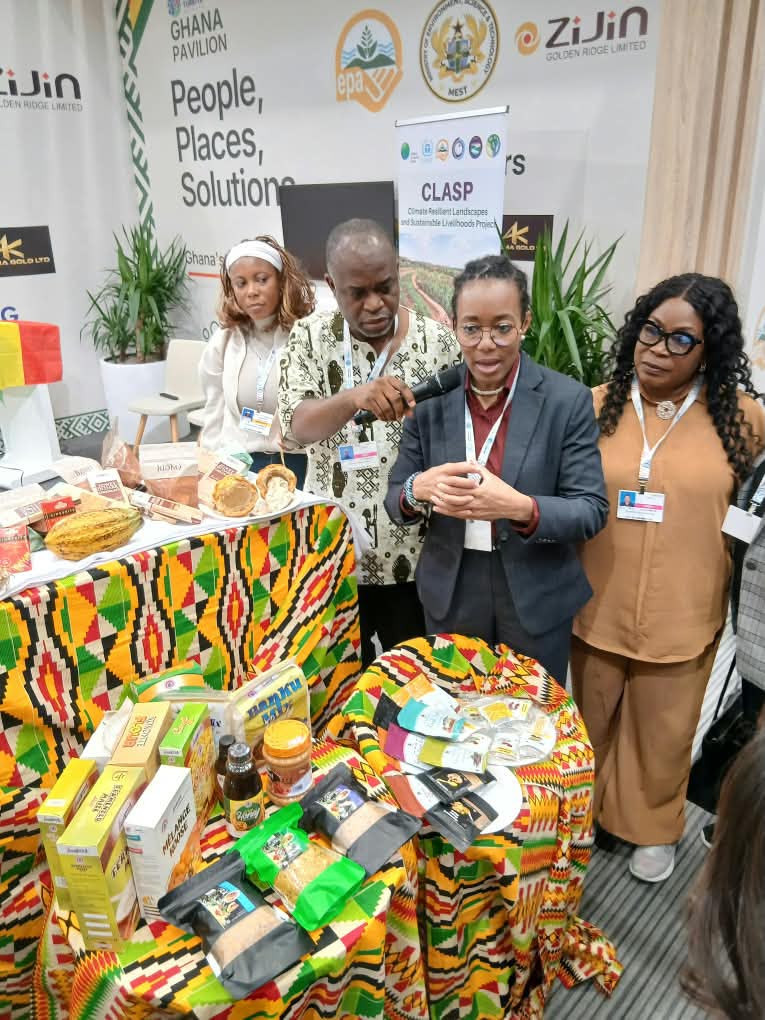
The Minister of Environment, Science and Technology, Dr Zanetor Agyeman-Rawlings, has highlighted the importance of science, research and local manufacturing in turning Ghana’s natural resources into competitive products for local and international markets.
She said Ghana’s participation in international climate engagements must go beyond discussions of environmental commitments and show how local industries, scientific innovation, and value addition can support sustainable economic development.
The Minister made the remarks during an exhibition of Ghanaian cocoa and other locally developed products at the 31st United Nations Climate Change Conference (COP31) in Antalya, Turkey.
The exhibition featured a range of products developed by the Council for Scientific and Industrial Research (CSIR), particularly its Food Research Institute, including chocolate products and cashew nuts coated with honey and chocolate.
Dr Agyeman-Rawlings said the products demonstrated the potential of Ghana’s research institutions and local enterprises to add value to the country’s agricultural resources and create opportunities across the production and marketing chain.
She explained that Ghana’s push for stronger climate commitments and increased financing was not merely about securing figures at negotiation tables but ensuring that the outcomes translated into tangible benefits for people, businesses and communities.
The Minister noted that decisions taken at climate negotiations had implications for food production, livelihoods, consumers and the wider value chain, making it important to consider the people whose lives were affected by such commitments.
She said showcasing locally manufactured products at COP31 was also intended to demonstrate the economic opportunities that could emerge from investing in research, innovation and domestic processing.
The display attracted interest from conference participants, some of whom expressed appreciation for the quality and variety of the products and requested contact details to explore possible business connections.
The engagement provided an opportunity to promote Ghanaian products to an international audience while highlighting the contribution of scientific research to industrial development.
Ghana’s participation in COP31 forms part of its broader efforts to advance climate action while promoting sustainable development, economic resilience and opportunities for local industries.
Judith Twumwaa, ISD