Ghana’s historic ties with Fisk University strengthened as Ambassador Victor Smith visits
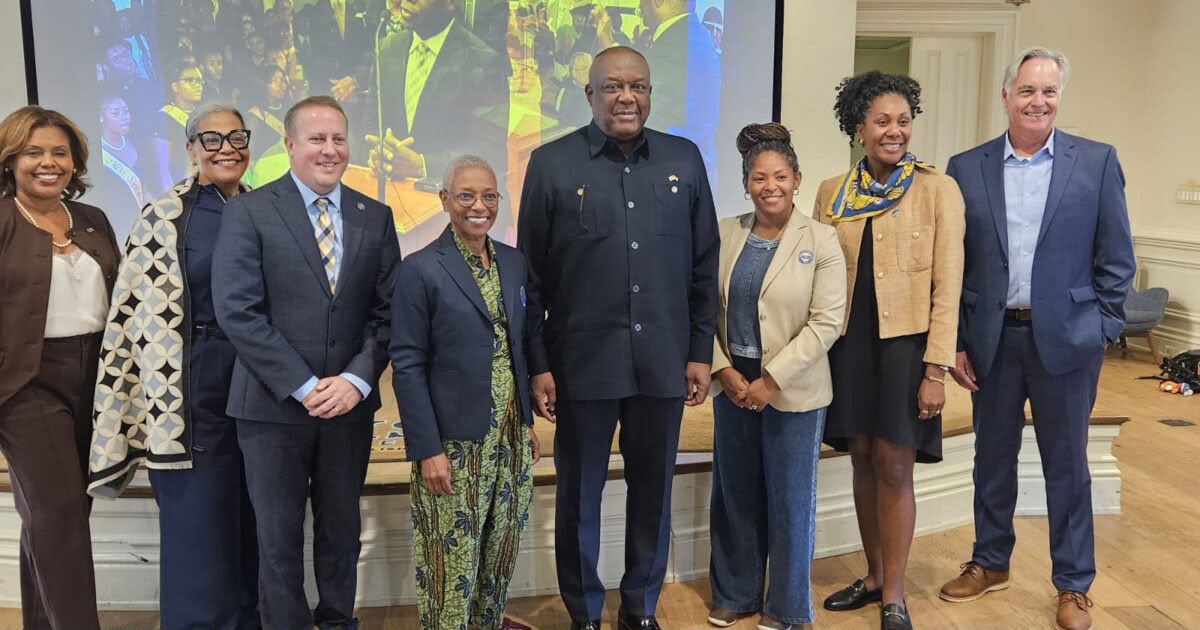
Ghana’s longstanding academic and cultural ties with Fisk University in the United States have received renewed attention following a historic visit by Ghana’s Ambassador to the US, Victor Smith, to the institution in Nashville, Tennessee.
The October 30, 2026 visit, the first by a Ghanaian Ambassador to the university, provided an opportunity to reflect on more than a century of intellectual exchange, shared Pan-African heritage and educational cooperation between Ghana and the historically Black university.
Hosted by Fisk University President Agenia Clark and members of the faculty, the meeting explored the institution’s longstanding relationship with Ghana, which dates back to 1882, when Fisk dedicated Livingstone Missionary Hall to train African American teachers, medical professionals and religious scholars for service in West Africa, particularly Ghana.
Faculty presentations traced how the relationship developed into academic collaboration in the 1920s, when Black American educators and sociologists from Fisk travelled to Ghana to help design higher education programmes. The exchanges subsequently attracted generations of Ghanaian students to the Nashville institution.
Another important chapter in the relationship was established under Dr Charles Johnson, Fisk’s ninth president and its first Black leader. In 1928, he established the Department of Social Sciences and directed faculty research towards Ghana’s anti-colonial movement, creating an archive that continues to attract scholarly interest.
The university’s connection with Ghana is also reflected in its campus murals by renowned African American artist Aaron Douglas, which incorporate Ghanaian imagery, heritage and symbolism.
The visit also revisited the connection between Ghana’s first President, Dr Kwame Nkrumah, and renowned Pan-Africanist Dr W.E.B. Du Bois, a Fisk alumnus. Du Bois eventually relocated to Ghana at the invitation of President Nkrumah to undertake work preserving and documenting African heritage in Accra. The two had been introduced on the Fisk campus before Ghana attained independence in 1957.
A major part of the engagement was dedicated to the legacy of the late Ghanaian musician and academic, Dr Paul Kwami, whose contribution to the university’s celebrated Fisk Jubilee Singers further strengthened the cultural relationship.
Dr Kwami enrolled at Fisk in 1983 and joined the internationally renowned ensemble, eventually becoming its first Ghanaian director in 1994. He devoted 28 years to preserving and advancing the group’s musical heritage.
Founded in 1871 by formerly enslaved students to raise funds to save the university from financial difficulties, the Jubilee Singers became internationally recognised under successive leadership. During Dr Kwami’s tenure, the group performed at Carnegie Hall and the White House, received the National Medal of Arts in 2008 and won its first Grammy Award in 2021.
In 2007, Dr Kwami led the ensemble on a historic visit to Ghana, where the singers performed at Elmina Castle and the National Theatre, connecting the group with the country’s history and their ancestral heritage. He died in 2022.
The university’s relationship with Ghana has also continued through student exchanges. In 2023, Fisk selected Ghana as the destination for its honours programme’s international study tour, with faculty members noting that the country matched the students’ energy, sense of place and outlook on global progress.
The delegation, comprising 25 students and five faculty members, visited several locations, including Accra, Cape Coast Castle, the Volta Region, the National Museum, James Town, Kakum National Park, the W.E.B. Du Bois Centre and the University of Ghana.
Ambassador Smith’s visit was facilitated by the Conscious Group, led by Dr Addae, and is expected to further draw attention to the historic educational, intellectual and cultural connections between Ghana and Fisk University.
Mrs Ethel Cudjoe Amissah
ISD, Washington