NDPC assesses 78 district development plans to strengthen population-responsive planning
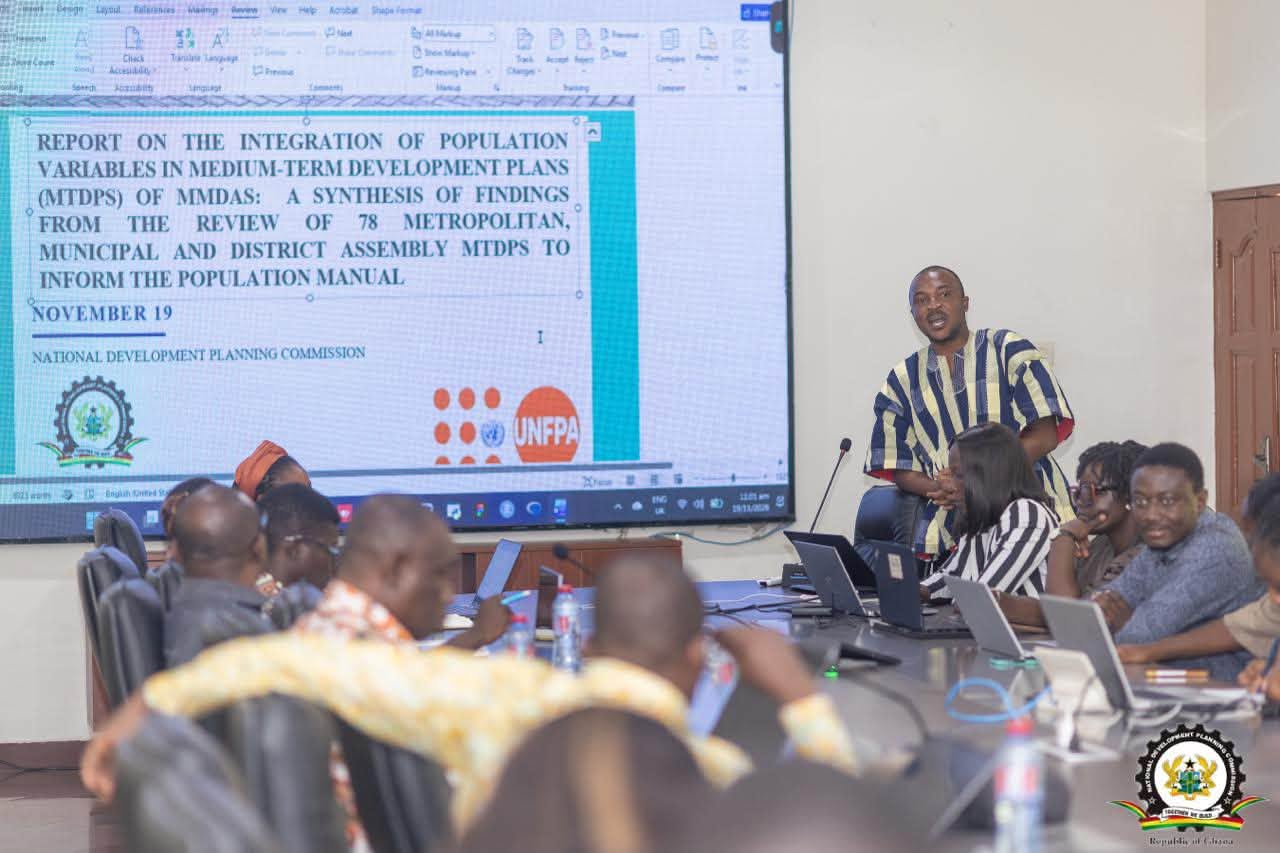
The National Development Planning Commission (NDPC) is reviewing how population changes are reflected in local development priorities, following an assessment of 78 development plans prepared by Metropolitan, Municipal and District Assemblies (MMDAs) across the country.
The exercise is to strengthen the integration of population dynamics into local development planning to ensure that public investments and social interventions respond to the changing needs of communities.
The assessment covered the 2026–2029 Medium-Term Development Plans (MTDPs) of 78 MMDAs across all 16 regions and examined how population variables had informed the identification of development priorities and the planning of essential services.
The NDPC, in collaboration with the National Population Council (NPC), organised a validation meeting to review the findings and recommendations of the assessment.
Speaking on behalf of the Director-General of the NDPC, Dr Sandra Amankwa said effective development planning must be informed by a clear understanding of the population it was intended to serve.
She explained that population changes had direct implications for the demand for education, healthcare, employment, housing and social protection, making their consideration essential in designing effective development interventions.
She said incorporating population dynamics into development plans would help ensure that development priorities reflected the actual circumstances and needs of communities.
Speaking on behalf of the United Nations Population Fund (UNFPA), Mr Benjamin Addo Boahene reaffirmed the organisation’s support for the exercise and commended the NDPC for its leadership and continued partnership.
He said integrating population dynamics into development planning went beyond a technical requirement, describing it as an important step towards making governance more responsive to the needs of the people.
The Chief Analyst at the NDPC, Mr Malcom Yendaw, who led the technical session, presented the structure and objectives of the report, including the methodology, scope, key findings and recommendations.
The recommendations are expected to guide MMDAs in improving the integration of population variables into subsequent development plans and ensuring that local interventions are better aligned with demographic realities.
Judith Twumwaa, ISD