NDPC, GMet Partner to Mainstream Climate Data into Ghana’s Development Planning
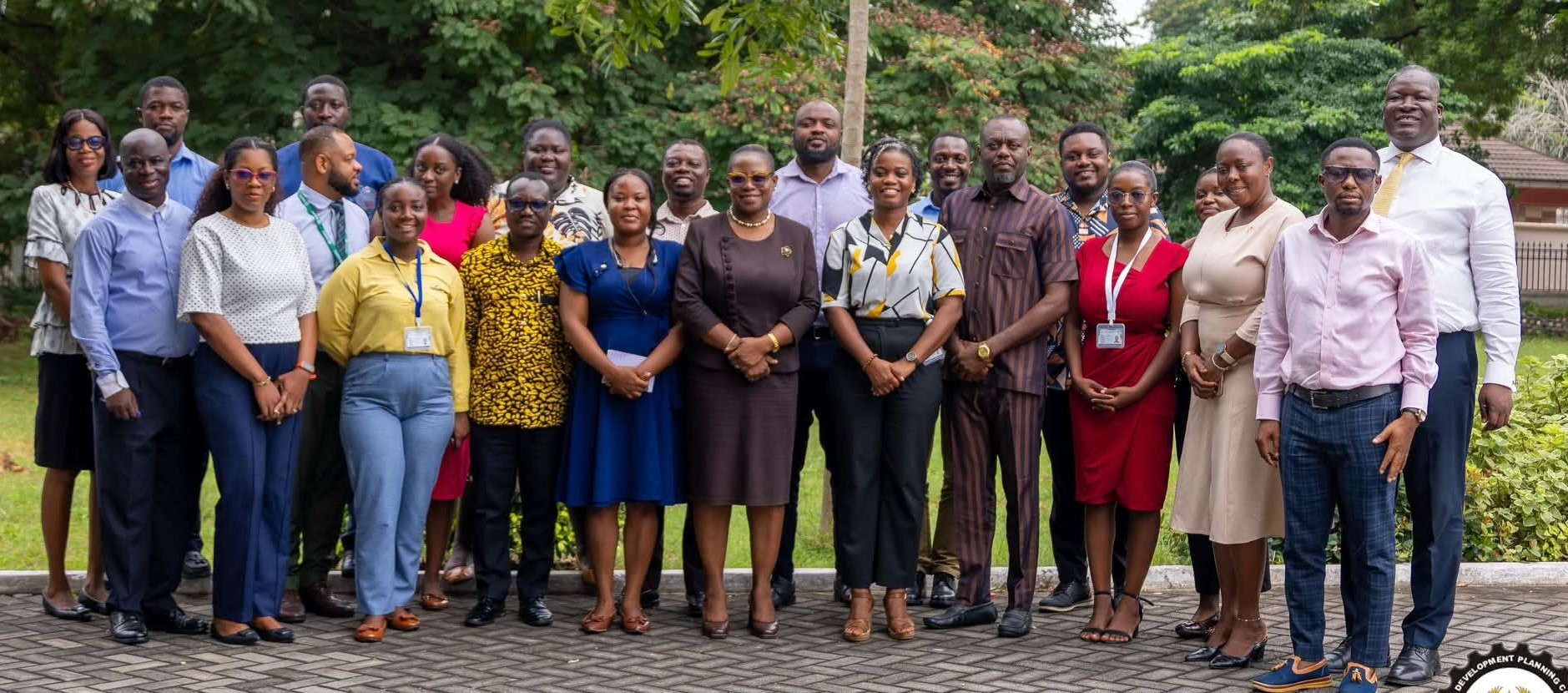
The National Development Planning Commission (NDPC) is set to deepen collaboration with the Ghana Meteorological Agency (GMet) to integrate climate science into Ghana’s long-term development planning, following a presentation on the newly launched Ghana Climate Atlas and its potential to guide evidence-based policymaking.
During the presentation on Monday, GMet demonstrated how the Ghana Climate Atlas can support national and local development planning, public investment decisions, climate risk management and policy formulation through the use of historical climate data and future projections.
The Principal Meteorologist at GMet, Ms Maureen Abla Ahiataku, said the Agency’s core mandate is to provide weather and climate services that safeguard lives and property while supporting Ghana’s socio-economic development.
She explained that GMet delivers a range of services, including marine and aviation forecasting, numerical weather prediction, public weather updates and the provision of climate data.
She described the Ghana Climate Atlas as the country’s first comprehensive long-term climate projection platform.
Ms Ahiataku explained that although the Atlas was developed with international support, its technical infrastructure was built and is managed by GMet personnel, ensuring the platform’s long-term sustainability.
According to her, the Atlas enables users to assess projected changes in rainfall, temperature and sea-level rise under low, medium and high greenhouse gas emission scenarios. It also provides climate projections for different time horizons, including 2040, 2060 and the end of the century.
She noted that the Agency is expanding the delivery of weather alerts and warnings through multiple channels, including a WhatsApp alert platform, the Common Alerting Protocol system and ongoing engagements with telecommunications companies to introduce location-specific weather alerts for mobile phone users.
She added that proposed amendments to GMet’s governing legislation are expected to strengthen the Agency’s mandate and improve the dissemination of authoritative weather warnings and climate information nationwide.
On her part, the Director-General of NDPC, Dr Audrey Smock Amoah, welcomed the presentation, describing it as timely as Ghana prepares to develop and implement its long-term national development plan.
She stressed that climate information has become indispensable for effective national planning, noting that GMet’s work supports all five dimensions of national development: economic, social, environmental, governance and international relations.
Dr Amoah encouraged GMet to align relevant climate indicators with the Commission’s forthcoming national results framework and Ghana’s Sustainable Development Goals reporting processes.
She said stronger collaboration between the two institutions would facilitate the development of practical applications demonstrating how the Ghana Climate Atlas can inform policies, development plans, public investments and climate resilience initiatives across sectors.
Dr Amoah disclosed that the Commission would formally engage GMet to define the scope, implementation arrangements and expected outcomes of the partnership.
According to her, the collaboration would strengthen institutional capacity to access, interpret and apply climate information while supporting the mainstreaming of the Ghana Climate Atlas into Ghana’s national development planning framework.
Deborah Narkie Nartey, ISD