Nana Oye Calls for Responsible Use of AI In Public Service
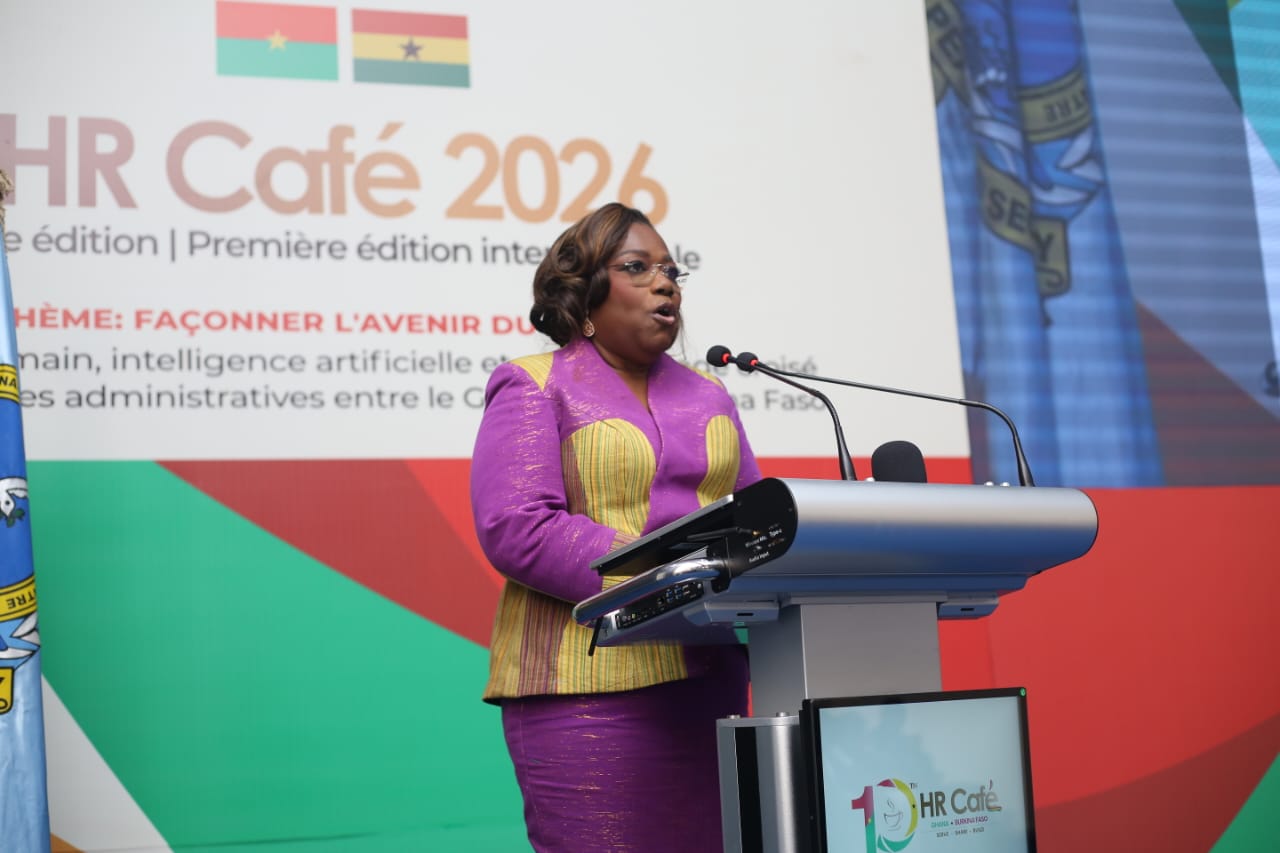
Deputy Chief of Staff in charge of Administration at the Office of the President, Nana Oye Bampoe Addo, has called for the responsible and human-centred use of Artificial Intelligence (AI) in Ghana’s public service.
She said while AI and other modern technologies could improve productivity and service delivery, their adoption should not undermine human judgement or create excessive dependence on technology.
“Technology must remain the servant, and the human being the master, never the reverse,” she stated.
Nana Oye made the call in Accra on Monday, when she delivered the keynote address at the opening ceremony of the 10th edition of the HR Café, the first international edition of the programme involving Ghana and Burkina Faso.
She said the future of work required public institutions to embrace digital transformation while ensuring that people remained at the centre of administrative processes.
According to her, AI had the potential to reduce bureaucratic bottlenecks, improve productivity and support better decision-making across public institutions.
She cited the digitalisation of passport applications and the Ghana Revenue Authority’s AI trade valuation platform as examples of how technology was already being applied to improve public service delivery.
She said the AI trade valuation platform had collected GH¢1 billion in a single month, contributing to record levels of customs revenue.
Nana Oye, however, cautioned that the benefits of AI must be balanced against its potential risks, including job displacement, data insecurity and excessive reliance on automated systems.
She stressed that public servants must continue to exercise professional judgement even as institutions adopt new technologies.
“We must innovate to allocate, monitor and discharge assignments better, track KPIs daily, and measure productivity through real-time data,” she said.
She said the integration of AI into the public sector must therefore be accompanied by investment in human capital, ethical standards and professional development.
Nana Oye noted that institutions were only as strong as the people who operated them, making human resource development essential to the success of public sector reforms.
She further urged Ghanaian and Burkinabè public servants participating in the HR Café to use the six-day programme to share experiences and develop practical approaches to improving public administration in both countries.
Head of the Burkina Faso Organising Committee for the HR Café, Comrade Ousmane Sandwidi, called for a stronger collaboration between Ghana and Burkina Faso in human resource management, saying the two countries can learn from each other and harness their human capital to address shared development challenges.
He said the 10th edition of the HR Café, the first international edition, was a historic opportunity to build bridges between the two countries through the exchange of experiences, cultures, ideas and practices in human resource management.
The programme was held under the theme, “Shaping the Future of Work: Human Capital, AI and Administrative Cross-Learning Between Ghana and Burkina Faso.”
Joyce Adwoa Animia Ocran, ISD