NRCC Urges Health Service Administrators to Strengthen Primary Healthcare
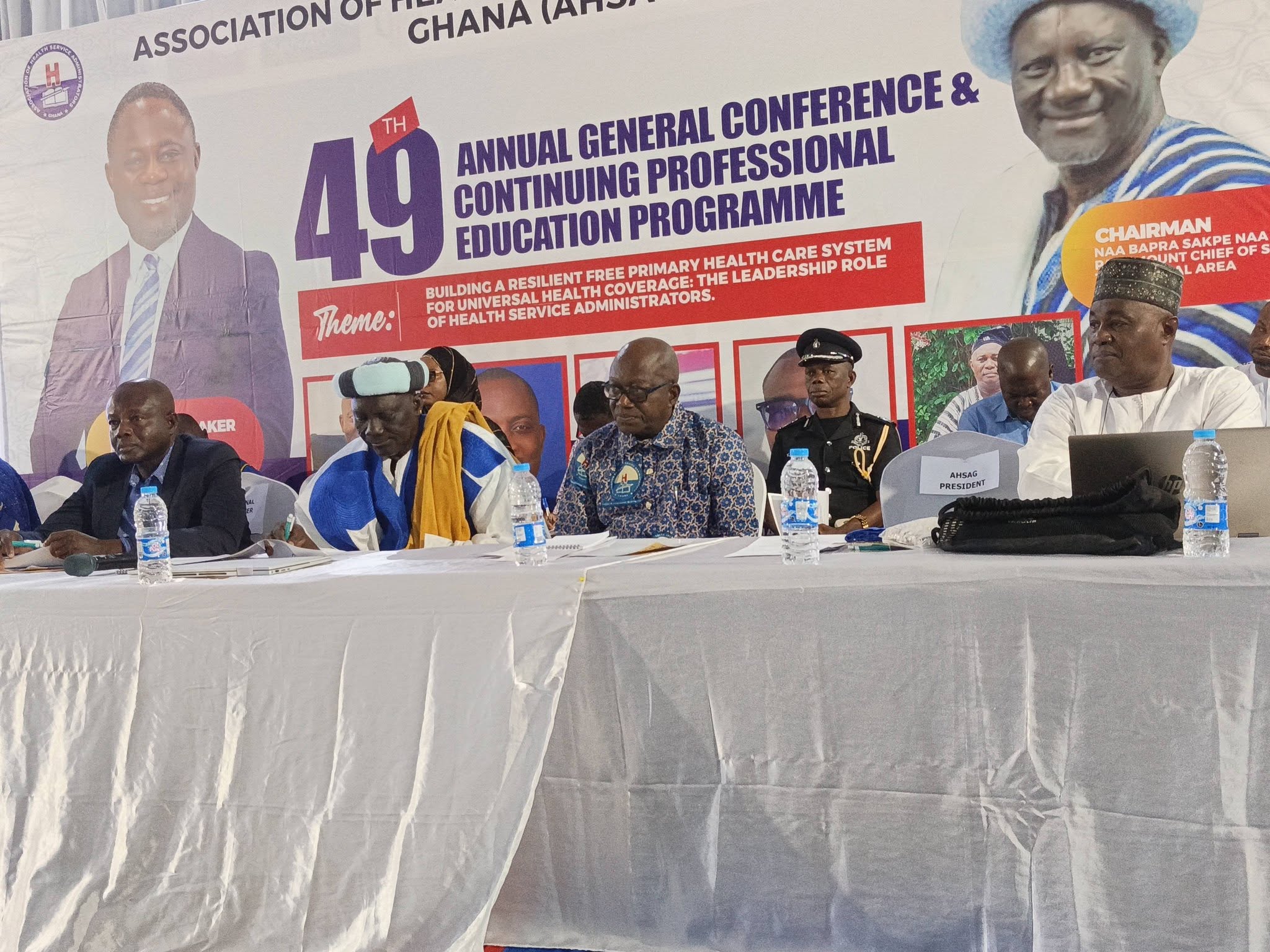
The Northern Regional Coordinating Council (NRCC) has called on health service administrators to strengthen primary healthcare delivery through effective leadership, efficient resource management, professional discipline and innovative service delivery to accelerate Ghana’s progress towards Universal Health Coverage (UHC).
The Acting Chief Director of the NRCC, Mr Sumaila Ewuntomah Abudu, made the call on Wednesday when he delivered an address on behalf of the Northern Regional Minister at the 49th Annual Conference and Continuing Professional Education Programme of the Association of Health Service Administrators, Ghana (AHSAG), in Tamale.
The conference, held at the Modern City Hotel, was attended by key stakeholders in the health sector and centred on the theme: “Building Resilient Free Primary Healthcare Systems for Universal Health Coverage: The Leadership Role of Health Service Administrators.”
Mr Abudu commended the national executive committee of AHSAG for selecting the region to host the conference. He said the gathering provided an opportunity for stakeholders to deliberate on practical measures to improve healthcare delivery, particularly at the primary level.
He described the conference theme as timely, noting that an accessible, affordable, equitable and responsive healthcare system was essential to national development. According to him, a healthy population contributes to increased productivity, economic growth, poverty reduction and improved living standards.
The Acting Chief Director emphasised that health service administrators played a critical role in translating government policies and programmes into tangible outcomes.
He said their responsibilities included ensuring the judicious use of limited resources, maintaining staff discipline, upholding professional ethics and improving the operational efficiency of healthcare institutions.
He cautioned that without effective administration and committed leadership, even well-designed policies could fail to achieve their intended objectives.
On Ghana’s progress towards Universal Health Coverage, Mr Abudu cited figures presented by the Minister of Health during a recent Government Accountability Series, which put the country’s UHC coverage at 56 per cent, against a national target of 80 per cent by 2030.
He said the 24-percentage-point gap underscored the need for concerted efforts by government, health professionals, administrators and other stakeholders to address challenges affecting healthcare delivery and expand access to essential services.
Mr Abudu described primary healthcare as the foundation of an effective and resilient health system, explaining that it served as the first point of contact between individuals, families and formal healthcare institutions.
He noted that primary healthcare was essential for disease prevention, health promotion, early diagnosis, treatment and rehabilitation.
He therefore called for adequate funding for primary healthcare facilities, alongside stronger commitments to professionalism, discipline and ethical conduct.
He added that strengthening primary healthcare would reduce the cost of accessing medical services, improve health outcomes and address disparities in healthcare access between rural and urban communities. A resilient system, he said, would also ease pressure on higher-level health facilities.
On professional conduct, the Acting Chief Director stressed that the effectiveness of healthcare institutions depended not only on infrastructure, equipment and funding but also on the competence, commitment and conduct of the personnel responsible for managing and delivering services.
He urged health professionals and administrators to avoid unprofessional practices that could compromise service quality and undermine public confidence in the health system.
He further challenged administrators to lead by example, uphold high ethical standards and enforce institutional rules fairly and consistently.
He said accountable leadership and sound management were necessary to ensure that patients’ needs and welfare remained central to healthcare delivery.
Mr Abudu said the government’s commitment to expanding access to essential health services and achieving Universal Health Coverage required effective administration at every level of the health system, from national and regional institutions to district health directorates and individual healthcare facilities.
He urged administrators to adopt innovative, efficient and results-oriented management approaches to ensure that available resources were directed towards the most pressing healthcare needs.
He also encouraged participants to move beyond identifying challenges and focus on practical, innovative and sustainable solutions that could improve institutional performance, enhance the quality of care and extend services to underserved communities.
In his remarks, the Director-General of the Ghana Health Service, Dr Samuel Kaba Akoriyea, stressed the importance of staff welfare, inclusivity and fairness across all levels of the organisation.
He said every employee, irrespective of rank, position or professional status, deserved equal treatment, respect and consideration.
Dr Akoriyea noted that an inclusive and equitable working environment was essential to improving staff morale, enhancing productivity and fostering a sense of belonging among personnel.
He called for a workplace culture in which the welfare and concerns of all employees received due attention, adding that the success of the Ghana Health Service depended significantly on the collective commitment, dedication and well-being of its workforce.
The conference provided a platform for health service administrators and other stakeholders to examine strategies for strengthening primary healthcare systems and advancing Universal Health Coverage in Ghana.
Faustina Naa Ayele Johnson, ISD