President Mahama Touts Gold Board Success at WAIIS, Urges African Nations to Review Mineral Agreements
Ghana’s decision to channel all gold exports through the Ghana Gold Board has increased the value of small-scale gold production retained in the domestic economy.
The policy was introduced to strengthen the country’s control over its gold resources, curb the uncontrolled export of gold and ensure that more of the proceeds from the sector benefited the Ghanaian economy.
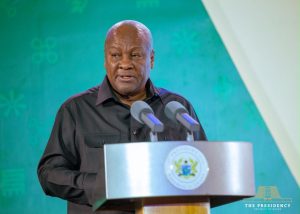
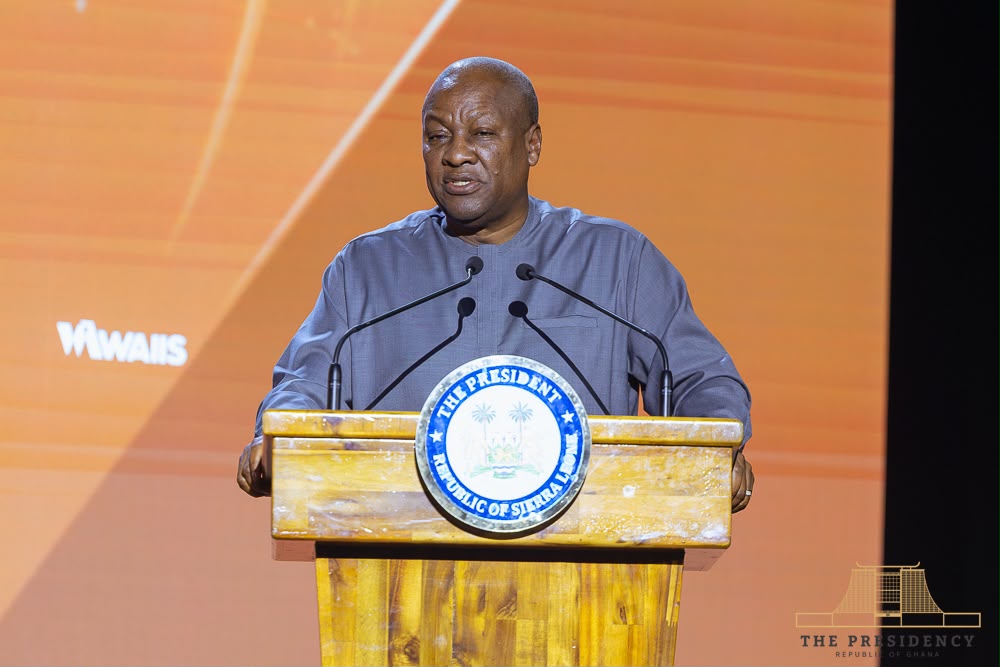
President John Dramani Mahama made this known on Tuesday during his address at the West Africa Integration and Investment Summit (WAIIS) in Lungi, Sierra Leone.
He explained that before the introduction of the Gold Board law, artisanal and small-scale mined gold was being taken out of the country freely by different individuals and groups, making it difficult for Ghana to fully account for and benefit from its gold exports.
“In 2024, we had a situation where artisanal and small-scale mined gold was taken out freely by all kinds of people. We changed the law and said you cannot take any gold out of Ghana without it going through the Gold Board. The penalty is the gold will be confiscated and then you also go to prison,” he said.
The President disclosed that Ghana’s artisanal and small-scale mining sector produced 64 tonnes of gold, valued at US$4.6 billion, in 2024.
Following the introduction of the Ghana Gold Board law, production from the sector increased to 104 tonnes, with the gold generating US$10.8 billion for the Ghanaian economy, he said.
President Mahama said the figures demonstrated the importance of exercising national control over natural resources to ensure that the benefits accrued to the country and its people.
“So, it is an issue of exercising sovereignty over what God blessed us with. We did not put the gold there, God gave it to us. The diamonds, God gave it to us. And our people must benefit from that,” he stated.
He further explained that Ghana had also reviewed the royalty arrangements for large-scale gold mining companies, moving away from fixed three percent rates under certain development and stability agreements to a sliding scale of between five and 12 percent, depending on prevailing gold prices.
He said the revised arrangement had enabled the country to collect GH¢7.8 billion in royalties from large-scale gold mining since the law was passed in 2026.
President Mahama called on other African countries to review their mineral agreements and strengthen their control over natural resources to ensure that a greater share of the wealth generated from mining remained within their economies.
Richard Aniagyei, ISD