President Mahama invites people of African descent to come home, points to right of abode law and visa-free entry
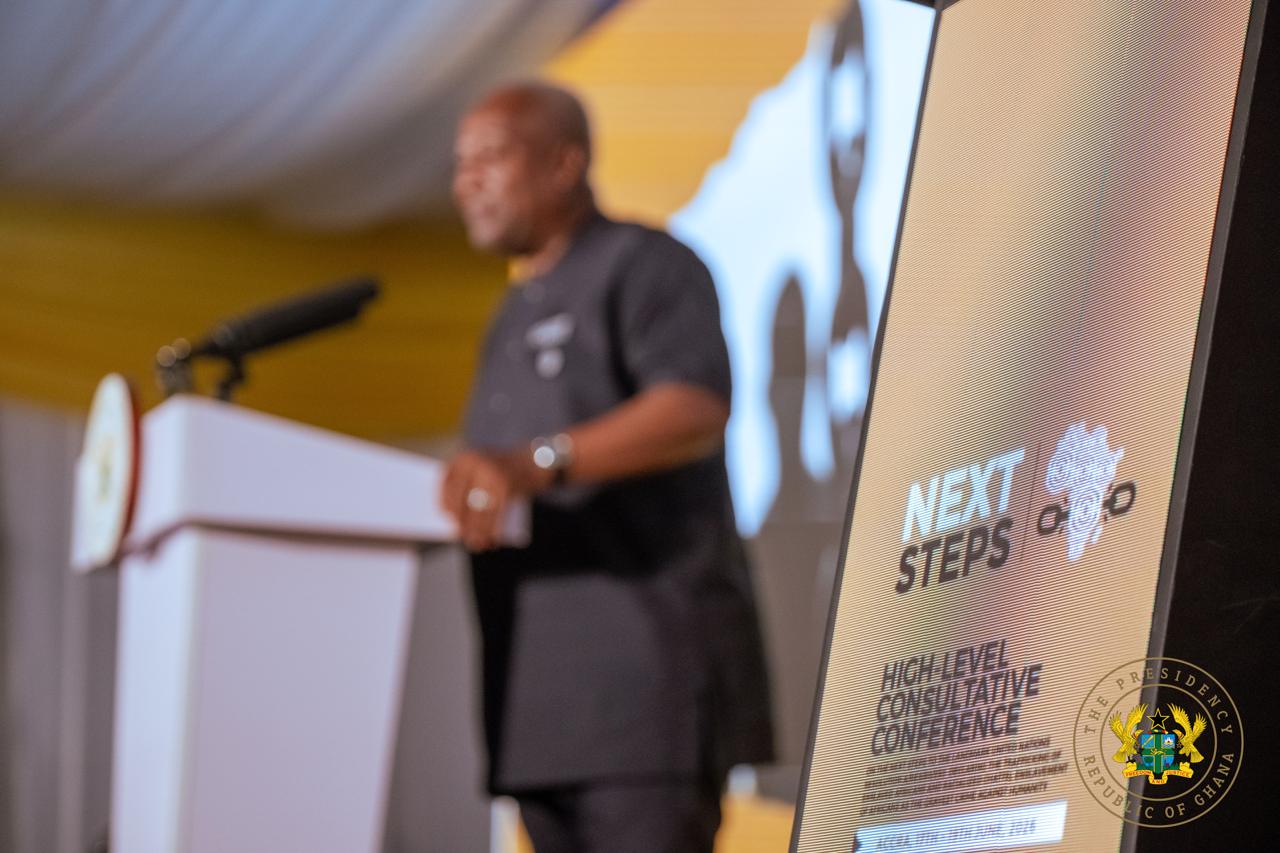
President John Dramani Mahama has extended an open invitation to people of African descent across the world to return to Ghana, pointing to legislation that grants people of African heritage the right to seek abode in the country and a visa-free regime that allows all Africans to enter without paying for a visa.
The President made the invitation at the close of the Next Steps Conference and Juneteenth commemoration at Christiansborg Castle in Accra, telling diaspora representatives gathered from across the Americas and the Caribbean that Ghana was their home and that the door was open.
“Ghana is your home, and you are all free to visit Ghana whenever you want. We have passed an act that allows people of African descent to seek abode in Ghana. If you want to come home to the motherland, Ghana is one of the countries that has a law that allows you to come and stay,” President Mahama said.
He said Ghana had introduced a visa-free regime for all Africans, removing the cost barrier that had made travel to the country inaccessible for many on the continent.
He added that the Ministry of Foreign Affairs was working to extend the same arrangement to CARICOM countries, and that visa waivers were already in place with most Caribbean nations.
The invitation came at the close of three days of deliberations on reparatory justice that brought together leaders, scholars, jurists and civil society representatives from Africa, the Caribbean, North America and Latin America, many of them descendants of Africans taken from the continent through the transatlantic slave trade.
President Mahama told the gathering that the conference marked the beginning of a unified voice between Africa and its diaspora, and that the joint commemoration of Juneteenth on African soil for the first time was a symbol of what that unity looked like in practice.
He said Ghana’s role as a destination for the African diaspora was not merely symbolic.
The country had taken concrete legislative steps to make return a real option for those who wished to reconnect with the continent, building on the Right of Abode legislation that had already drawn thousands of diaspora Africans, particularly from the United States, to settle in the country.
The President said the work of the conference extended beyond reparations and the return of cultural artefacts into a broader advocacy for a more equal world, one that offered genuine opportunity to the descendants of those who had been taken from Africa in chains and whose communities continued to bear the economic consequences of that history.
Richard Aniagyei, ISD