
Ghana Health Service Receives 205 Laptops to Boost Disease Surveillance and Health Data Management
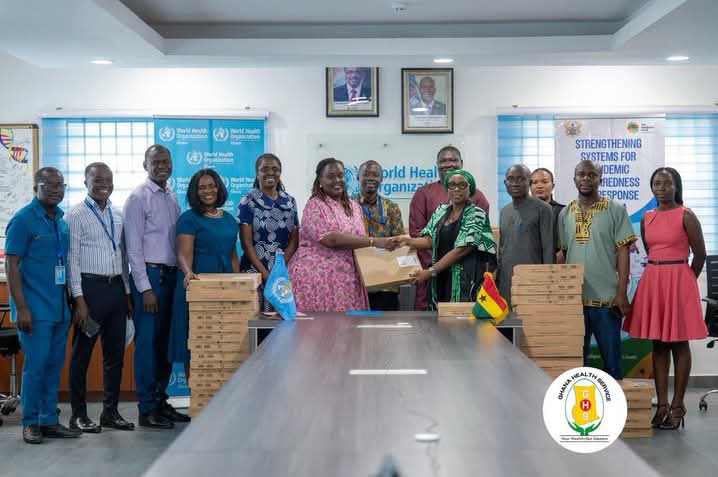
The Ghana Health Service (GHS) has received 205 laptop computers from the World Health Organisation (WHO), with funding support from the Pandemic Fund, to strengthen disease surveillance, laboratory services and health workforce development across the country.
The laptops were presented during a handover ceremony at the WHO Country Office in Accra.
The items will be distributed to Regional and District Health Directorates to improve data collection, analysis and reporting, helping health officials make timely decisions and respond more effectively to disease outbreaks and other public health emergencies.
Receiving the laptops on behalf of the Ghana Health Service, the Deputy Director General, Dr Caroline Reindorf Amissah, thanked the WHO and the Pandemic Fund for their continued support to Ghana’s health sector.
She described the donation as timely, explaining that health workers had recently identified the lack of computers as one of the main challenges affecting data collection, collation and the transmission of information across the health system.
“During our recent field visits, one of the issues consistently raised by health workers was the shortage of computers. This support will help improve data management and strengthen decision-making at all levels of the health system,” she said.
She said the donation reflects the WHO’s continued commitment to Ghana’s public health system and will help address operational challenges facing frontline health workers.
Dr Amissah assured the WHO that the laptops would be distributed to the areas where they are most needed and used for their intended purpose and pledged that the equipment would be properly maintained to ensure long-term value.
The WHO Representative to Ghana, Dr Fiona Braka, said strong disease surveillance depends on the timely collection, analysis and use of quality data.
According to her, the laptops would enable regional and district health teams to capture, analyse and transmit health information more efficiently, improving Ghana’s ability to detect and respond quickly to public health threats.
“Strong surveillance systems rely on timely, high-quality data. These laptops will strengthen the capacity of health teams to generate and share information that supports faster and more effective public health action,” Dr Braka added.
She commended the Ghana Health Service for its leadership and the dedication of its staff, expressing confidence that the equipment would support efforts to build a stronger and more resilient health system.
The Pandemic Fund is supporting Ghana through investments in disease surveillance, laboratory services and the health workforce to strengthen the country’s preparedness and response to public health emergencies.
The laptop donation adds to ongoing collaboration between the WHO and the Ghana Health Service to improve health security and build a more resilient health system.
Priscilla Osei-Wusu Nimako, ISD