Reparatory justice must go beyond artefacts- President Mahama
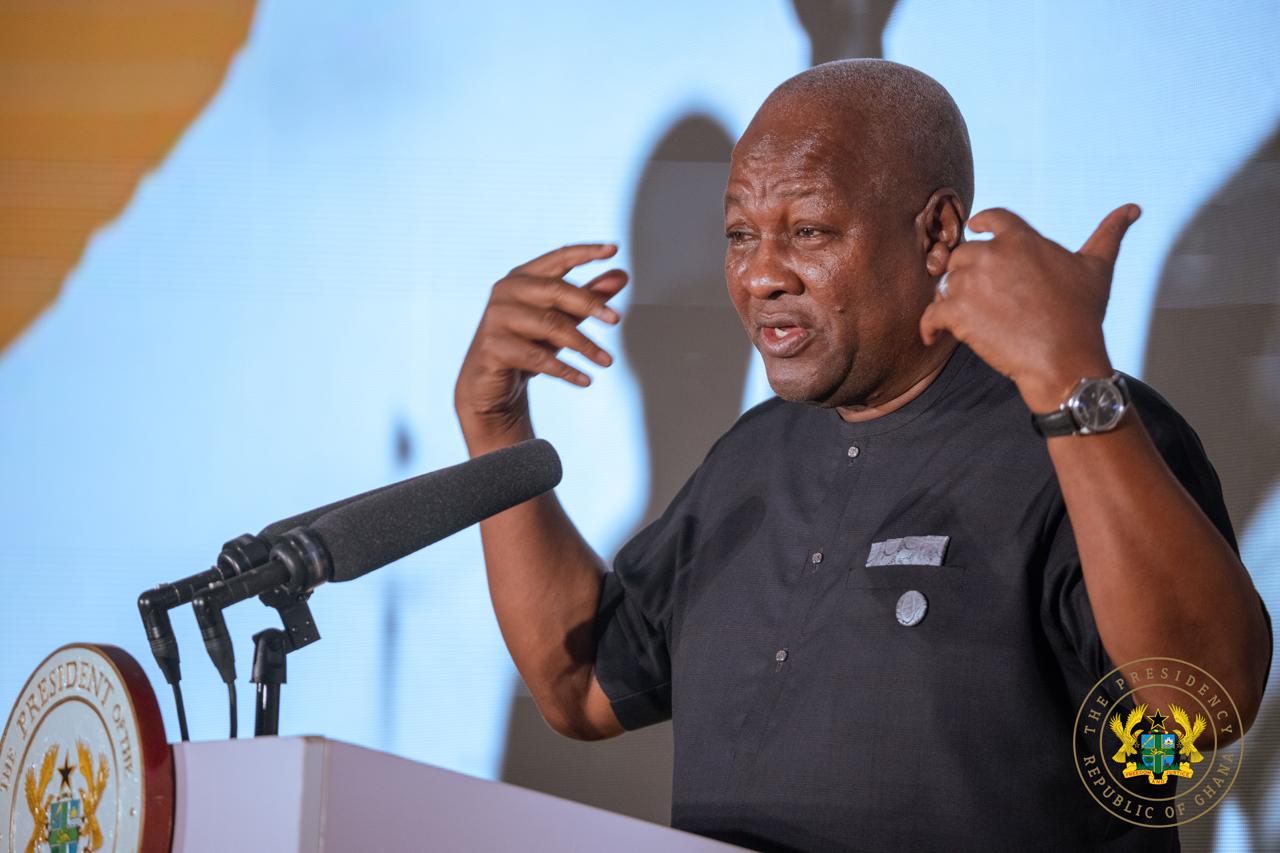
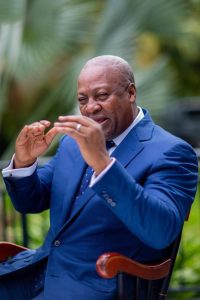
President John Dramani Mahama has warned that the global economic order continues to work against the descendants of enslaved Africans, and called for the reparatory justice agenda to extend beyond the return of artefacts and financial reparations into a broader fight for a more equal and fair world.
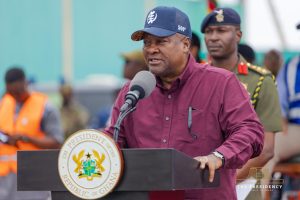
The President made the declaration at the close of the Next Steps Conference and Juneteenth commemoration at Christiansborg Castle in Accra, drawing on an observation made by Barbados Prime Minister Mia Mottley to frame the scale of what the movement was up against.
“As Mia Mottley said, the iniquities of the slave trade still remain. The demographic that slavery affected is still the poorest part of this world because the world is rigged against the descendants of slaves and the victims of slavery,” President Mahama said.
He told the gathering of world leaders, scholars, jurists and diaspora representatives that the work they had committed to through the conference’s outcome document went far beyond recovering stolen property or securing financial compensation, reaching into the structures and systems that continued to disadvantage communities shaped by the history of enslavement.
“Our work goes beyond reparations and beyond the return of artifacts. It goes into advocacy for creating a more equal world, a world that offers opportunity to everyone, a world that is fair and just,” he said.
President Mahama said the voices of Africa and its diaspora had been kept fragmented for decades, and that it had served the interests of others to keep them that way. The Next Steps Conference, he said, marked the beginning of a different approach, one in which Africa, the Caribbean, the Americas and Latin America spoke with a single, coordinated voice.
He said the unity that had made it possible to move Resolution A/RES 80/250 through the UN General Assembly with the support of 123 member states was the same unity that would be needed to pursue the deeper structural changes the reparatory justice agenda demanded.
The President drew on a moment from the conference’s Juneteenth commemoration at Christiansborg Castle, where traditional leaders poured libation to the ancestors, to make the point that the memory of those who suffered under slavery remained a living guide to those carrying the struggle forward.
He said Prime Minister Mottley had pointed out during the ceremony that the practice of pouring a little drink on the ground to honour the ancestors before taking a sip was also observed in Barbados, a reminder that the cultural bonds between Africa and its diaspora had survived centuries of separation and continued to connect them across oceans and generations.
President Mahama said the outcome document adopted at the close of the conference would serve as the foundation for collective action, and called on all participants to carry its commitments back to their governments, institutions and communities with the determination to turn them into results.
“We will work together with one voice, as we did to move this resolution in the General Assembly, because in unity lies strength,” he said.
Richard Aniagyei, ISD