World leaders adopt Accra outcome document to chart course on reparatory justice
World leaders, scholars, jurists and civil society representatives gathered in Accra have adopted an outcome document establishing a framework to advance the reparatory justice agenda following the United Nations General Assembly’s landmark resolution recognising the transatlantic slave trade as a crime against humanity.
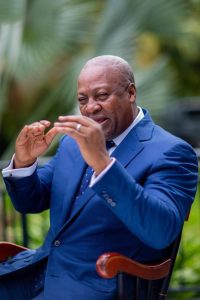
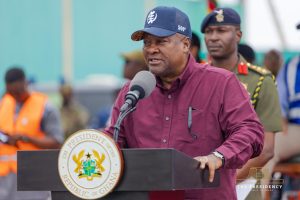
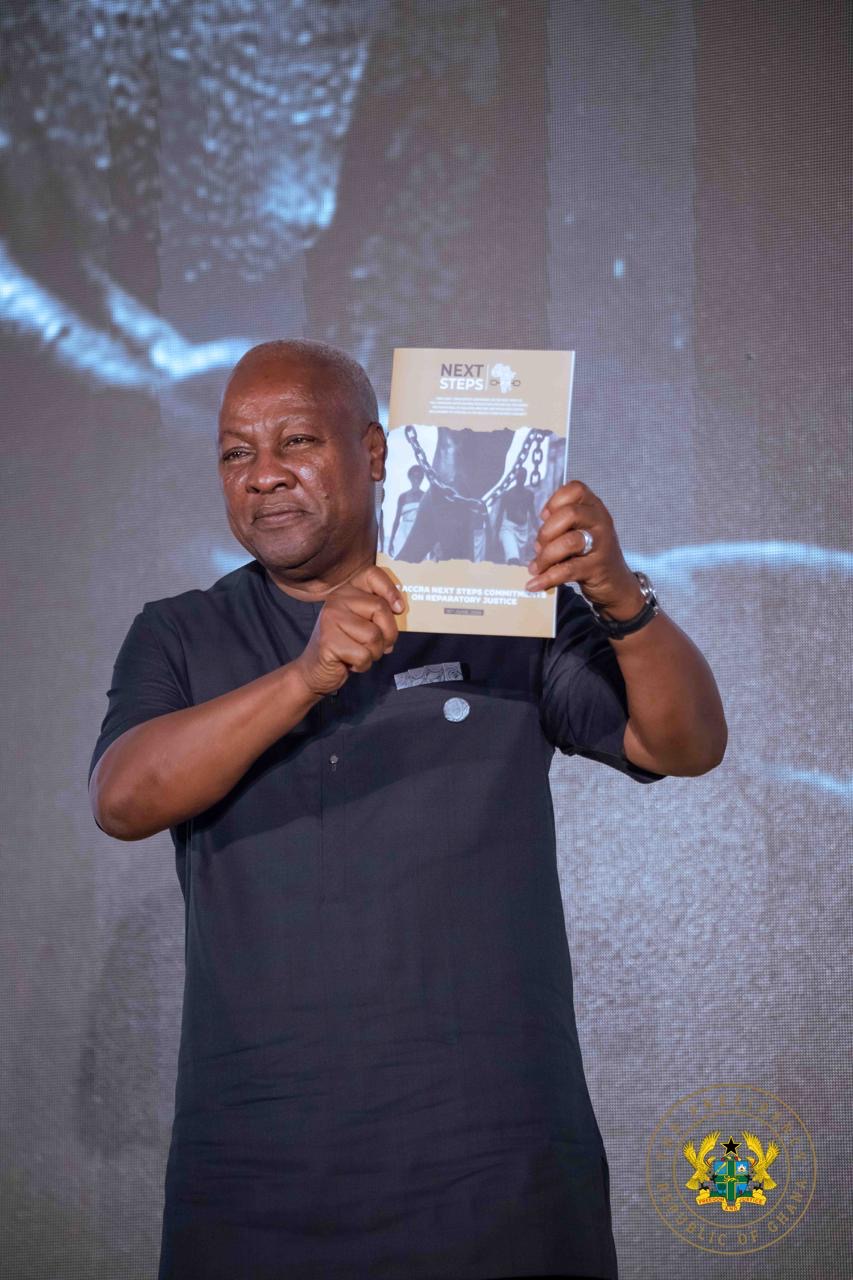
President John Dramani Mahama announced the adoption of the document at the close of the Next Steps Conference at Christiansborg Castle in Accra, describing it as the platform on which Africa and the diaspora would forge ahead together in pursuit of the justice denied their forebears.
“Let this outcome document be the platform for how we forge ahead together in unity so that together we can achieve the justice that was denied our forebears, not only in terms of restitution and reparation, but also in the fight for creating a more just world,” President Mahama said.
The conference, which ran for three days, was convened by Ghana in the aftermath of the adoption of Resolution A/RES 80/250 by the UN General Assembly on 25 March 2026, which 123 member states supported.
Following the resolution’s passage, partners of Ghana had asked what came next, and President Mahama said the country took it upon itself to call the conference precisely to answer that question.
“After the UN General Assembly, several of our partners asked me, after that, what next? I said, just wait. We did this together. We must decide the next steps together,” he said.
President Mahama said the conference stood apart from most international gatherings he had attended, noting that unlike many where attendance thinned out by the second day, participants stayed through to the end, a reflection of the weight and value of what was being discussed.
A technical team had worked for three weeks ahead of the conference to prepare for its deliberations, and a separate group worked through the final morning to complete the outcome document that was formally adopted at the closing session.
The conference, held alongside the first joint Africa-United States commemoration of Juneteenth on African soil, brought together representatives of African states, CARICOM nations, diaspora communities, academic institutions, faith organisations and civil society groups, all of whom the President said had contributed to the decades of advocacy that made the UN resolution possible.
President Mahama said the unity that produced the resolution at the General Assembly was the same unity that would carry the reparatory justice agenda forward, and called on all participants to hold to that spirit as they returned to their respective countries and institutions.
Richard Aniagyei, ISD