Cabinet approves National Ethics and Anti-Corruption Action Plan 2026-2030
Cabinet has approved a National Ethics and Anti-Corruption Action Plan covering the period 2026 to 2030, with the document to be transmitted to Parliament for consideration.
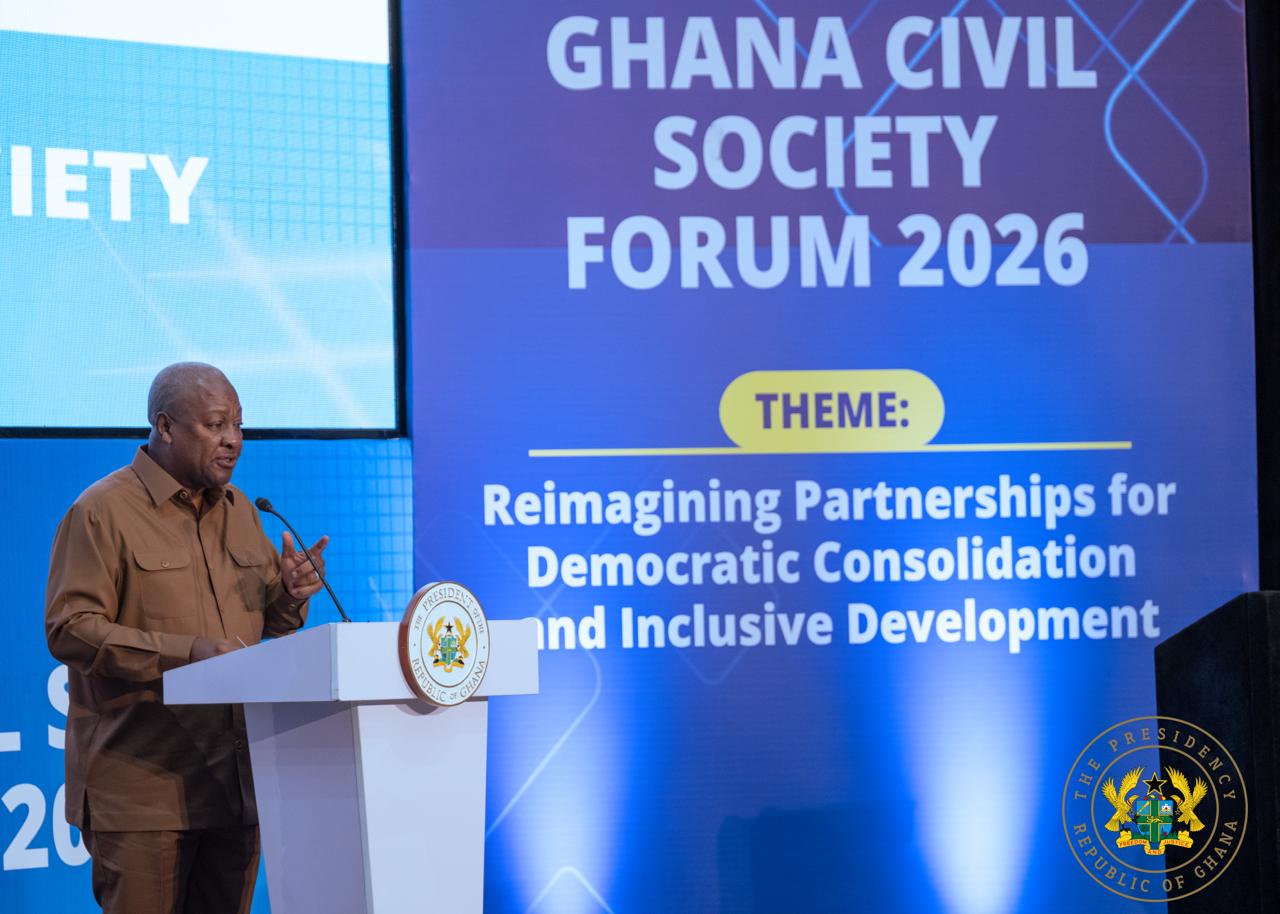
President John Dramani Mahama announced the approval on Thursday during his address at the 2026 Civil Society Forum in Accra, where he outlined a series of governance and accountability measures his administration was pursuing alongside its broader economic transformation agenda.
“I am pleased to report that yesterday cabinet approved the new National Ethics and Anti-Corruption Action Plan 2026-2030 for onward transmission to Parliament,” President Mahama said.
The approval of the plan came on the same day Cabinet directed the Attorney General to draft a State Assets Protection Bill, signalling a push by the administration to strengthen the institutional frameworks governing public accountability and the management of state resources.
President Mahama told the forum that accountability and the fight against corruption were not peripheral concerns but were central to democratic consolidation, and that his administration remained committed to transparent and accountable governance as a core principle of its work.
He said the recently passed Governance Advisory Council Act, which established an independent multi-stakeholder body to monitor governance standards and promote integrity and accountability across public institutions, was part of the same effort to build systems that could sustain accountability beyond the life of any single administration.
The President said the Governance Advisory Council would be inaugurated in the coming weeks and expressed confidence in its potential to strengthen public trust in Ghana’s democratic institutions.
He told civil society organisations present at the forum that their contribution had been indispensable in shaping the Governance Advisory Council legislation, from early policy development through stakeholder consultations, public advocacy and parliamentary engagement, and placed on record the government’s appreciation for their role.
The Ghana Civil Society Forum (GCSF), the national convening platform for CSOs, NGOs, and academia to deliberate on democratic governance and inclusive development, is convened by Ibrahim-Tanko Amidu, who also serves as Executive Director of STAR-Ghana.
The forum brought together diverse voices from across the country to examine challenges and to chart pathways for national progress.
Richard Aniagyei, ISD