Health Ministry Appeals for Prehospital Care to Improve Emergency Survival

The Ministry of Health has called for a major transformation in Ghana’s emergency medical services, urging the National Ambulance Service (NAS) to move beyond transporting patients and place greater emphasis on delivering advanced prehospital care that can save lives before patients reach hospital.
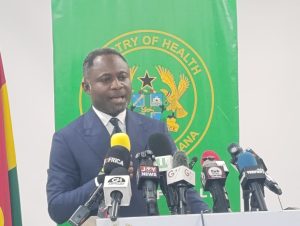
The call was made by the Chief Director of the Ministry of Health, Mr Desmond Boateng, whose address was delivered by Dr Hafiz Adam, Director of Technical Coordination, at the NAS Annual and Mid-Year Performance Review Conference in Accra.
Speaking under the conference theme, “Beyond Transport: Strengthening Prehospital Emergency Care, Stabilisation and Timely Patient Transfer,” Dr Adam stressed that the quality of care provided in the minutes immediately following a medical emergency often determines whether a patient survives.
He noted that emergencies such as trauma, cardiac arrest, stroke and obstetric complications require rapid assessment and timely intervention during the “golden hour”—the critical period between the onset of an emergency and definitive hospital treatment.
According to him, procedures such as airway management, circulation support, pain control and early patient stabilisation should become standard components of ambulance care, rather than treating ambulances solely as vehicles for transporting patients.
“The interventions delivered at the scene—swift assessment, early stabilisation, appropriate management of airways and circulation, and pain management are not incidental. They are foundational,” Dr Adam said.
To support this transition, he disclosed that the Ministry of Health will continue strengthening clinical governance within the National Ambulance Service by updating treatment protocols to reflect international best practices and expanding advanced life support training for Emergency Medical Technicians (EMTs) across the country.
While acknowledging the Service’s progress in extending ambulance coverage and improving emergency response times, Dr Adam also pointed to ongoing operational challenges, including fleet maintenance, fuel supply, staffing shortages and difficulties reaching some underserved communities.
He further highlighted delays in transferring patients to receiving hospitals as one of the major obstacles to effective emergency care, hence called for stronger collaboration between the National Ambulance Service and teaching, regional and district hospitals to establish efficient referral pathways, improve clinical documentation and ensure prompt patient handovers upon arrival.
Looking ahead, Dr. Adam outlined four strategic priorities for the remaining year which are enhancing clinical excellence through continuous professional development and advanced life support certification; strengthening coordination between ambulance teams and hospitals through standardised referral systems and pre-notification protocols; improving data collection and real-time operational analysis to support dispatch and fleet management; and expanding public education on the appropriate use of the national emergency numbers while encouraging motorists to give way to ambulances.
Delivering the Chief Director’s closing remarks, Dr Adam reaffirmed the Ministry of Health’s commitment to supporting the National Ambulance Service through policy direction, strategic partnerships and resource mobilisation.
He also commended the dedication of dispatchers, paramedics, Emergency Medical Technicians and other frontline personnel whose efforts continue to strengthen emergency healthcare delivery across Ghana.
Grace Acheampong, ISD