President Mahama urges Africa to build self-reliant health systems.
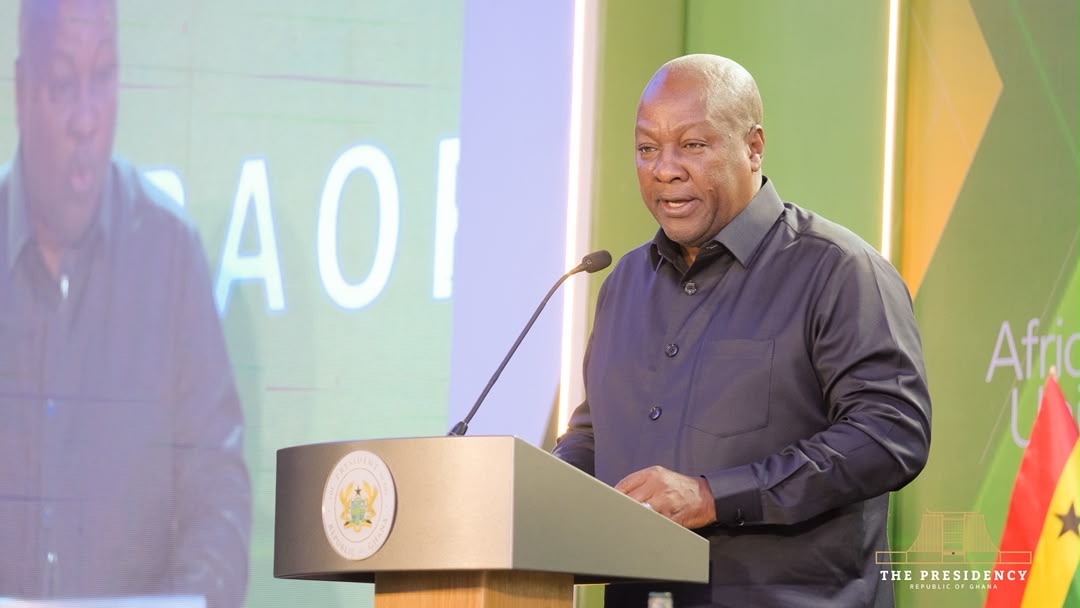
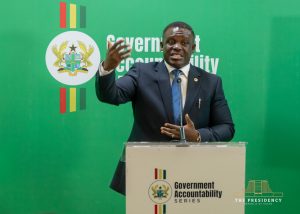
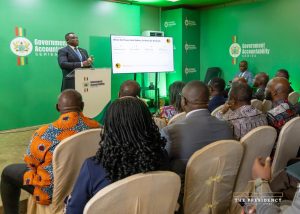
President John Dramani Mahama has called on African leaders to seize the current global health financing challenges as an opportunity to build resilient and self-reliant health systems capable of meeting the continent’s healthcare needs without excessive dependence on external support.
Addressing the African Union Extraordinary Summit on Health in Accra, President Mahama said Africa stood at a defining moment in its history, where the struggle was no longer for political liberation but for health sovereignty, equitable access to healthcare and stronger national health systems.
“The liberation we seek today is not from colonial rule but from inequality, preventable disease, maternal deaths, weak health systems and dependence on others for our healthcare,” he said.
He noted that the success of this new struggle would not be measured by declarations alone but by tangible improvements in the lives of Africans.
“The success of this new liberation struggle will be measured by clinics that remain open, medicines produced on African soil, healthy mothers carrying healthy babies and governments financing their own health priorities,” President Mahama stated.
The President said the Summit had brought together African leaders to chart a new course for healthcare delivery across the continent, with discussions expected to focus on strengthening health systems, reducing maternal mortality and combating both communicable and non-communicable diseases.
“We are gathered here because we are the leaders entrusted with shaping Africa’s health future and delivering lasting transformation for our people,” he said.
President Mahama expressed appreciation to the African Union for selecting Ghana to host the Extraordinary Summit, describing Accra as a city with a rich history of shaping Africa’s future.
“Accra has always been a city where Africa has gathered to shape its destiny,” he said, recalling that in December 1958, Ghana’s first President, Osagyefo Dr Kwame Nkrumah, convened the All-African Peoples Conference in the capital and declared that Ghana’s independence would only be meaningful when the entire continent was free.
“Today, sixty-eight years later, Africa gathers once again in Accra to confront a different struggle,” he added.
President Mahama observed that while African countries had made notable progress in reducing HIV/AIDS-related deaths and tuberculosis infections, the continent continued to grapple with malaria, maternal mortality, neglected tropical diseases and the growing burden of non-communicable diseases.
He noted that heart disease, diabetes, cancers and mental health conditions were increasingly becoming leading causes of illness and premature deaths across Africa, while more than two million Africans died annually from non-communicable diseases before reaching the age of 70.
“Mental health remains neglected in far too many national health strategies,” he said, stressing that the changing disease profile required a new approach to healthcare across the continent.
President Mahama urged African governments to move beyond dependence on externally designed health systems and build institutions capable of responding to the continent’s unique realities.
“Africa can no longer afford to remain a passive beneficiary of global health systems designed elsewhere. We must become the architects of our own health destiny,” he declared.
According to him, the weakening of global development assistance should not discourage African leaders but rather inspire them to build stronger and more sustainable health systems.
“This is not the time to speak the language of hopelessness but the language of determination, resilience and action,” he said.
“The system that is weakening today was never meant to become our permanent foundation. It was only the scaffolding that helped us build. Our responsibility now is to complete the building itself, a strong, self-reliant African health system that can stand on its own.”
President Mahama said Africa must invest in lasting institutions capable of delivering quality healthcare irrespective of fluctuations in international assistance.
“We must ask ourselves whether we intend to remain builders of temporary scaffolds or builders of lasting institutions,” he said.
The President highlighted Ghana’s efforts to advance health reforms through the Accra Reset Initiative, which seeks to promote health sovereignty by strengthening governance, expanding domestic investment and improving Africa’s capacity to shape global health policies.
He said the initiative had led to the establishment of a High-Level Panel on Global Health Architecture and Governance to generate practical solutions that would place Africa firmly in control of its health future.
President Mahama also pointed to Ghana’s Medical Trust Fund, popularly known as Mahama Cares, as one of the practical interventions introduced to protect families from the financial burden of chronic diseases.
He urged African leaders to remain focused on implementing concrete reforms that would deliver better healthcare services to citizens across the continent.
“The people of Africa may never read the declarations we adopt here, but they must experience their impact in better hospitals, reliable medicines, efficient clinics and healthier lives,” he said.
“They must see the difference in mothers smiling with healthy children, patients receiving timely treatment and communities enjoying stronger health systems.”
President Mahama expressed optimism that the Extraordinary Summit would produce decisions capable of transforming healthcare delivery across Africa, urging leaders to ensure that the Accra Declaration became a practical roadmap for action rather than another policy document.
“Let history record that when the old systems began to fail, African leaders gathered once again in Accra and charted a new path towards health sovereignty and total liberation,” he said.
Richard Aniagyei, ISD