
Government Introduces Biometric-Only Ghana Card Verification to Strengthen Identity Security
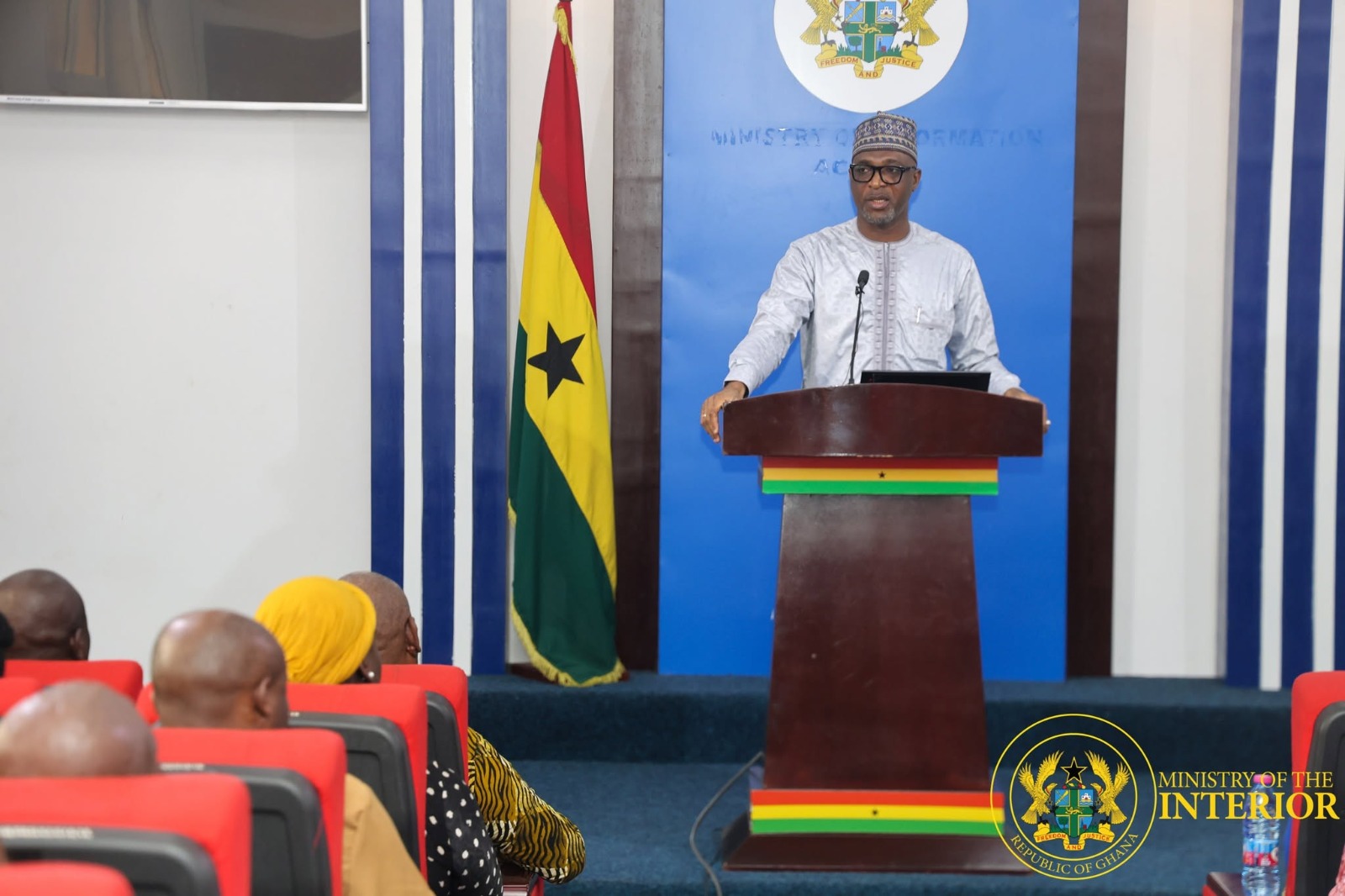
The Minister for the Interior, Mr Muntaka Mohammed-Mubarak, has announced that the Government has introduced new regulations requiring biometric verification as the mandatory method for confirming the identity of Ghana Card holders in an effort to strengthen the country’s national identification system and protect citizens’ personal data.
Speaking at a press briefing on Wednesday in Accra, the Minister said the new Legislative Instrument replaces the long-standing practice of relying on visual inspection, photocopies, or scanned images of the Ghana Card for identity verification.
He explained that the regulation, signed on March 2, 2026, gazetted on March 27, 2026, and brought into force on June 9, 2026, amends the National Identity Register Regulations, 2012 (L.I. 2111).
Mr Mohammed-Mubarak stated that under the amended regulations, organisations carrying out transactions listed under Regulation 7 of L.I. 2111 are now required to verify the identity of individuals through biometric authentication against the National Identity Register or by using approved match-on-card verification devices authorised by the National Identification Authority (NIA).
He noted that organisations are prohibited from requesting, retaining or reproducing photocopies, scanned copies or images of the Ghana Card for verification purposes, adding that only biometric verification methods approved by the NIA will be permitted.
“The new regulation ensures that the person presenting the Ghana Card is its rightful owner while reducing the risk of identity theft and the misuse of personal information,” he said.
The Minister further explained that individuals involved in private or informal transactions are also expected, where practicable, to use biometric verification and refrain from retaining or sharing copies of Ghana Cards unless permitted by law or with the consent of the cardholder.
He added that any person who, without reasonable excuse, refuses to allow a law enforcement officer or another authorised person to scan their fingerprint on the Ghana Card or capture a live image for verification commits an offence under the law.
Mr Mohammed-Mubarak said organisations and individuals that fail to comply with the regulations could face significant penalties, including hefty fines, suspension or termination of access to the NIA’s Identity Verification System, while individuals who misuse Ghana Cards could face fines, imprisonment or both.
To ensure effective implementation, he disclosed that the NIA would establish a dedicated compliance and enforcement team to monitor adherence to the regulations, investigate reported breaches and collaborate with law enforcement agencies nationwide.
The Minister announced the Government has granted institutions a three-month transition period from July 27 to November 2, 2026, to complete the installation of the required systems, infrastructure and staff training needed for full compliance.
He stressed, however, that the transition period does not suspend any legal obligations and urged institutions to begin implementing compliance measures immediately.
Mr Mohammed-Mubarak encouraged banks, telecommunications companies, insurance firms, hospitals, educational institutions, government agencies and other organisations that verify identities to promptly onboard onto the NIA’s Identity Verification System.
He said the NIA has published technical specifications for approved biometric verification devices on its website www.nia.gov.gh and will provide technical support and public education to facilitate a smooth transition.
The Interior Minister also urged Ghanaians to insist on biometric verification whenever they are required to present their Ghana Cards.
Mr Mohammed-Mubarak explained that the reforms would help curb identity theft, fraudulent SIM card registrations and other criminal activities that rely on the misuse of personal identities.
He assured the public that the Ministry of the Interior, the NIA, the Ghana Police Service and other security agencies would work together to strictly enforce the new regulations and protect the identities of all citizens and residents.
Judith Twumwaa & Mary Olivia Cobblah, ISD