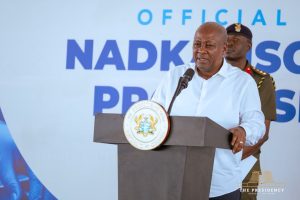
Africa Must Retain More Value from Its Natural Resources – President Mahama at WAIIS
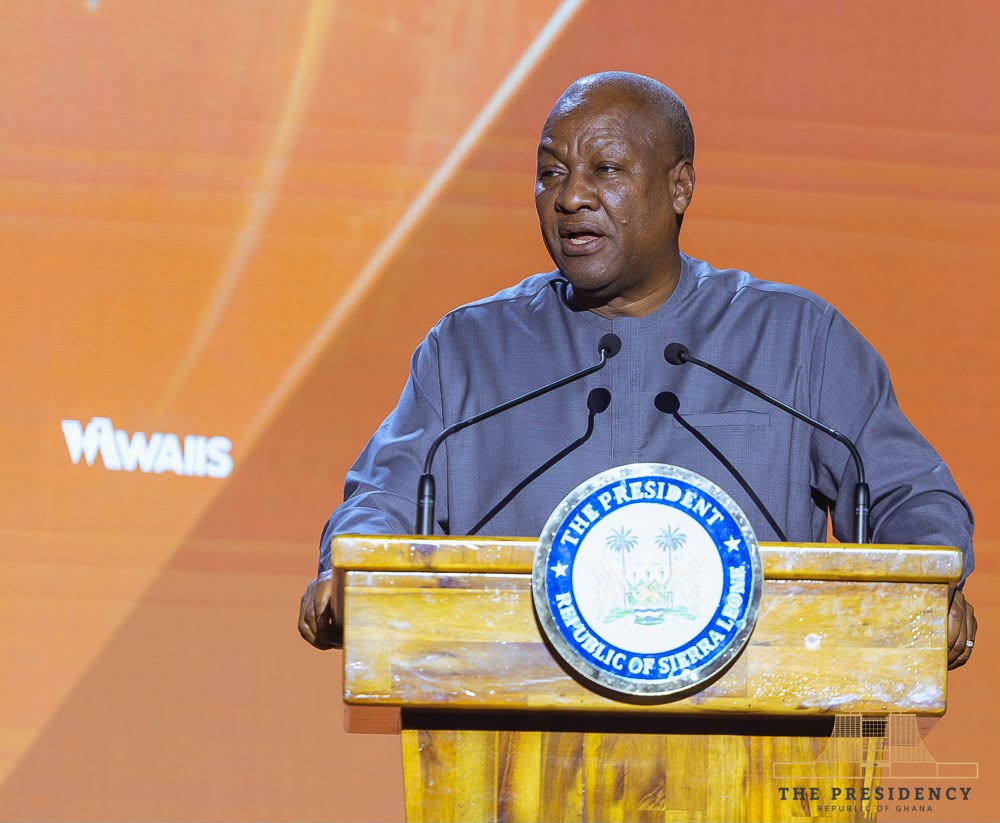
Despite its vast deposits of gold, diamonds and other valuable minerals, Africa continues to see much of the wealth generated from its natural resources flow outside the continent, while communities around mining operations remain poor.
African countries must then review mineral agreements and strengthen control over natural resources to ensure that a greater share of the wealth generated from mining contributes to local development and prosperity.
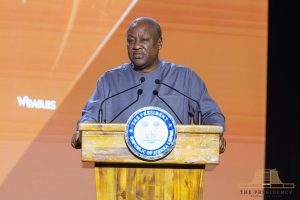
President Mahama made this call when he addressed the West Africa Integration and Investment Summit (WAIIS) in Lungi, Sierra Leone on Tuesday.
Using Sierra Leone and Ghana as examples, he said the continent was endowed with valuable resources, including iron ore, diamonds and gold, but the benefits had not always translated into improved living conditions for people in mining communities.
He questioned the arrangements under which foreign companies secured long-term concessions to extract minerals, with much of the wealth generated from those operations building economies outside the continent.
President Mahama illustrated the situation by comparing the facilities available to mining companies with the conditions in surrounding communities.
“So you have a mine, and it is a profitable mine. The senior officers have their recreation ground, they have their lawn tennis courts, they have their swimming pools, they have their gyms. Just go look at the communities around the mine and see the level of poverty,” he said.
He stressed that Africa’s mineral resources should serve as a source of wealth and prosperity for its people rather than primarily benefiting external interests.
“So we are saying that African minerals must be a source of wealth and prosperity for African people,” he stated.
The President said Ghana had taken steps to secure greater benefits from its gold resources through the establishment of the Ghana Gold Board, which requires all gold exports to pass through the institution.
He disclosed that the country’s artisanal and small-scale mining sector produced 64 tonnes of gold, valued at US$4.6 billion, in 2024. Following the introduction of the Ghana Gold Board law, production increased to 104 tonnes, bringing US$10.8 billion into the Ghanaian economy.
President Mahama also cited changes to the royalty arrangements for large-scale gold mining, explaining that Ghana had moved from a fixed three percent rate under certain development and stability agreements to a sliding scale of between five and 12 percent, depending on gold prices.
He said the new arrangement had generated GH¢7.8 billion in royalties from large-scale gold mining since the law was passed in 2026.
President Mahama urged African leaders to take another look at mineral rights and agreements to ensure that the continent retained more value from its natural resources and that mining contributed more directly to the welfare of its people.
Richard Aniagyei, ISD