Ghana launches US$18.8m project to boost rice production and target self-sufficiency by 2028

Ghana has launched a US$18.8 million rice development project aimed at increasing domestic production, improving farmers’ incomes and reducing the country’s dependence on imported rice as Government targets self-sufficiency by 2028.
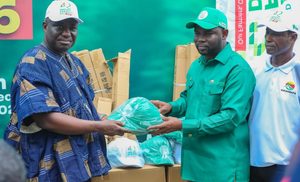
The Regional West Africa Resilient Rice Value Chains Development Project (REWARD), supported by the African Development Bank (AfDB), was officially launched by the Minister for Food and Agriculture, Mr Eric Opoku, in Tamale on Monday.
The project is expected to strengthen rice production and improve activities across the value chain, including seed supply, mechanisation, processing, storage and marketing.
The Northern Regional Minister, Mr Ali Adolf John, said the initiative was particularly important to the region because of its potential to contribute significantly to national rice production and agricultural development.
He noted that rice production supported several economic activities involving farmers, input suppliers, processors, transporters and traders.
Mr Adolf acknowledged challenges facing farmers that included changing weather patterns, rising production costs, inadequate infrastructure and limited market access,
He called for stronger collaboration among implementing partners, district authorities, traditional leaders, farmer organisations and private-sector actors to ensure effective delivery of the project.
Launching the initiative, Mr Opoku said the investment formed part of Government’s broader efforts to strengthen food security, reduce food import dependence and position agriculture as a major driver of economic growth and appreciated the AfDB for providing the US$18.8 million grant to support the project.
The Minister disclosed that Ghana’s milled rice production had increased from approximately 685,000 metric tonnes in 2022 to 960,000 metric tonnes in 2025. However, domestic production currently meets only about 56 per cent of national consumption, with the remaining 44 per cent supplied through imports.
He estimated that Ghana spends about US$500 million annually on rice imports, making increased local production important for reducing pressure on the country’s foreign exchange.
Mr Opoku reaffirmed Government’s target of achieving rice self-sufficiency by 2028, with a national paddy production target of 3.31 million metric tonnes, adding that the ambition was not only to increase food production but also to create jobs, retain foreign exchange and strengthen the country’s food security.
The Minister explained that REWARD would complement the Feed Ghana Programme by addressing challenges affecting the competitiveness of the local rice industry and improving support for farmers and other value-chain operators.
The project will cover seven beneficiary areas: Tamale Metropolitan, Mion, Savelugu, Mamprugu-Moagduri, West Gonja, Wa Municipal and Nandom. About 20,000 smallholder farmers, including women and young people, are expected to benefit directly.
A key component of the project is the development of 3,200 hectares of land for rice production within the Northern Savannah Ecological Zone. The intervention is expected to expand farming opportunities and improve productivity in beneficiary communities.
To support production, the project will provide improved agricultural inputs, strengthen selected seed centres and introduce machinery such as rotary tillers, seed drills, rice transplanters, boom sprayers and mini crawler combine harvesters.
The initiative will also support rice processing facilities with equipment, including colour sorters, destoners and improved parboiling vessels, to enhance the quality and competitiveness of locally produced rice.
Mr Opoku stressed that increased production must be matched by improved processing and reliable markets to ensure that farmers benefit from their investments.
He therefore called on private-sector investors to explore opportunities in seed production, mechanisation, processing, packaging, storage and distribution, while encouraging businesses to establish dependable purchasing arrangements with farmers.
He also urged farmers to work closely with agricultural extension officers, adopt improved farming practices and strengthen their Farmer-Based Organisations to improve productivity.
He said the success of the initiative would be measured by improvements in yields, reduced production costs and post-harvest losses, better rice quality, increased farmer incomes and improved access to markets.
Mr Opoku further appealed to households, restaurants, hotels, food vendors, schools and public and private institutions to patronise locally produced rice to support farmers, create jobs and strengthen businesses across the agricultural value chain,
Faustina Naa Ayele Johnson, ISD