Ghana Moves to Harness Space Technology for National Development – Environment MinisteR
r
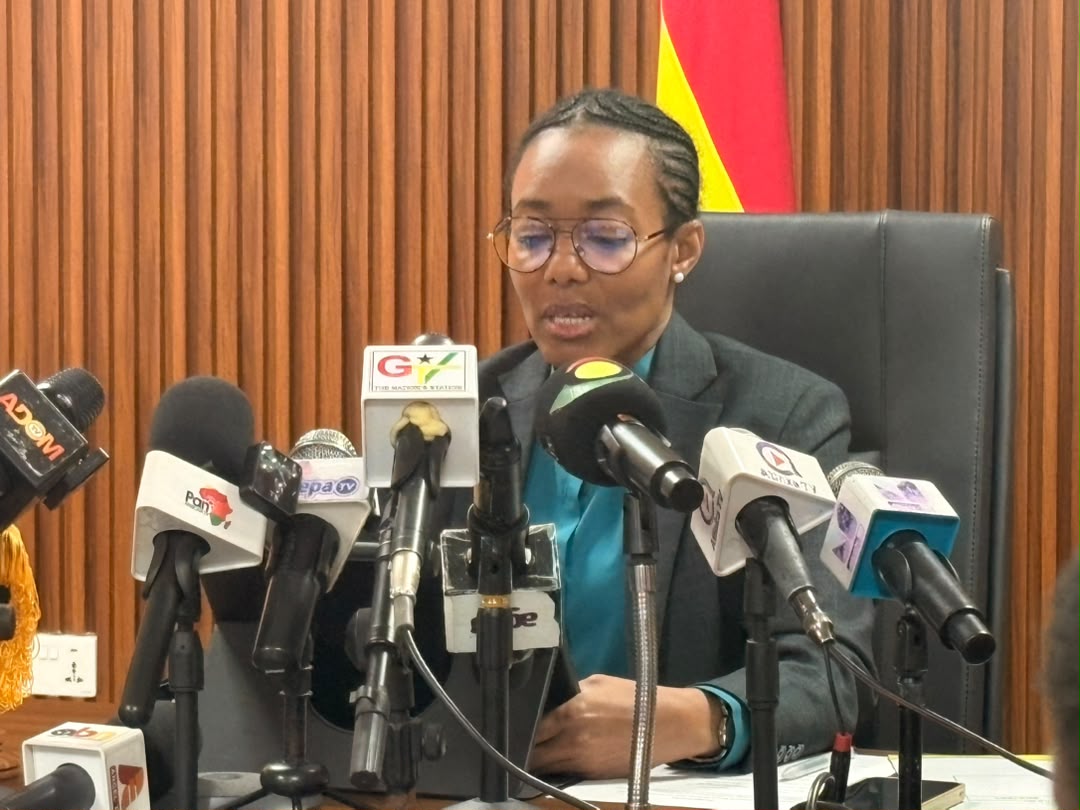
The Minister for Environment, Science and Technology, Dr Zanetor Agyemang-Rawlings, has said the Government is taking steps to position Ghana to harness space science and technology to address developmental challenges, create economic opportunities and strengthen national resilience.
She said space technology has become an important development tool, with applications in agriculture, environmental management, telecommunications, disaster management, national security, and scientific research.
Dr Agyemang-Rawlings made the remarks at a press engagement in Accra as part of her first 100 days public engagement agenda.
She said Ghana must move beyond consuming space-based technologies developed by other countries and build the capacity to participate meaningfully in the emerging global space economy.
The Minister identified environmental management and climate resilience as key areas where Ghana could benefit from space technology, including satellite imagery, Earth observation, drones, geospatial technologies and artificial intelligence.
She said these technologies could provide timely information on deforestation, illegal mining, land degradation, coastal erosion, flooding, drought, and climate variability, enabling the country to adopt more evidence-based, predictive approaches to environmental management.
Dr Agyemang-Rawlings indicated that the Government was working to transform the Ghana Space Science and Technology Institute (GSSTI) into a fully-fledged Ghana Space Agency, following Cabinet’s approval of the National Space Policy.
She said the proposed agency would coordinate Ghana’s space activities, promote research and innovation, facilitate public-private partnerships and strengthen international cooperation.
The Minister called for increased investment in skills development in areas such as satellite engineering, remote sensing, geospatial science, artificial intelligence, robotics, data science and space entrepreneurship.
She also urged greater private-sector participation, saying businesses in agriculture, banking, telecommunications, logistics, mining, maritime services and environmental monitoring could benefit from space-based technologies.
Dr Joseph Tandoh, Director of the Ghana Space Science and Technology Institute under the Ghana Atomic Energy Commission, said Ghana needs a clear legislative and regulatory framework to support its growing space ambitions.
He cited Ghana’s achievements in space science, including the 2017 launch of GhanaSat-1, the conversion of the Kuntunse telecommunications dish into a radio telescope, and the country’s participation in the Square Kilometre Array project.
According to him, the Kuntunse facility had strategic importance because its geographical location helped fill observational gaps in the international radio telescope network and had positioned Ghana for scientific collaboration.
He said the facility had also served as a regional training centre, with 192 students trained since 2015 in areas including engineering, communication, data processing, astronomy and instrumentation.
Dr Tandoh further stressed the importance of establishing a clear regulatory framework to support Ghana’s growing space ambitions.
Judith Twumwaa, ISD