GHS Takes Family Planning Message to Markets and Communities
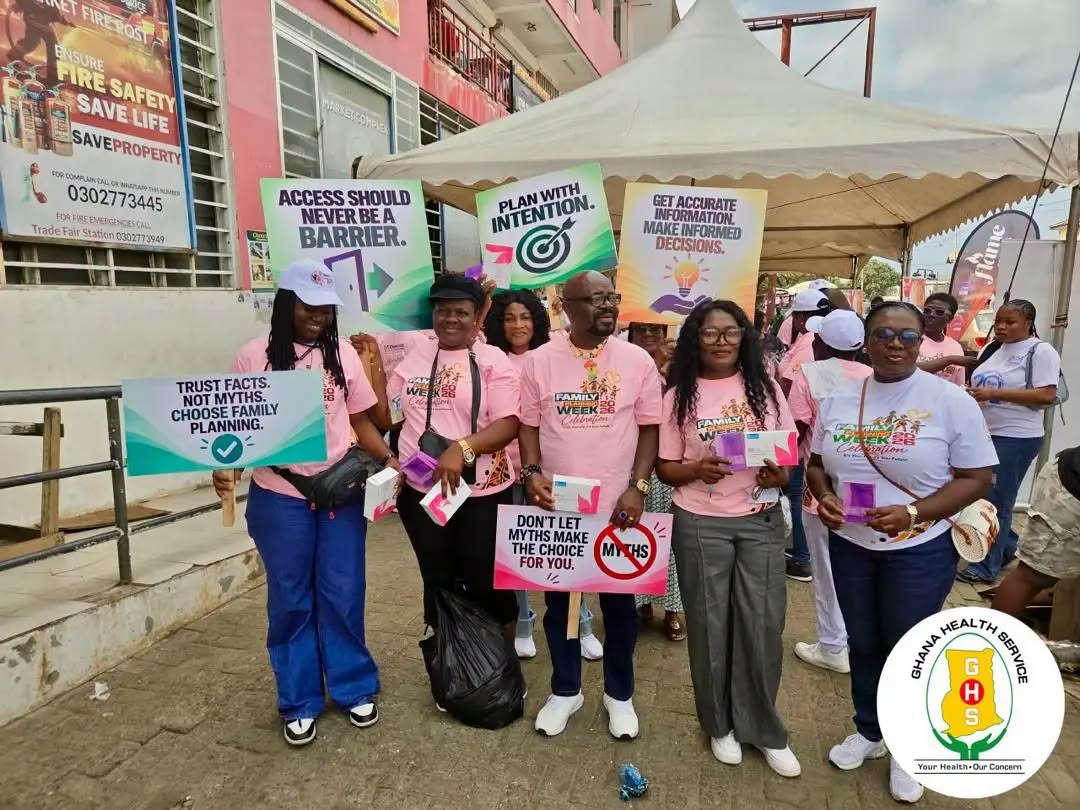
The Ghana Health Service (GHS) has taken family planning education beyond health facilities to communities and markets in Accra, as part of activities marking National Family Planning Week 2026.
The initiative, led by the Family Health Division, combined a health walk with direct community engagement aimed at bringing reproductive health information and services closer to residents, traders and young people, on Saturday in Accra.
On Saturday in Accra,the health walk started from Palm Wine Junction, passed through La Township and continued towards Osu, with health workers and family planning advocates engaging people along the route on healthy lifestyle choices and the importance of informed family planning.
The outreach also took the message directly to the market, where the Director of the Family Health Division, Dr. Kennedy T.C. Brightson, interacted with market women and traders and provided counselling on reproductive health and available family planning methods.
Dr. Brightson stressed that family planning decisions must be voluntary and informed, noting that clients are counselled on the different options available to enable them to choose a method that suits their individual needs.
As part of the exercise, outreach teams distributed free condoms to residents, traders and young people across La Township to promote safer reproductive health practices and help reduce barriers to access.
Dr. Brightson also urged outreach teams to pay close attention to data collection during community activities, particularly the number of people counselled, services taken up and commodities distributed.
He said accurate field data was essential for planning future outreach activities, improving logistics, and ensuring services responded to communities’ needs.
On concerns about recent shortages of some family planning commodities, Dr. Brightson said community-level engagements remained important for identifying and addressing stock-out challenges, while also correcting myths and misconceptions about family planning.
He further highlighted the need to reach vulnerable groups, particularly adolescents and young people, with accurate reproductive health information and appropriate services.
Grace Acheampong, ISD.