Government Moves to Integrate Traditional Medicine into Mainstream Healthcare
The Government is exploring ways to integrate scientifically validated traditional medicine into Ghana’s mainstream healthcare system as part of efforts to expand access to safe, quality and affordable healthcare.
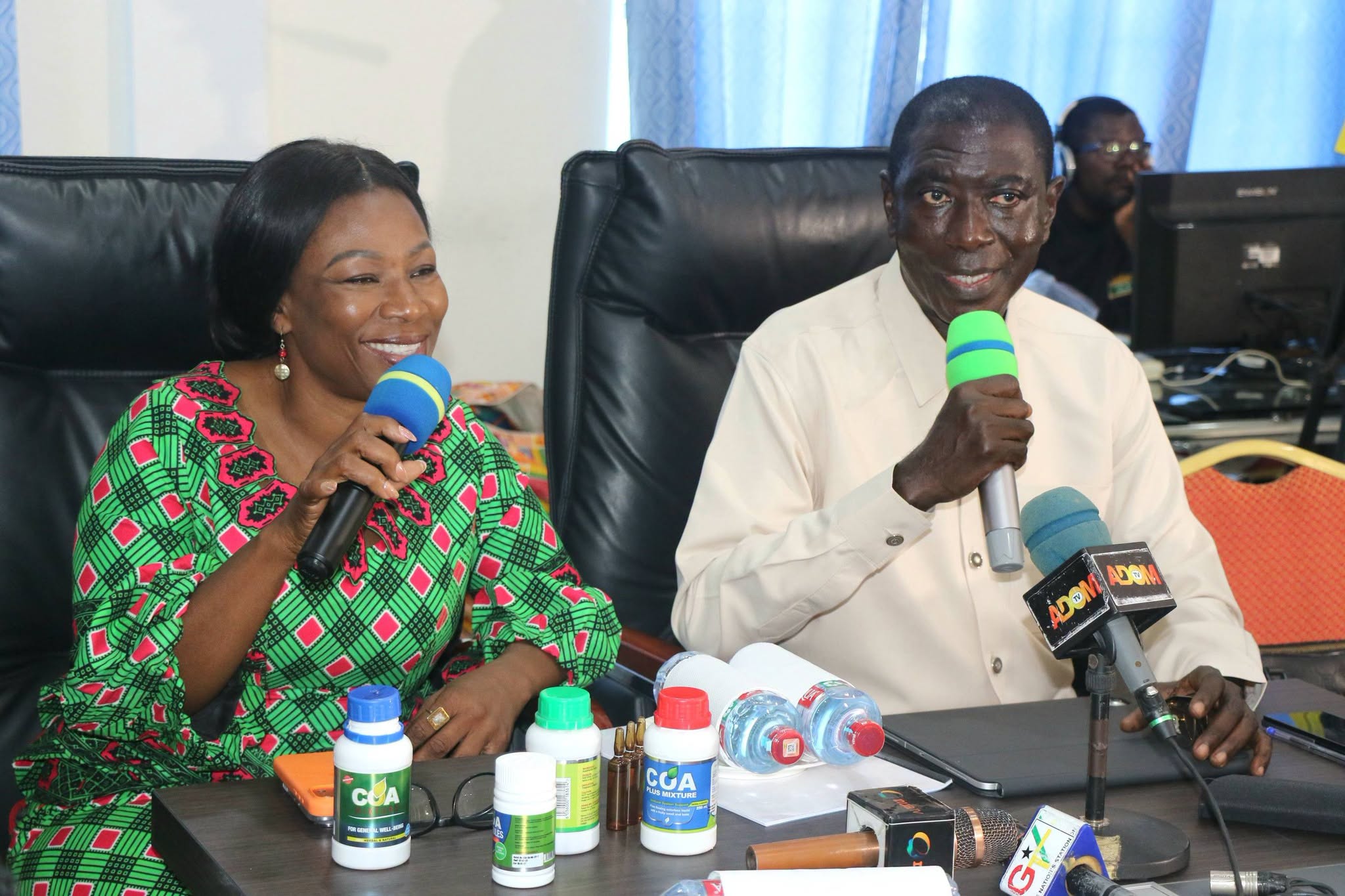
Deputy Minister for Health, Prof. Dr. Grace Ayensu-Danquah, said traditional medicine had an important role to play in improving healthcare delivery, particularly as the country rolls out the Free Primary Healthcare programme.
She made the remarks during a visit to the Center of Awareness (CoA) Research and Manufacturing Company, an herbal medicine manufacturing facility on Friday in the Central Region, where she engaged management and staff and inspected the facility to assess its compliance with Good Manufacturing Practices (GMPs).
Prof. Ayensu-Danquah said Ghana could draw useful lessons from countries such as China, where conventional medicines are used alongside each other to complement healthcare delivery.
She noted that greater integration of the two systems, backed by science, research and proper regulation, could help widen access to safe and quality healthcare.
According to the Deputy Minister for Health, the focus of the Free Primary Healthcare programme on preventive and promotive care also presents an opportunity to examine how traditional medicine could contribute to addressing non-communicable diseases such as hypertension and diabetes.
Prof. Ayensu-Danquah assured that the Ministry of Health would continue to work with relevant stakeholders to strengthen research, quality assurance, manufacturing and regulation in the traditional medicine sector.
She said the broader objective was to create a safe, evidence-based framework in which conventional medicine could complement each other in improving healthcare delivery in Ghana.
The Chief Executive Officer of CoA Manufacturing Company, Prof. (HC) Samuel Ato Duncan, welcomed the Government’s efforts to develop traditional medicine to a standard where it could complement national healthcare programmes, particularly the Free Primary Healthcare initiative.
He said the company was undertaking research into the potential health benefits of its products, including their possible application in areas such as cancer and viral diseases.
Prof. Duncan said sustained research and collaboration with the Government would be critical to unlocking the potential of traditional medicine and enabling the sector to make a greater contribution to national healthcare.
Grace Acheampong, ISD