Government to Develop New Human Trafficking Framework for 2027 to 2031- Gender Minister
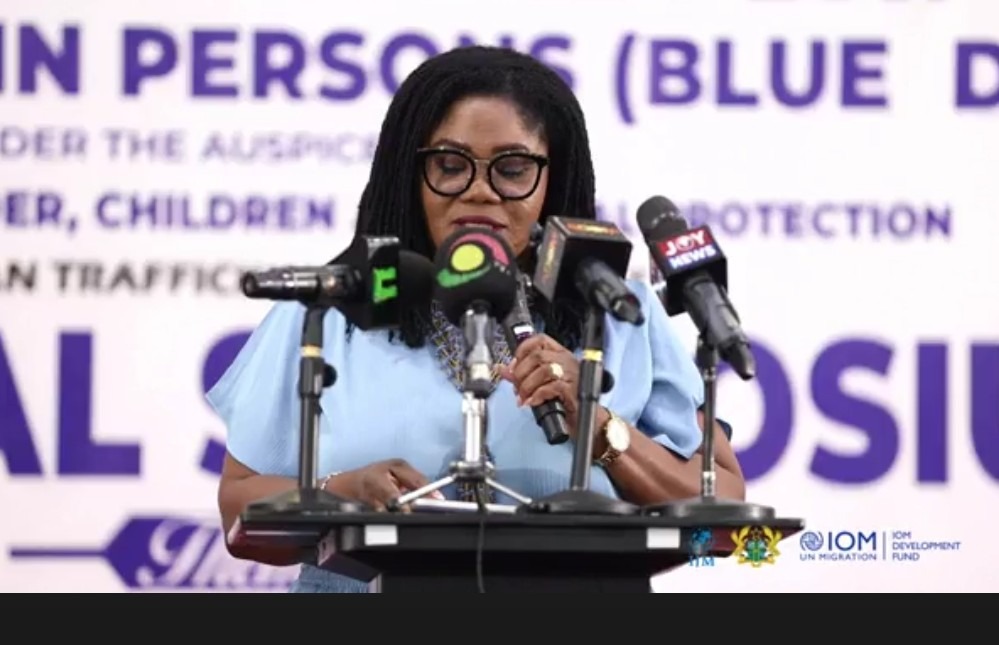
Government is set to develop a new National Plan of Action on Human Trafficking for the period 2027 to 2031, as the current five-year strategy comes to an end this year.
The Minister for Gender, Children and Social Protection, Dr Agnes Naa Momo Lartey, disclosed this on Thursday at the national symposium to mark the 2026 World Day Against Trafficking in Persons.
She said a technical working group had already been established to lead the development of the new plan and expressed confidence that recommendations from stakeholders at the national symposium would help shape the country’s next phase of action against human trafficking.
She revealed that stakeholders had called for a review of the Human Trafficking Act, 2005 (Act 694), to strengthen provisions on prevention, victim support, rehabilitation services, sustainable financing and shelter infrastructure.
According to the Minister, while Ghana has made progress in tackling human trafficking, the country must continue to improve its response to address changing trends, particularly the growing use of digital platforms by traffickers.
She urged government institutions, law enforcement agencies, development partners, civil society organisations and communities to work together to prevent trafficking and protect vulnerable people.
Dr Lartey said the Human Trafficking Act laid the foundation for Ghana’s fight against modern slavery by affirming the dignity of every person and the need to hold perpetrators accountable.
“Our nation declared that every human life has dignity, every child deserves protection, and every trafficker will be held accountable. That declaration remains as relevant today as it was in 2005,” she said.
She noted that collaboration among state institutions, law enforcement agencies, civil society organisations and international partners had strengthened Ghana’s response over the past five years.
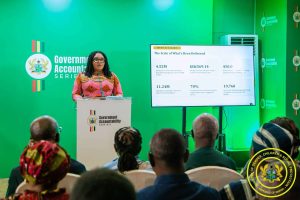
According to the minister, the number of rescued victims increased from 821 in 2021 to 846 in 2022 before rising to 1,089 in 2023.
“In 2025, Ghana recorded 2,331 rescued victims, the highest figure within the five-year period,” she added.
She said the figures represented people whose lives had been restored after experiencing exploitation.
Despite the progress, the Minister said challenges included inadequate funding for prevention programmes, limited shelter facilities for survivors, low public awareness and the need for continuous training for law enforcement officers, prosecutors and members of the judiciary.
Referring to this year’s global theme, “Trapped Behind a Scam,” Dr Lartey said organised criminal groups were increasingly exploiting people through online scams and financial fraud schemes.
She called on governments, technology companies, parents, educators and communities to work together to address the growing digital dimension of human trafficking.
The Minister also highlighted the Human Trafficking Secretariat’s National Blue Day campaign launched earlier this year under the theme, “Human Trafficking Can End. The Time Is Now to Blow the Whistle on Sports Trafficking.”
She explained that the campaign seeks to protect young athletes and aspiring footballers from individuals who lure them with false promises of professional opportunities abroad.
Priscilla Osei- Wusu Nimako, ISD