Gov’t Commits US$1 Billion to Pharmaceutical Industry Under New Economy Programme
A US$1 billion government allocation is expected to support the development of pharmaceutical and biomanufacturing hubs in the Eastern, Central and Volta Regions as Ghana steps up efforts to become a pharmaceutical centre for West Africa.
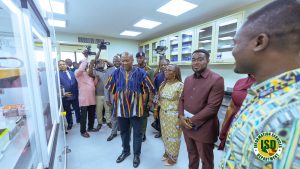
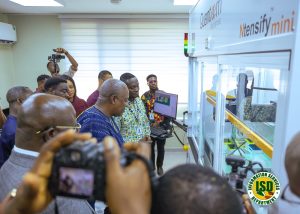
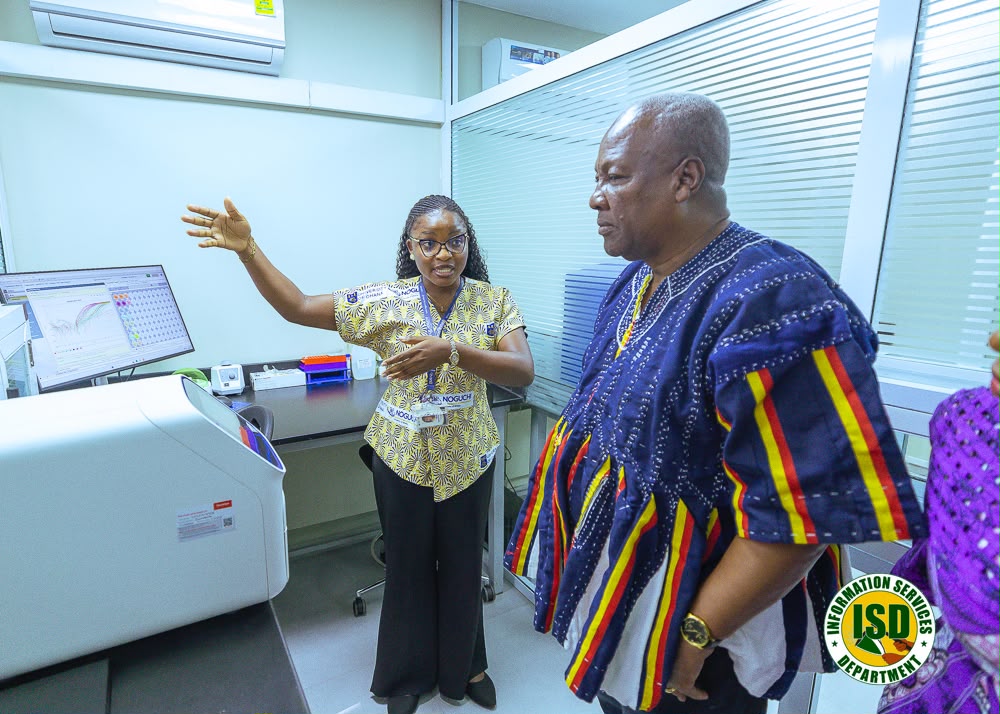
President John Dramani Mahama announced the investment on Wednesday, at the commissioning of the DNA testing and vaccine research laboratories at the Noguchi Memorial Institute for Medical Research at the University of Ghana.
The allocation forms part of the pharmaceutical sector’s support under the seventh pillar of the New Economy Programme.
President Mahama said the government had been working to realise the economic potential of the pharmaceutical industry and position Ghana as a centre for pharmaceutical production serving the wider African continent.
“Since my time in office, we have worked consistently to realize the pharmaceutical industry’s economic potential and position Ghana as a pharmaceutical hub for West Africa and the wider African continent,” he said.
He explained that the US$1 billion allocation would support the development of pharmaceutical and biomanufacturing hubs in three regions, providing a stronger foundation for local production and research.
“Government has backed that commitment with a $1 billion allocation to pharmaceuticals under the New Economy’s Seventh Pillar. With this allocation, we are aiming to build the Ghana pharmaceutical and biomanufacturing hubs in the Eastern, Central, and Volta regions,” he stated.
The President said the investment was part of a wider effort to strengthen Ghana’s capacity to produce vaccines and other pharmaceutical products locally, reduce dependence on external suppliers and improve the country’s ability to respond to public health needs.
He pointed to the COVID-19 pandemic as a lesson in the risks of depending heavily on international supply chains for vaccines and other medical products.
President Mahama noted that when global demand for vaccines increased during the pandemic, many African countries struggled to access supplies because wealthier countries prioritised their own populations.
He said the experience made it necessary for African countries to build local research, development and manufacturing capacity to avoid being left behind during future health emergencies.
The President said the newly commissioned mRNA and protein laboratories at Noguchi would complement the government’s industrial investment by providing scientists with facilities to conduct research, test new ideas and work with international partners.
He commended the National Vaccine Institute for its efforts to develop Ghana’s vaccine ecosystem and build partnerships with institutions in Europe and the United States.
President Mahama also disclosed that the National Vaccine Institute was discussing a possible partnership with a European institution to undertake cancer vaccine research using mRNA technology.
He said Ghanaian scientists would be able to conduct their own research while working alongside international counterparts to address existing and emerging health threats.
The President described the current period as a promising one for Ghana’s vaccine and pharmaceutical industry and assured stakeholders that government would continue to create conditions for the sector to grow across both the public and private sectors.
“I agree with the CEO of the National Vaccine Institute that this is a golden era for Ghana’s vaccine and pharmaceutical industry,” he said.
He added that the government’s efforts were intended to improve health outcomes while contributing to the country’s broader economic transformation.
President Mahama further disclosed that government would spend US$46 million this year to procure vaccines required for child immunisation.
He thanked the Minister of Health and his team, the scientists who helped procure the laboratory equipment and the University of Ghana for hosting the national research facility.
The President said the combination of investment in pharmaceutical infrastructure, local scientific expertise and international partnerships would help Ghana strengthen its position in vaccine research and pharmaceutical production.
Richard Aniagyei, ISD