Gov’t to Facilitate Overseas Employment for Skilled Apprentices Through Labour Mobility Agreements
Ghanaian graduates of the National Apprenticeship Programme (NAP) could secure employment opportunities in the Caribbean and the Middle East through labour mobility agreements being pursued by Government to connect trained local workers with international employers.
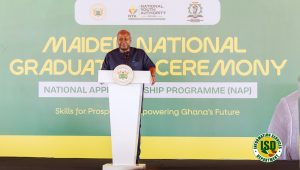
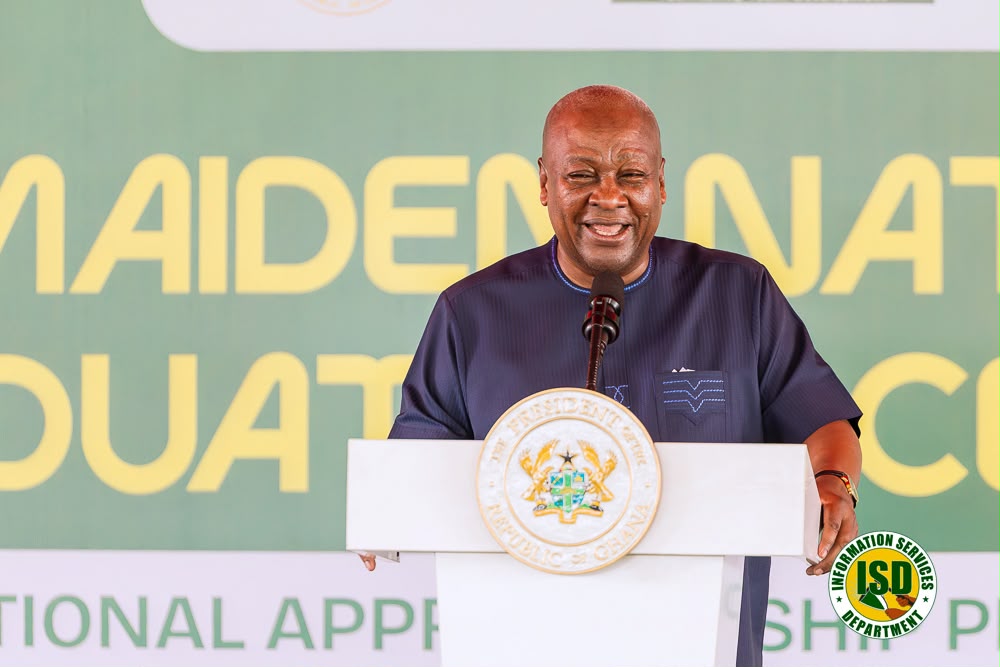
President John Dramani Mahama announced the initiative at the graduation ceremony of the first cohort of the National Apprenticeship Programme, saying some countries and regions had expressed demand for skilled workers and that Ghana was working to make its trained workforce available to them.
He said the agreements would create opportunities for qualified Ghanaians to take up employment abroad under fixed-term contracts, with the duration of most of the arrangements expected to be about five years.
The President explained that the agreements were intended to provide an additional employment pathway for young people who had acquired practical skills but were seeking opportunities beyond the domestic labour market.
He said the Caribbean and the Middle East were among the areas requesting skilled workers, creating an opportunity for Ghana to connect its growing pool of trained artisans and technical workers to international demand.
The National Apprenticeship Programme is designed to equip young people with practical competencies in occupations that are relevant to both local and international labour markets.
Its areas of training include electrical installations, plumbing, welding, carpentry, mechanical trades, agriculture and agro-processing, fashion and textiles, catering, hospitality, beauty and personal care, renewable energy and information technology.
President Mahama urged the graduates to appreciate that acquiring a certificate was only one part of their preparation for the world of work. They must also demonstrate competence, discipline, punctuality, honesty and the ability to deliver quality services.
The emphasis on work standards is particularly relevant to graduates who may seek employment abroad, where employers require workers who can demonstrate the practical skills and professional conduct expected in their respective occupations.
The first cohort produced 13,309 graduates, comprising 10,325 females and 2,984 males. The graduates were drawn from all 16 regions, with 112 persons with disabilities also completing the programme.
The pilot recorded 14,335 enrolments against an initial target of 10,000, exceeding the target by 43 per cent. More than 300,000 applications were received, reflecting the demand among young people for opportunities to acquire employable skills.
The programme, launched in Tamale on April 30, 2025, combines 70 per cent practical training with 30 per cent theory and entrepreneurship. Courses run for periods ranging from three to 18 months, depending on the area of specialisation.
Government is also working to connect graduates to opportunities within Ghana through the 24-hour economy and other employment initiatives. The Adwumawura Programme is expected to support those interested in setting up businesses, while the Women’s Development Bank is another avenue for enterprise support.
President Mahama also announced plans to expand the apprenticeship programme, with a target of training at least 50,000 apprentices in 2027.
The labour mobility arrangements add an international dimension to the programme by creating opportunities for trained Ghanaians to access employment outside the country while putting their skills to use in response to demand from foreign employers.
The President encouraged the graduates to make good use of the opportunities available to them and maintain standards that would earn them the confidence of employers and clients wherever they work.
Richard Aniagyei, ISD