President Mahama Announces Pharmaceutical and Biomanufacturing Hub for Asuogyaman District
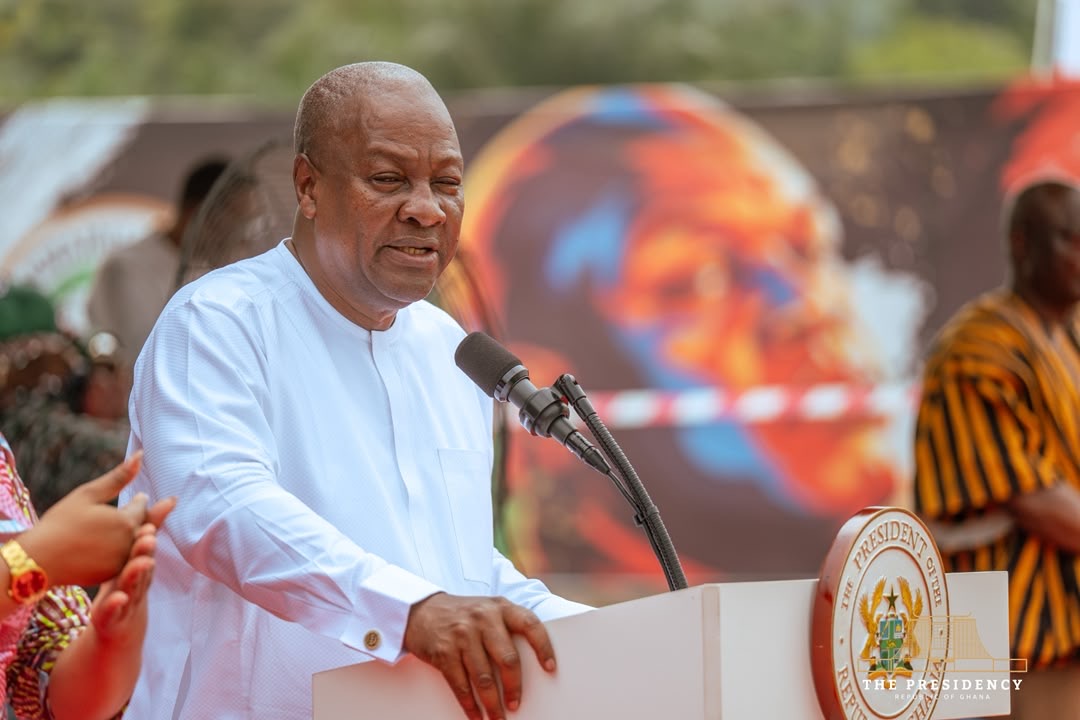
President John Dramani Mahama has announced plans to establish a pharmaceutical and biomanufacturing hub at Kwenyako in the Asuogyaman District of the Eastern Region as part of efforts to expand local medicine production, create jobs and position Ghana as a pharmaceutical manufacturing centre for the African market.
The proposed hub, which forms part of the pharmaceutical and biomedical engineering pillar of the Government’s New Economy Programme, is expected to attract investments in medicine and vaccine production, research, innovation and pharmaceutical manufacturing.
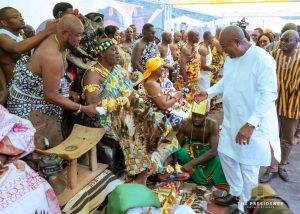
President Mahama made the announcement at the Odwira Akyi Akwasidae Kese durbar in the Akwamu Traditional Area, held in Asuogyaman to mark the 15th anniversary of the enstoolment of Odeneho Kwafo Akoto III, Akwamuhene.
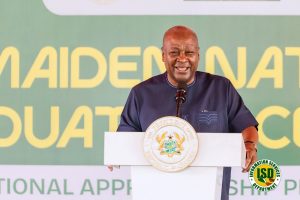
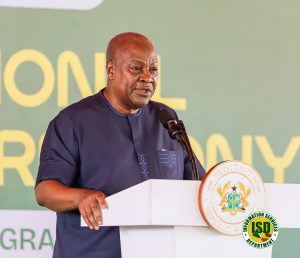
Addressing the gathering on Sunday, the President said the pharmaceutical sector had been identified as one of the key areas for investment under the New Economy Programme, which seeks to mobilise US$10 billion in investment between 2027 and 2030 to expand Ghana’s productive capacity.
“I am therefore pleased, Nana, to announce that government intends to establish a pharmaceutical and biomanufacturing hub in Kwenyako here in the Asuogyaman District,” he said.
The President explained that the pharmaceutical industry had been allocated up to US$1 billion in investment under the programme, with the proposed hub expected to host factories that would manufacture medicines and vaccines for Ghana and the wider continental market.
He said the initiative was part of the country’s efforts to reduce its dependence on imported medicines by strengthening domestic manufacturing capacity and building an economy that produces more of what it consumes.
Ghana’s national ambition, he said, was to manufacture between 70 and 80 per cent of its essential medicines locally by 2030, with the proposed pharmaceutical hub expected to contribute to achieving the target.
The project is also expected to create approximately 20,000 direct and indirect jobs across the pharmaceutical value chain, offering opportunities in manufacturing, research, logistics, technical services and other related areas.
President Mahama further disclosed that a United States pharmaceutical company had visited the area to begin preparations towards investing in the proposed hub, signalling interest in the pharmaceutical manufacturing initiative.
The pharmaceutical investment forms part of a broader development agenda under the New Economy Programme, which is expected to support industrial growth, job creation and investment in strategic sectors of the economy.
The President said Asuogyaman was well positioned to contribute to the country’s transformation through its natural resources, geographical location and economic potential, adding that the district would not be left out of the government’s development plans.
He also announced plans to invest US$1 billion in the tourism and hospitality industry, with Asuogyaman expected to benefit from efforts to develop its waterfront tourism, eco-tourism, cultural heritage, recreation and hospitality potential.
The President identified the Volta River, Lake Volta, the Akosombo landscape, the Adomi Bridge and the historical heritage of Akwamufie as assets that could be developed to attract tourists, stimulate local businesses and create jobs.
He also pointed to the proposed Esikuma Inland Port, the extension of the railway line from Mpakadan to Esikuma and plans for a modern marina at Mpakadan as projects expected to strengthen trade, transport and economic activity in the area.
President Mahama said the investments were intended to ensure that development translated into tangible benefits for local communities, including farmers, artisans, transport operators, hospitality businesses and young entrepreneurs.
The proposed pharmaceutical and biomanufacturing hub in Asuogyaman is expected to form part of Ghana’s wider efforts to strengthen local pharmaceutical production, improve access to medicines and expand the country’s industrial base.
Richard Aniagyei, ISD