President Mahama Pushes Manganese Processing to Expand Local Industralisation
President John Dramani Mahama has called for accelerated development of Ghana’s manganese-processing industry as part of a wider strategy to retain more value from the country’s mineral resources and create jobs through domestic manufacturing.
He said Ghana’s mineral wealth must support industries at home rather than remain a source of raw materials for manufacturing economies elsewhere.
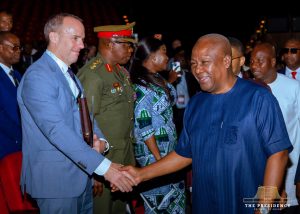
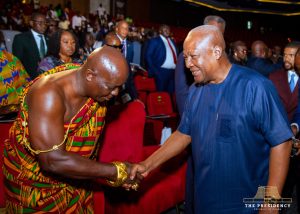
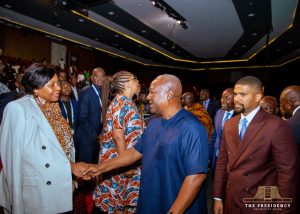
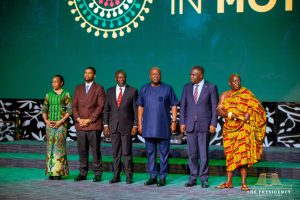
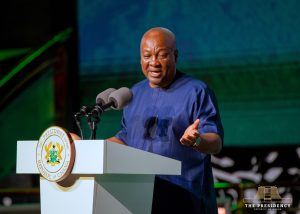
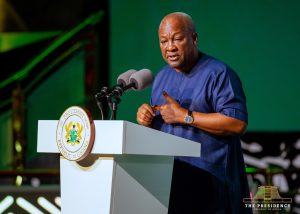
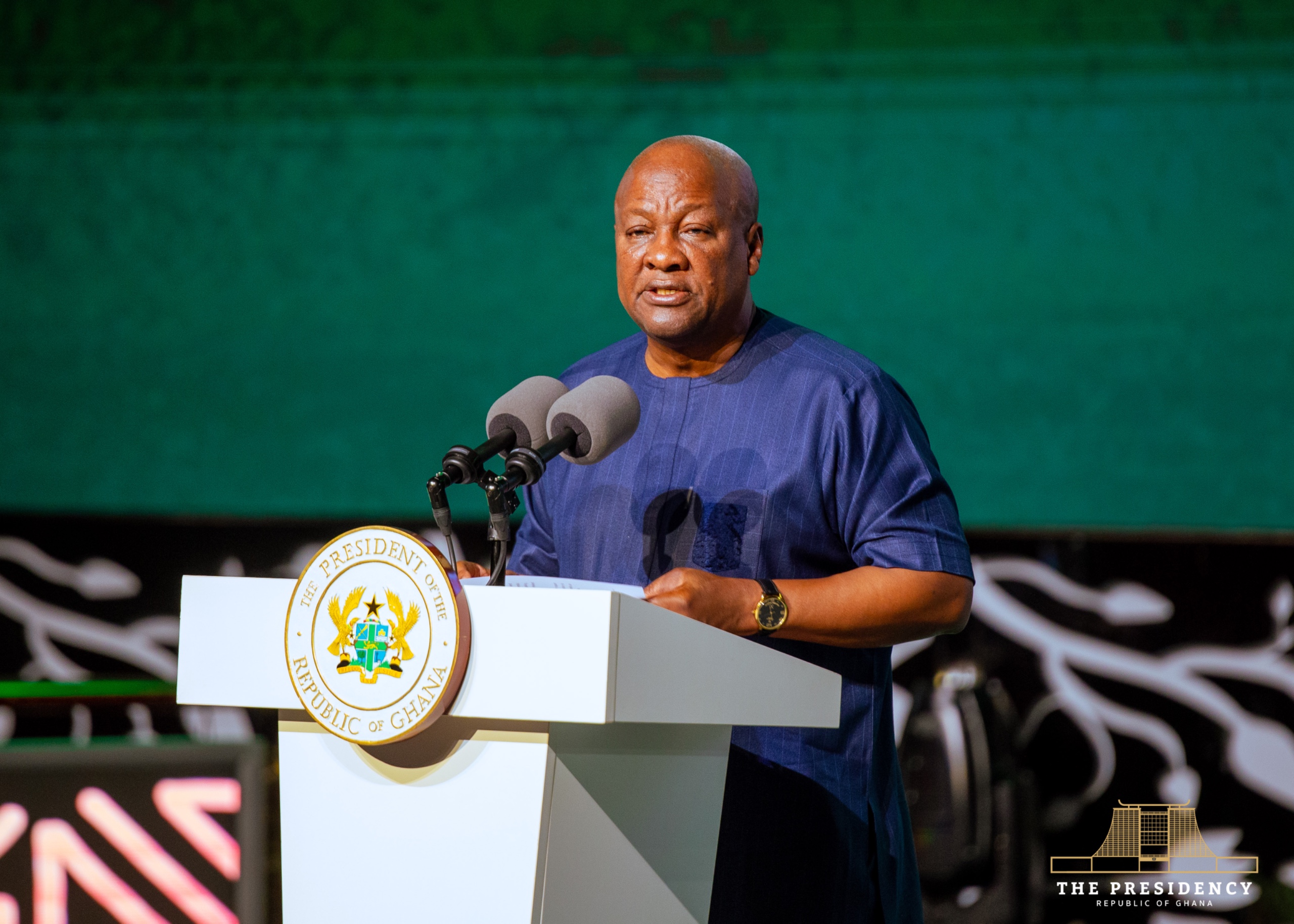
Addressing the opening of the 2026 Mining in Motion Summit in Accra, President Mahama said the government was advancing manganese processing alongside plans to develop domestic aluminium refining and strengthen the iron and steel industry.
“We are also advancing manganese processing. Our 24-hour economy agenda can help coordinate production, logistics and services, thereby expanding output and employment,” he said.
The President said the development of mineral-processing industries was necessary to change Ghana’s long-standing dependence on exporting raw materials while importing finished products manufactured from them.
He recalled that Ghana had for generations exported manganese and bauxite to supply industries abroad, while opportunities for skilled employment and technological learning were lost.
“For generations, ships have departed from Ghana’s ports, carrying Ghanaian manganese and bauxite. Much of these materials has supplied industries in other parts of the world, while we have imported the finished products made from these mineral ores,” he said.
President Mahama said the government intended to change that pattern by developing local processing capacity and connecting mineral resources to the needs of Ghana’s wider economy.
He set a target for unprocessed mineral ores to stop leaving the country’s shores by 2030, explaining that the government would pursue a phased prohibition supported by legal measures and mineral-specific implementation requirements.
The President said manganese, together with bauxite, iron, lithium and other minerals, should become a foundation for domestic industrial development.
He explained that the 24-hour economy agenda could support the expansion of mining-related production by coordinating activities across production, logistics and services.
Beyond mineral extraction and processing, he identified opportunities for Ghanaian businesses in fabrication, equipment maintenance, laboratory services, software and recycling.
President Mahama said universities and technical institutions should collaborate with industry to develop practical solutions to production challenges and prepare young people for skilled employment.
“Our training institutions must also prepare the engineers, technicians, geologists and managers that these industries require,” he said.
He added that infrastructure and reliable energy supplies would be necessary to make processing facilities competitive, alongside access to financing and dependable supplies of raw materials.
The President also stressed the need for clear responsibilities, measurable milestones and transparent reporting on major industrial initiatives.
He said the government welcomed investors willing to build processing facilities, transfer technology and create employment opportunities beyond extraction.
“Successful partnerships must strengthen enterprise, transfer knowledge and create opportunities beyond extraction,” he said.
President Mahama said Ghana’s industrial development would be strengthened by greater participation of indigenous companies in mining operations and related supply chains.
He called for fair procurement arrangements, financing for viable local businesses and practical supplier-development programmes to enable Ghanaian enterprises to participate meaningfully in the industry.
The President further urged African countries to cooperate on mineral processing and regional markets, arguing that a coordinated continental approach could help countries capture more of the value generated from their natural resources.
He said Ghana’s mineral-development policies should ultimately produce operating facilities, expanding local supplies, skilled employment and finished products that can compete in African and international markets
Richard Aniagyei, ISD