
Reducing Gender Issues to Clickbait Denies Public Substance – Vice President
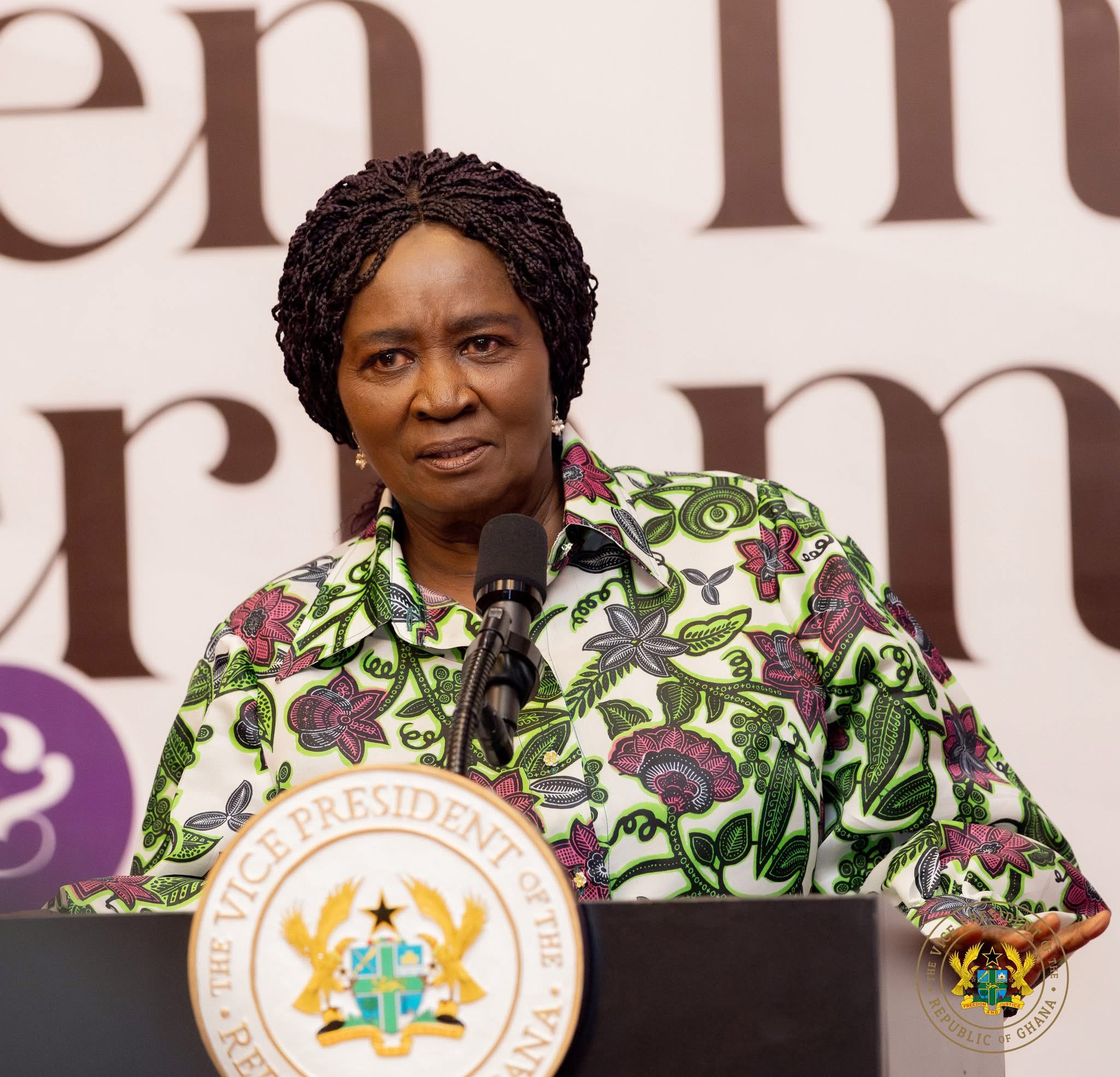
Vice President Professor Jane Naana Opoku-Agyemang has warned that reducing gender issues to clickbait denies the public substance and shrinks the space for women in public life.
The Vice President made this statement on Thursday at a networking event for women in government and media at the Jubilee House in Accra.
She cautioned that when stories about women focus on superficial issues like appearance at the expense of competence and outcomes, the space for women in public life becomes very small and sometimes insignificant.
“When gender issues are reduced to clickbait, the public is denied sustenance. When stories about women focus on superficial issues only, like appearance, at the expense of our brains, our competence, and our outcomes, the space for women in public life becomes very, very small, and sometimes insignificant,” Professor Opoku-Agyemang stated.
The Vice President stressed that women must refuse to be belittled, intimidated, or shaped in other people’s images, urging them to have faith in themselves and reject attempts to talk them down simply because they are women.
“We must refuse to be belittled. We must refuse to be intimidated. We must refuse to be shaped in other people’s images. We must have faith in ourselves. We must refuse for anyone to talk us down, simply because we are women. We are proud of being women,” she declared.
Professor Opoku-Agyemang explained that women journalists and editors carry a particular responsibility, not because women are morally superior, but because their presence changes perspective in newsrooms.
She said when women occupy editorial rooms, they can question framing, challenge assumptions, and insist on depth rather than superficiality in coverage.
The Vice President noted that the media serves as a classroom for governance, economics, health, and public policy for many citizens, and women in media leadership can clarify complex issues, elevate credible expertise, and expose harmful practices.
She acknowledged the pressures of the digital age, noting that speed and controversy tend to be rewarded and travel faster than substance, but insisted that standards must still govern editorial choices.
Professor Opoku-Agyemang emphasized that visibility by itself is not the goal but influence, adding that influence without standards can be risky.
She explained that in the media, visibility shapes how society understands power, leadership, competence, and credibility, making the role of women in media particularly important.
The Vice President urged younger women entering journalism to recognize that their bylines, reporting, and leadership will shape people’s understanding of power and potential.
She encouraged them to interrogate every story and decision by asking whether it clarifies, provokes, informs, or inflames, and to what end.
Professor Opoku-Agyemang called for women in governance and media to work together professionally to strengthen democratic accountability, ensuring that the story of Ghana’s development is told accurately, fairly, and with confidence in Ghana’s women.
She stressed that democratic governance depends on informed citizens, and informed citizens depend on credible journalism and credible leadership that goes beyond superficial coverage.
Richard Aniagyei, ISD