
Trade Minister Calls for Removal of Non-Tariff Barriers to Boost West African Trade
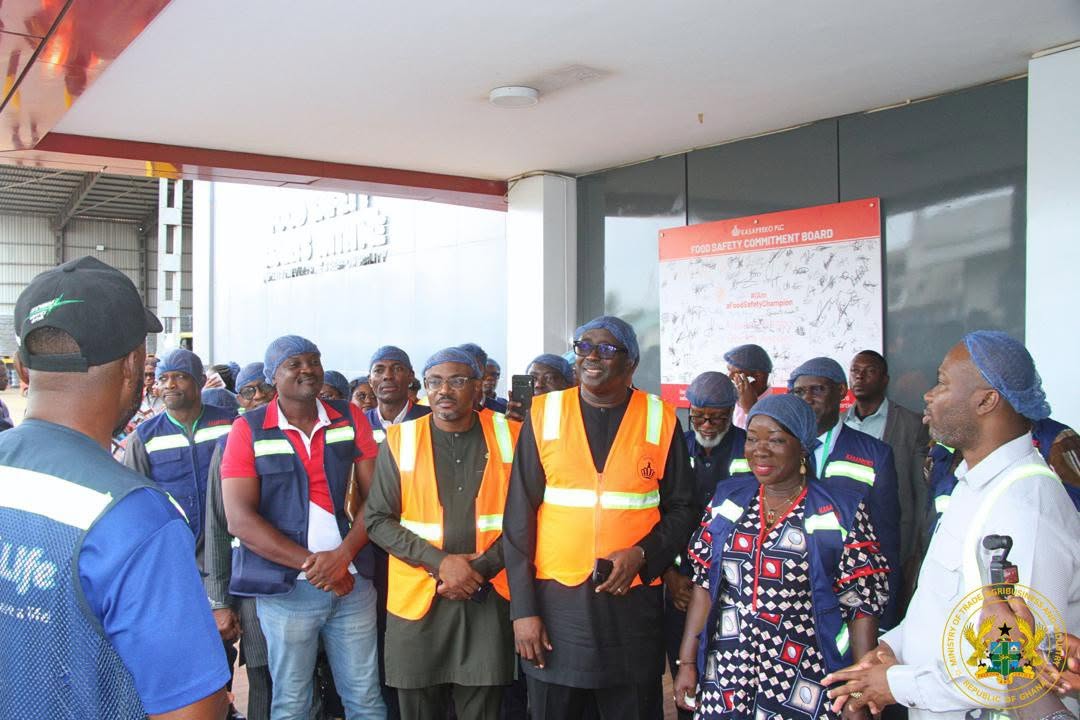
The Minister for Trade, Agribusiness and Industry, Madam Elizabeth Ofosu-Adjare, has called on ECOWAS member states to take concrete steps to dismantle non-tariff barriers that continue to impede the free movement of goods and services across West Africa’s borders.
The Minister made the call after leading a high-level delegation of ECOWAS Ministers and representatives on an industrial tour of Kasapreko Company PLC, one of Ghana’s foremost indigenous beverage manufacturers.
The visit, held in Accra, formed part of a broader ECOWAS drive to promote regional industrialisation, strengthen intra-African trade, and highlight successful manufacturing enterprises within the West African sub-region.
Discussions during the visit also centred on the opportunities presented by the African Continental Free Trade Area (AfCFTA), the development of regional value chains, and strategies for reducing trade barriers among ECOWAS member states.
Addressing the press after the tour, Madam Ofosu-Adjare stated that the persistence of non-tariff barriers remains one of the most significant challenges confronting traders and manufacturers operating across ECOWAS borders.
She said addressing these obstacles is critical to unlocking the full benefits of regional economic integration and enhancing the competitiveness of West African businesses in continental and global markets.
The Minister noted that well-performing companies such as Kasapreko demonstrate the capacity of African industries to compete at regional and international levels, provided they are supported by sound policies and a conducive investment environment.
She commended Kasapreko for its contribution to Ghana’s industrial transformation agenda and its role in advancing the cause of locally manufactured products beyond the country’s borders.
Welcoming the delegation, the Managing Director of Kasapreko PLC, Mr. Richard Adjei, highlighted the company’s growth from a local beverage producer into a recognised brand with products distributed across numerous African and international markets.
He disclosed that the company currently exports twenty percent of its production to markets within the sub-region.
Mr. Adjei emphasised the company’s commitment to innovation, value addition, job creation, and adherence to international production standards.
Participants agreed that deeper collaboration between governments and the private sector is essential to achieving sustainable industrial development and advancing economic integration across the continent.
Adwoa Koramah Anokye-Gyimah, ISD