Government Backs African Diplomatic Institutes Network to Strengthen Continental Cooperation
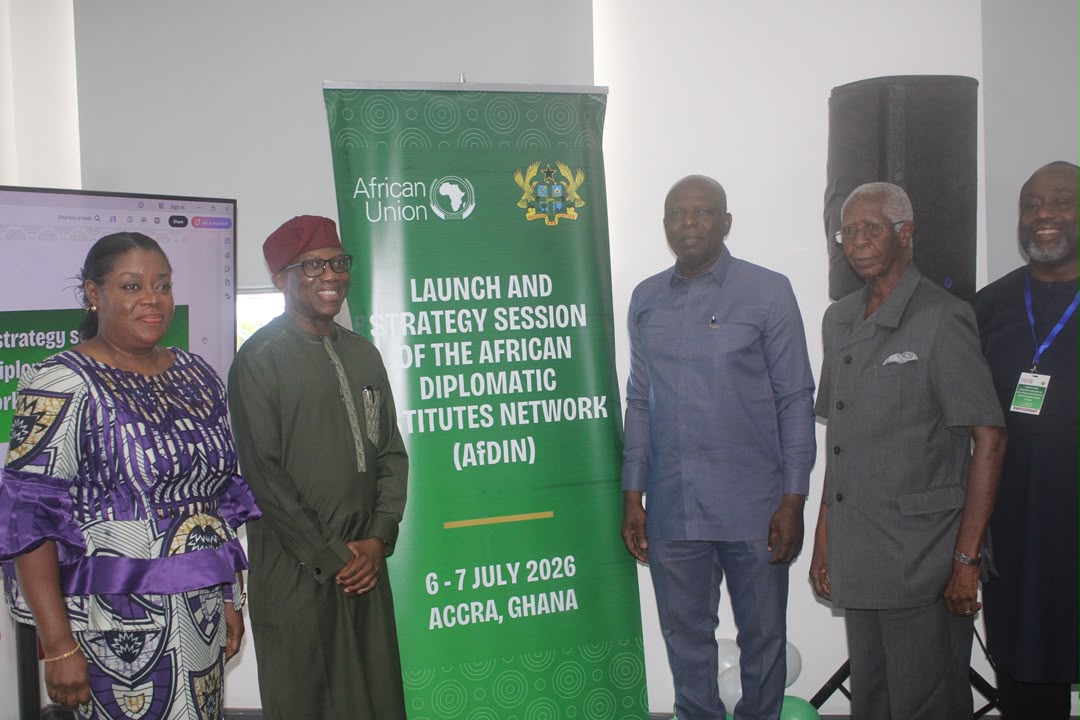
The government has reaffirmed its commitment to building a new generation of African diplomats equipped to advance the continent’s interests, describing the effort as a strategic investment in Africa’s future diplomatic leadership.
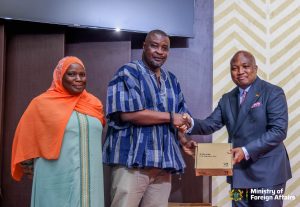
The Director of the Delivery Unit at the Ministry of Foreign Affairs, Alexander Grant Ntrakwa, disclosed this at the launch of the African Diplomatic Institutes Network (AfDIN) on Monday in Accra.
Delivering the keynote address on behalf of the Minister for Foreign Affairs, Samuel Okudzeto Ablakwa, he said Ghana fully supports the vision of AfDIN to strengthen diplomatic training institutions across Africa and deepen cooperation with the African Union Commission.
“The vision of AfDIN to cultivate a generation of diplomats who would not only be skilful in the art of diplomacy, but also be profoundly knowledgeable and passionate advocates for Africa’s continental agenda is a vision for which Ghana is truly committed,” he said.
Ambassador Ntrakwa said Ghana’s commitment to continental diplomacy dates back to the leadership of Kwame Nkrumah, who established the Kwame Nkrumah Ideological Institute in 1961 to provide ideological and practical training for African liberation leaders, anti-colonial fighters, and political activists.
According to him, while Africa’s priorities had shifted from the struggle against colonialism, the continent now faces challenges that require well-trained diplomats capable of promoting peace, preventing conflicts and protecting Africa’s interests on the global stage.
“Today we might not be fighting liberation and colonialism, but the urgent threat to our collective development is conflict prevention, peaceful cooperation, and advancing Africa’s interest in an increasingly complex international system, of which a well-informed African diplomat could be the solution”, he said.
He said AfDIN would contribute to the implementation of the African Union’s Agenda 2063 by preparing diplomats to champion continental integration, prosperity, and peace.
Ambassador Ntrakwa said the partnership between AfDIN and the African Union Commission would establish a permanent platform for collaboration among diplomatic training institutions, strengthen curriculum development, promote knowledge sharing, and provide member institutions with direct access to African Union expertise.
He expressed optimism that the network would help create a common understanding of African Union policies and frameworks among member academies, leading to more coordinated and informed representation of Africa in international affairs.
He said, “As we launch this initiative today, I am confident that it is the beginning of a transformative process that will strengthen Africa’s diplomatic institutions and future diplomatic leadership.”
Speaking on behalf of the African Union’s Political Affairs, Peace and Security Department, Head of the Peace and Security Council Secretariat, Madam Neema Chusi, said the launch occurs as Africa faces increasingly complex governance, peace, and security challenges amid changing global geopolitical dynamics.
Joyce Adwoa Animia Ocran, ISD