Government Expands School Feeding as Northern Region Leads Call for Nutrition Action

The Government has pumped an additional GH¢190 million into the Ghana School Feeding Programme for 2026, raising the budget to GH¢1.98 billion as part of a renewed push to tackle malnutrition across the country.
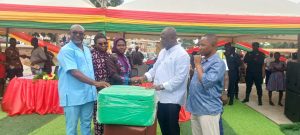
The announcement was made on Tuesday, August 4, 2026, by the Northern Regional Minister, Mr Ali Adolf John, at the opening of the Conference of Nutrition and Dietetics 2026 at the University for Development Studies, Tamale.
Speaking under the theme, “Curbing the Triple Burden of Malnutrition: Mobilising Stakeholders for Concerted Action,” the Minister said the funding increase is aimed at expanding coverage, improving meal quality, and creating stronger markets for local farmers.
“School feeding is no longer just about feeding pupils. It is about food security, jobs for caterers, and income for farmers. That is why we increased the budget from GH¢1.79 billion in 2025 to GH¢1.98 billion in 2026,” Mr Adolf stated.
The Minister told participants from the Ministry of Health, Ghana Academy of Nutrition and Dietetics, academia, CSOs, and development partners that Ghana’s nutrition crisis has evolved, noting that, beyond hunger, the country now faces a triple burden of undernutrition, overweight and obesity, and diet-related non-communicable diseases like diabetes and hypertension.
In the Northern Region, he noted, childhood stunting, wasting and micronutrient deficiencies persist, while obesity cases are rising in both adults and children.
“These challenges reduce productivity, weaken educational outcomes and undermine our long-term development goals,” he said.
Mr Adolf called for nutrition to be treated as a cross-sector issue and urged MMDAs to integrate nutrition-sensitive interventions into their Medium-Term Development Plans.
The minister extended his advocacy to other government departments and institutions, charging the Department of Agriculture to promote diversified food production, education authorities to strengthen nutrition lessons in schools, traditional and religious leaders to champion healthy lifestyles.
The Regional Minister paid tribute to nutritionists and dietitians, describing their work in clinical care, research and community outreach as “invaluable” at a time when processed foods are becoming common.
He charged the conference to produce a practical, time-bound roadmap to guide national and regional nutrition policies.
“Improving nutrition is essential for building a healthy population, increasing productivity and achieving sustainable national development,” he concluded.
Bala Ali, ISD