Gender Equity Secretariat Pushes Gender-Responsive Budgeting to Advance Affirmative Action
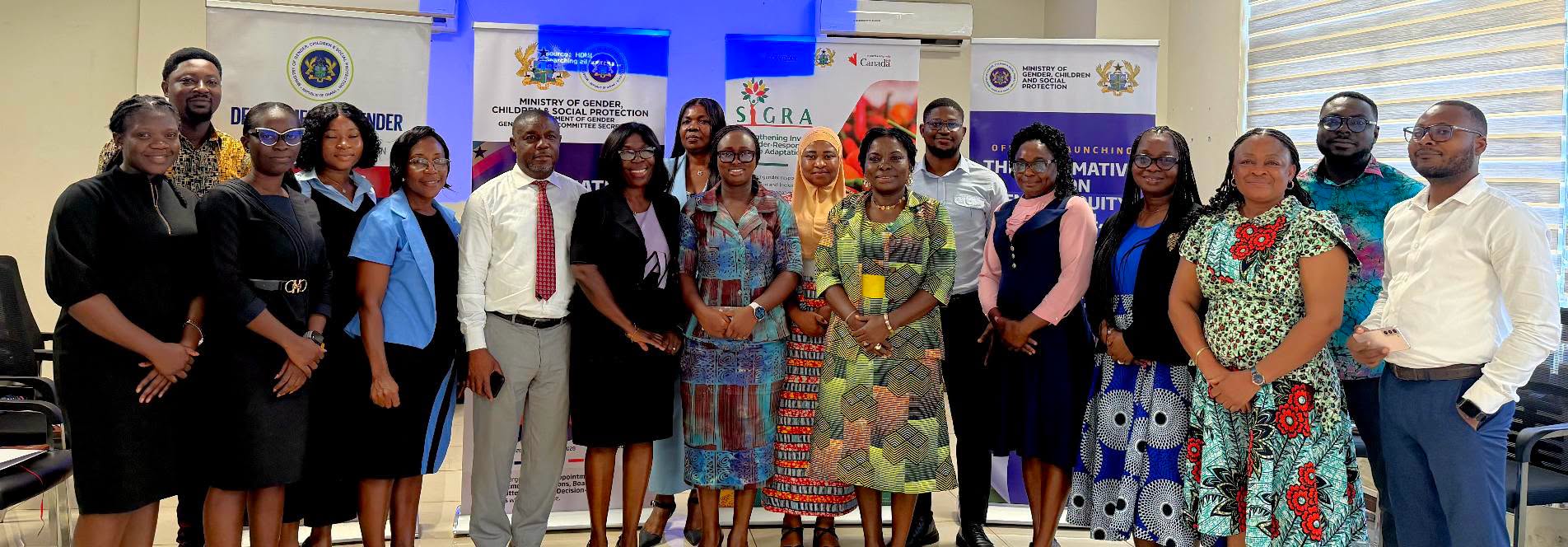
The Gender Equity Committee Secretariat under the Department of Gender has intensified efforts to make gender equality a practical part of government planning and resource allocation through a capacity-building workshop on Gender Responsive Budgeting (GRB).
The workshop, organised in collaboration with ActionAid Ghana last week, brought together members of the Sub Committee on Gender Responsive Budgeting and Resource Mobilisation, representatives of selected institutions and other stakeholders.
The session aimed at equipping participants with the knowledge and practical skills needed to apply gender considerations in institutional planning, budgeting and resource allocation, as part of efforts to support the implementation of the Affirmative Action (Gender Equity) Act, 2024 (Act 1121).
In a welcome address delivered on behalf of the Chief Director, Dr. Marian W. A. Kpakpah, by the Head of the Gender Equity Committee Secretariat, Madam Vera Karikari, the Chief Director said achieving the objectives of the law would require deliberate action, adequate funding and stronger attention to gender in the work of public institutions.
She pointed to Section 19 of the Act, which requires public institutions to integrate gender considerations into their planning and budgeting processes.
Dr. Kpakpah therefore urged institutions to move beyond recognising gender inequalities and ensure that policies, programmes, plans and budgets were designed and resourced to address identified gaps.
The workshop was facilitated by Dr. Afua Ansre of UN Women, with presentations by Dr. Elham Ansre Mumuni, Team Lead of the SIGRA Project, who examined Gender Responsive Budgeting and its importance to the implementation of the Affirmative Action (Gender Equity) Act.
Participants also took part in practical group exercises to identify gender inequalities within their respective institutions, examine the factors contributing to those gaps, and develop possible interventions, including the resources required to address them.
The exercises allowed participants to connect gender analysis with actual institutional decisions on planning and the allocation of resources.
The workshop ultimately sought to strengthen the capacity of public institutions to mainstream gender in their planning and budgeting processes and ensure that gender commitments result in measurable actions and more equitable development outcomes.
Grace Acheampong, ISD.