GHS Reviews Medical Records Strategy to Strengthen Digital Health Information Management

The Ghana Health Service (GHS) has begun a four-day validation workshop to review and update the Medical Records Strategy and Operational Guidelines to align with developments in digital health, data governance, interoperability, cybersecurity and artificial intelligence (AI).
The revised documents are expected to provide updated guidance for managing health information in Ghana’s health sector and address changes that have emerged since the introduction of the Medical Records Policy in 2017.
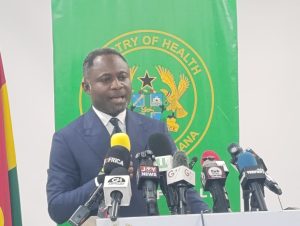
Opening the workshop, the Director of Policy, Planning, Monitoring and Evaluation (PPME), Dr. Samuel Kwabena Boakye-Boateng, said the revision was necessary to ensure that the guidelines reflect current and future health information needs.
He said the health information environment had changed since 2017, adding that the updated strategy must be suited for the current health system and the years ahead.
Dr. Boakye-Boateng acknowledged the support of the World Health Organization (WHO) and the United Nations Development Programme (UNDP), noting that their technical assistance, including the medical records gap analysis, had contributed to the review process.
He said developments in Electronic Medical Records, the expansion of the District Health Information Management System (DHIMS2), increased data interoperability and the use of artificial intelligence required stronger policies on data governance, patient privacy, cybersecurity, AI oversight, data quality and equitable access.
“The challenges we are addressing, which are absent AI oversight, weak data quality standards, fragile consent models and inequitable access, are not abstract governance problems. They affect real people seeking care in our facilities every day,” he said.
Dr. Boakye-Boateng added that patients needed policies that protected their information while health workers required guidelines that supported effective service delivery.
Dr. Boakye-Boateng urged participants to ensure that their discussions produce practical and evidence-based guidelines that strengthen health information management and protect patient data.
Speaking on behalf of UNDP Ghana, Ms. Toko Reikam, Project Management Specialist at UNDP Ghana, reaffirmed the organisation’s support for Ghana’s digital health transformation efforts.
She said responsible use of artificial intelligence could contribute to improved health outcomes by addressing risks and promoting human security.
“UNDP, jointly with WHO Ghana, is happy to join the Ghana Health Service to revise this document,” she said.
The workshop brings together regional health managers, medical records professionals, digital health experts and development partners to review recommendations across six priority areas.
The outcomes of the workshop will guide the development of a modern medical records governance framework focused on security, patient rights, data quality and interoperability within Ghana’s health sector.
Priscilla Osei-Wusu Nimako, ISD