Ministry of Finance Launches Sub-National PEFA Assessment and PFM Review to Strengthen Local Government Finances
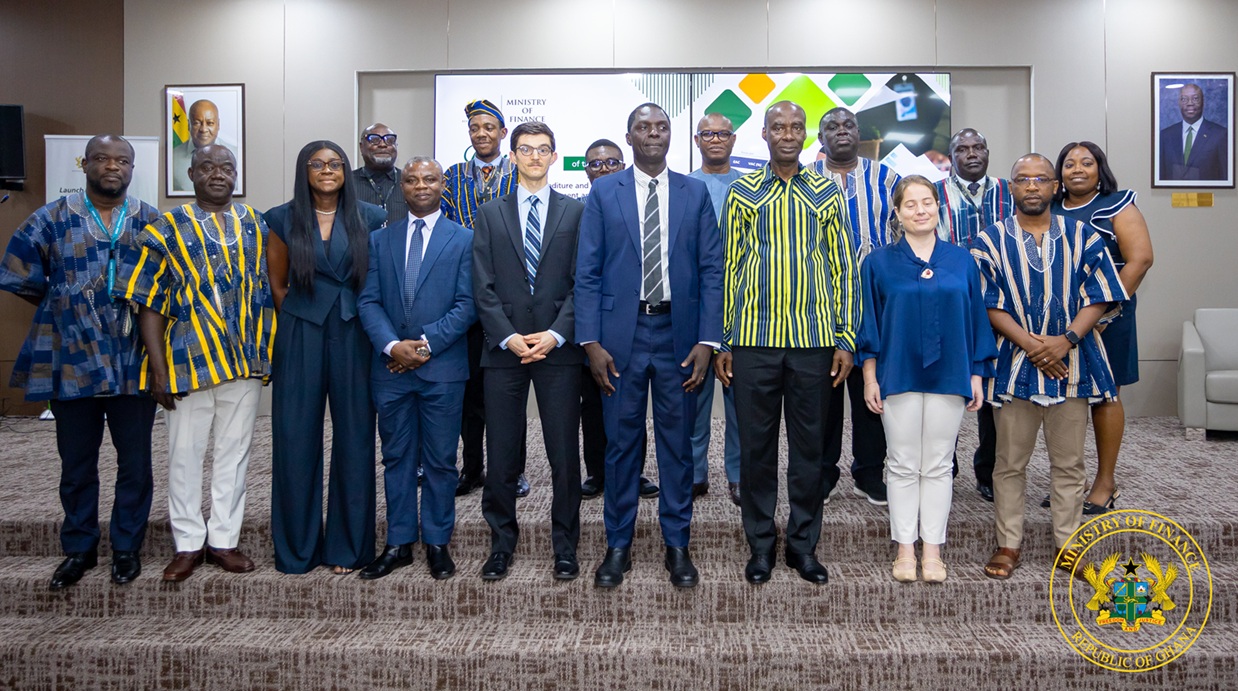
The Ministry of Finance, in collaboration with the World Bank, has launched the Sub-National Public Expenditure and Financial Accountability (PEFA) Assessment and Public Financial Management (PFM) Review to strengthen financial management at the local government level.
The programme, held under the theme, “Strengthening Sub-National Public Expenditure and Financial Accountability Assessment and Public Financial Management Review,” was launched on behalf of Dr Cassiel Ato Forson, Minister for Finance.
Speaking during the launch, the Chief Director of the Ministry of Finance, Mr. Patrick Nomo, called for a comprehensive examination of financial management challenges at the local government level to ensure that public resources allocated to Metropolitan, Municipal and District Assemblies (MMDAs) translate into improved service delivery and better living conditions for communities.
He said effective public financial management at the national level must be matched by equally strong systems at the sub-national level, where citizens directly experience the impact of government spending.
Mr Nomo said the exercise must go beyond establishing whether financial management systems and procedures were in place to identify the underlying reasons for persistent weaknesses and recommend practical solutions.
He urged the assessment teams to move beyond routine checklists and investigate the root causes of financial management challenges confronting local assemblies.
He also stressed that the transfer of resources to assemblies must be accompanied by deliberate efforts to build their institutional capacity to manage funds responsibly and maintain local infrastructure to ensure sustainable benefits for communities.
He noted that the initiative comprises a PFM Review covering all 261 MMDAs, alongside detailed PEFA assessments in 10 selected assemblies.
The exercise will examine critical areas of public financial management, including budgeting, revenue mobilisation, expenditure management, procurement and accountability, with the aim of identifying institutional gaps and recommending practical improvements.
Mr Nomo said the ultimate value of the assessment would depend on the implementation of its recommendations to ensure that improvements in financial management translated into tangible benefits for citizens.
The Head of Cooperation at Switzerland’s State Secretariat for Economic Affairs (SECO), Mrs Janine Walz, said the success of local governance should be measured by the positive difference it made in the lives of people.
She noted that effective public financial management was essential to ensuring that public resources supported critical services, including children’s education, healthcare and other everyday needs.
Mrs Walz reaffirmed Switzerland’s support for the initiative and encouraged participating institutions to share information openly and use the exercise to build institutional capacity, strengthen accountability and enhance public trust.
The Lead Public Sector Specialist at the World Bank Group, Mr Raymond Muhula, said the increasing resources allocated to assemblies must translate into improved service delivery for local communities.
He explained that the assessments would help identify areas where existing financial management systems were performing well and those requiring further improvement.
Describing the initiative as government-led, Mr Muhula reaffirmed the World Bank’s commitment to working closely with local institutions to develop practical recommendations to inform policy and strengthen service delivery.
Judith Twumwaa, ISD