NACOC to share best practices with Zimbabwe on Drug Control
The Narcotics Control Commission (NACOC) is set to share its operational experience and best practices in narcotics control with Zimbabwe as part of efforts to strengthen regional cooperation in combating illicit drug trafficking and substance abuse across Africa.
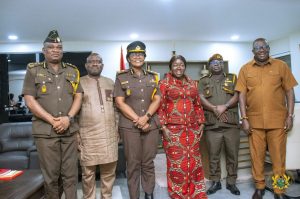
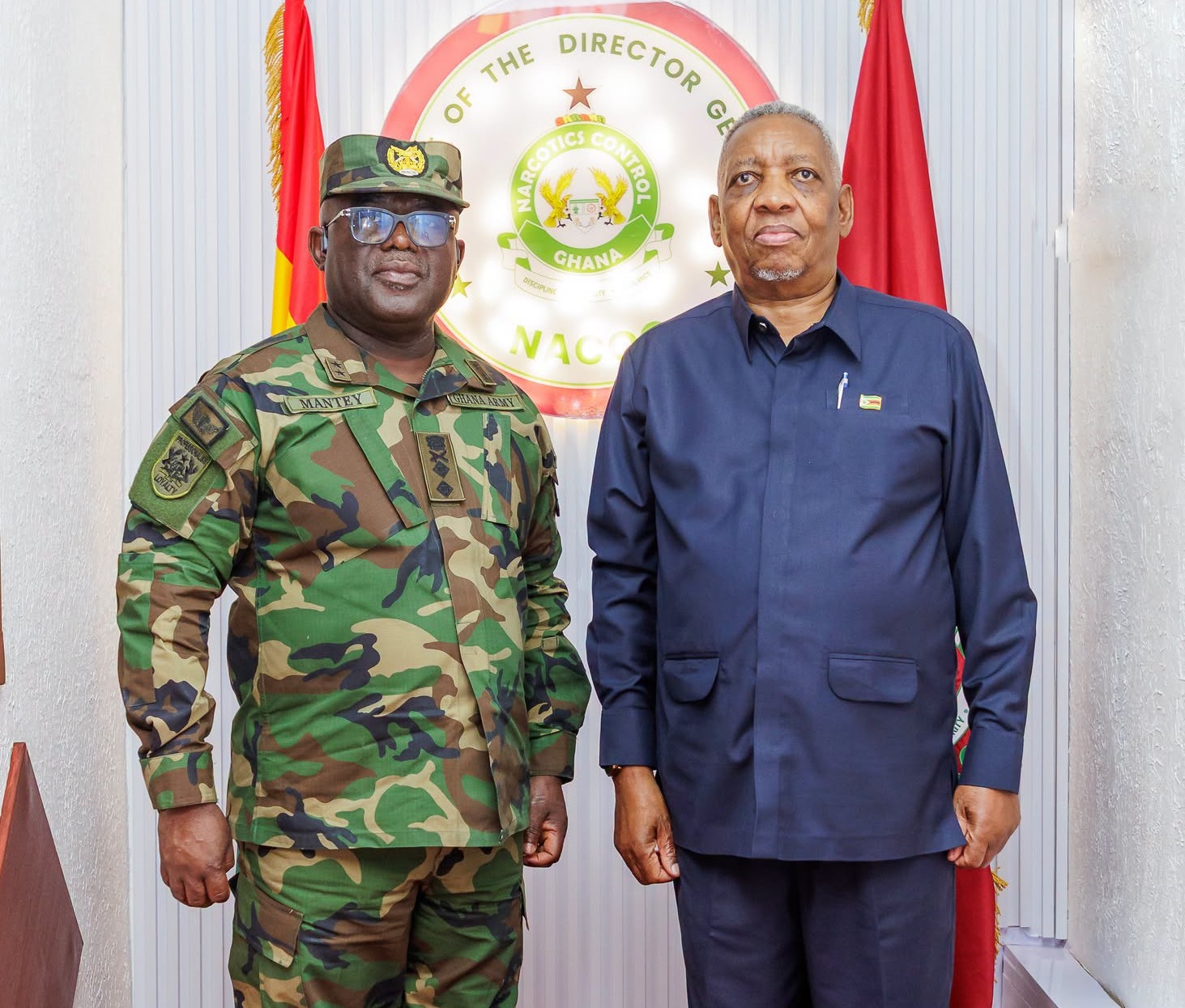
This follows a courtesy call by the Ambassador of Zimbabwe to Ghana, His Excellency K.E. Chinoza, on the Director-General of NACOC, Major General Maxwell Obuba Mantey, to formally brief the Commission on Zimbabwe’s proposed benchmarking mission ahead of the establishment of its Drug and Substance Abuse Control and Enforcement Agency.
The proposed benchmarking exercise forms part of Zimbabwe’s preparations to operationalise its new anti-drug agency, which will coordinate the country’s response to drug trafficking, substance abuse, prevention, treatment and rehabilitation once the enabling legislation comes into force.
Speaking during the meeting, Ambassador Chinoza said Ghana had been selected as one of the countries for the benchmarking exercise because of NACOC’s strong institutional framework and its proven success in narcotics control.
He explained that Zimbabwe’s Transition Task Team would study NACOC’s institutional design, governance systems, intelligence-led enforcement, border management, rehabilitation programmes, inter-agency coordination and international cooperation mechanisms to support the establishment of its new agency.
The Ambassador further noted that NACOC’s operational model had recently received continental recognition during the 13th Africa Security Symposium (ASEC 2026), where it was cited as a best practice for inter-agency coordination in drug control.
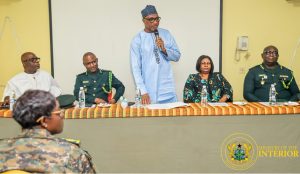
Responding, the Director-General of NACOC, Major General Maxwell Obuba Mantey, expressed appreciation to the Government of Zimbabwe for recognising Ghana’s achievements in narcotics control and selecting the Commission as a benchmark institution.
He reaffirmed NACOC’s commitment to supporting African countries through knowledge sharing, technical cooperation and capacity building to strengthen the continent’s fight against illicit drugs.
“We are ready to share our experiences and international best practices in the fight against illicit drugs. Drug trafficking is a transnational challenge and our collective success depends on collaboration among African countries,” he said.
Major General Mantey highlighted the significant progress made by NACOC despite logistical challenges confronting many drug law enforcement agencies across Africa.
He attributed the Commission’s achievements to sustained government support and institutional reforms, which have strengthened both drug supply reduction and drug demand reduction efforts.
He explained that while NACOC continues to intensify enforcement operations against drug traffickers, it places equal emphasis on public education, prevention, treatment and rehabilitation, particularly among the youth.
Major General Mantey stressed that effective drug control requires a balanced approach that combines strong law enforcement with sustained public education and rehabilitation programmes.
Judith Twumwaa, ISD